
Federal judge refuses to block Alabama law banning DEI initiatives in public schools
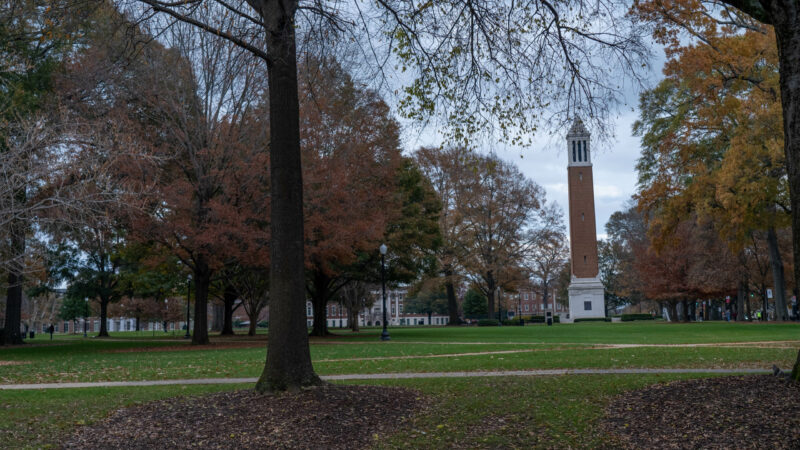
Denny Chimes stands above the Quad on the campus of The University of Alabama.
A federal judge on Wednesday declined a request to block an Alabama law that bans diversity, equity and inclusion initiatives in public schools and the teaching of what Republican lawmakers dubbed “divisive concepts” related to race and gender.
U.S. District Judge David Proctor wrote that University of Alabama students and professors who filed a lawsuit challenging the law as unconstitutional did not meet the legal burden required for a preliminary injunction, which he called “an extraordinary and drastic remedy.” The civil lawsuit challenging the statute will go forward, but the law will remain in place while it does.
The Alabama measure, which took effect Oct. 1, is part of a wave of proposals from Republican lawmakers across the country taking aim at DEI programs on college campuses.
The Alabama law prohibits public schools from funding or sponsoring any DEI program. It also prohibits schools from requiring students to assent to eight “divisive concepts” including that fault, blame or bias should be assigned to a race or sex or that any person should acknowledge a sense of guilt, complicity or a need to apologize because of their race, sex or national origin.
Six professors and students at the University of Alabama filed a lawsuit arguing that the law violates the First Amendment by placing viewpoint-based restrictions on what educators teach. The lawsuit also said the law unconstitutionally targets Black students because it limits programs that benefit them.
Professors said they had altered what they taught in their classes in the wake of the law and the university’s guidance about it. A professor said he reduced coverage of the Black Power movement, the Black Lives Matter movement and the white nationalist movement in the wake of the law. Another said five students had made complaints suggesting that the interdisciplinary honors program she administered had potential conflicts with the new legislation.
The university also shuttered designated spaces for the Black Student Union and a resource center for LGBTQ+ students in the wake of the law.
Proctor wrote that a professor’s academic freedom does not override a university’s decisions about the content of classroom instruction.
“Importantly, SB 129 does not banish all teaching or discussion of these concepts from campus or, for that matter, even from the classroom,” Proctor wrote. “To the contrary, it expressly permits classroom instruction that includes ‘discussion’ of the listed concepts so long as the ‘instruction is given in an objective manner without endorsement’ of the concepts.”
He added that the law appears to give notice about what is a violation. For example, he said a professor could not “indoctrinate” students to believe that racial health disparities were the fault of one race of people but could still discuss the role of racism in health disparities.
“If, alternatively, the theory she teaches about is that there is empirical evidence that racism may be a cause for health disparities, or if she frames such teaching as merely a theory, she would not violate SB 129,” Proctor wrote.
Will Creeley, legal director of the Foundation for Individual Rights and Expression, a nonpartisan First Amendment group, criticized the decision as dangerous and at odds with decades of Supreme Court precedent on academic freedom.
“Academic freedom protects the search for knowledge and truth from political pressure. That’s the whole point,” Creeley wrote in a statement. “Faculty are hired to share and hone their expertise in a given field of study, not to read from a government script.”

Crew of fatal US military crash included Alabama father recently deployed
The six U.S. service members who died in the crash of a U.S. military refueling aircraft included an Alabama father who had just been promoted and deployed. The U.S. government released the identities of the deceased service members Saturday.
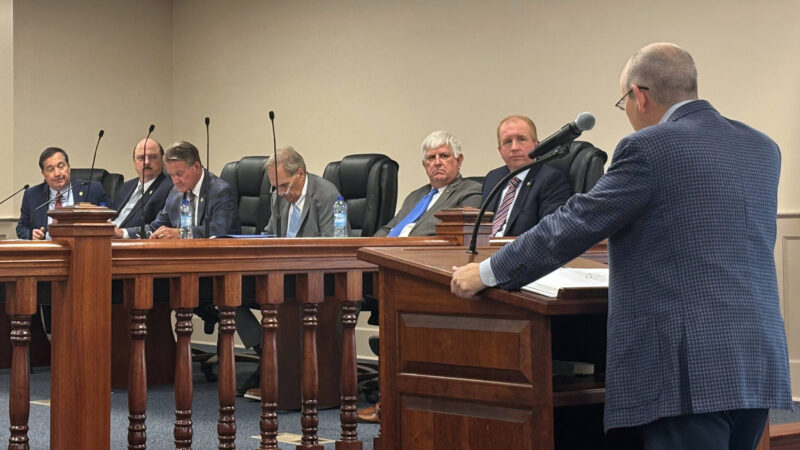
Alabama poised to drastically overhaul utility regulation. Will it lower electric bills?
The Alabama Senate unanimously voted to expand the public service commission, and create a Secretary of Energy to address rising electricity prices. A bill in the House would go even further, requiring rate case hearings and limiting utility profits.

Musher from Alabama is going for back-to-back Iditarod wins
Riches and paid appearances haven’t followed Jessie Holmes since he won the world’s most famous sled dog race, the Iditarod, last year. He doesn't mind.
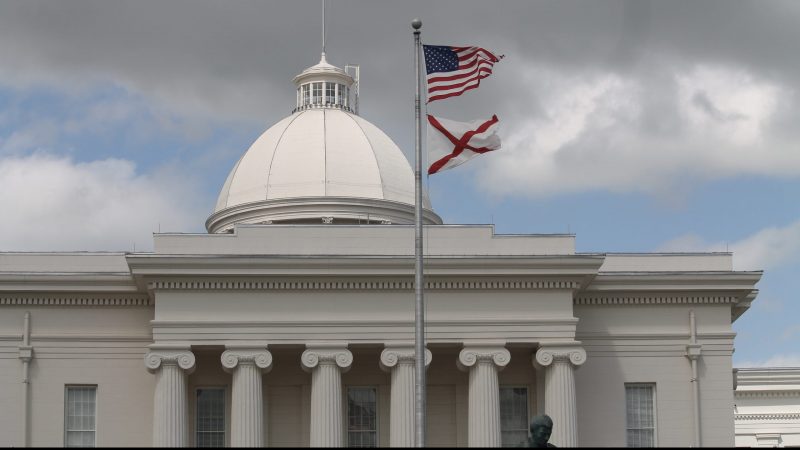
Bill would move Alabama to closed primaries
Right now, any Alabama voter can participate in a primary election. Lawmakers in Montgomery took up a bill this week that would change that system.
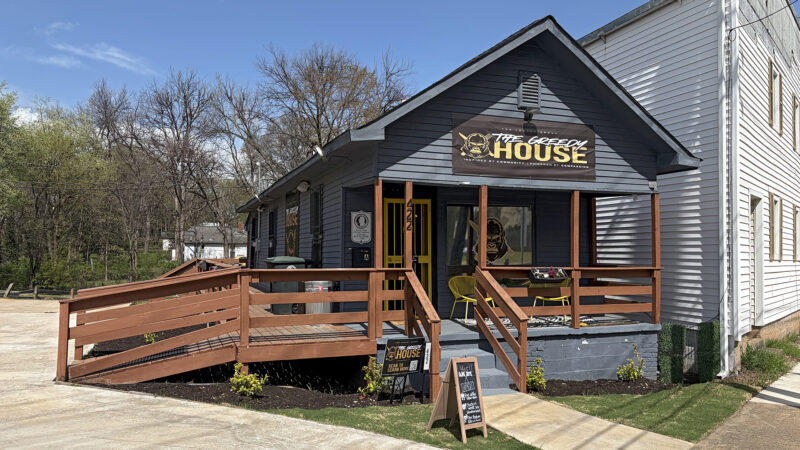
Auburn football player uses NIL funds to open a community hub in Birmingham
Jourdin Crawford, a freshman defensive lineman at Auburn, used earnings from a Name, Image, and Likeness deal to give back to his hometown.
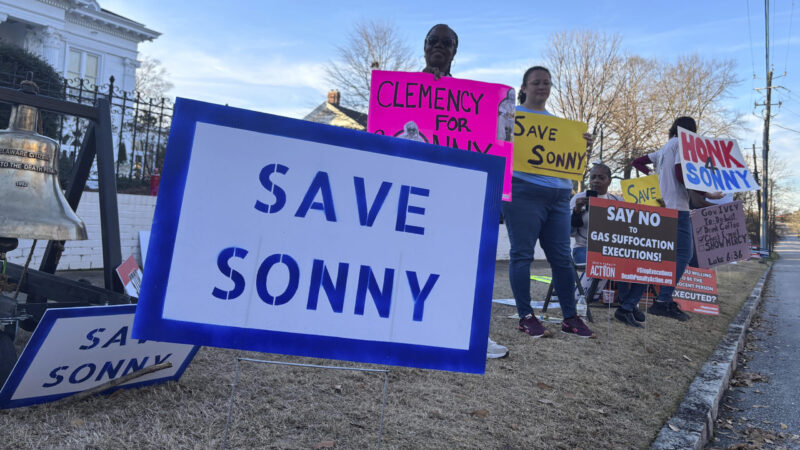
Ivey commutes death sentence of inmate whose accomplice fired fatal shot
Charles “Sonny” Burton was sentenced to death for the killing of Doug Battle during a 1991 robbery. However, another man shot Battle when Burton had left the building.