
Federal judge hears request to block an upcoming nitrogen gas execution in Alabama
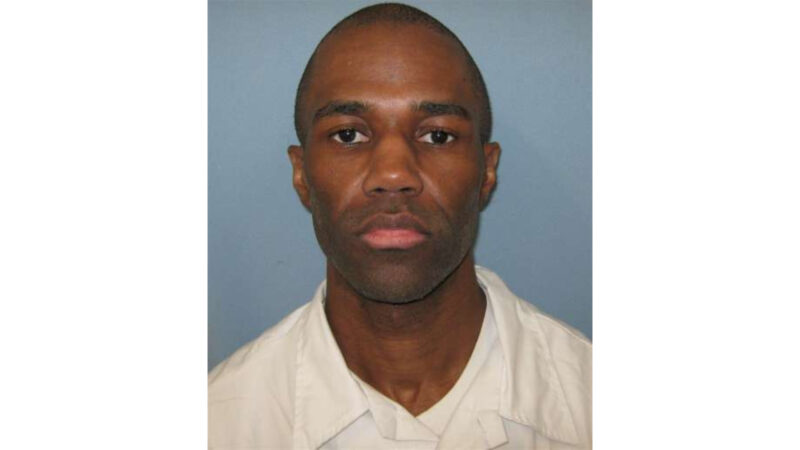
By Kim Chandler and Safiyah Riddle
MONTGOMERY, Ala. (AP) — The state of Alabama urged a federal judge Tuesday to allow the nation’s fourth execution with nitrogen gas to proceed next week, but a doctor who witnessed an earlier execution by the new method told the judge the inmate appeared to be in distress and awake minutes longer than officials predicted.
Alabama has carried out all three of the nation’s executions using the gas and has set a Feb. 6 execution date for Demetrius Terrence Frazier, 52. But attorneys for Frazier, who was convicted of the 1991 rape and murder of a woman in Birmingham, sought the hearing asking the court to intervene.
Frazier’s attorneys urged the judge to block the execution unless the state makes changes to its protocol, such as giving the inmate the same sedative used at the start of lethal injections before the gas begins flowing. Separately Tuesday, Frazier’s mother and death penalty opponents asked Michigan’s governor to bring Frazier back there to finish a life sentence in the state for a separate murder conviction in the killing of a 14-year-old girl. Michigan has no death penalty.
Alabama’s method involves placing a respirator gas mask over the face to replace breathable air with pure nitrogen gas, causing death by lack of oxygen. The state maintained Tuesday that the method brings swift death.
Dylan L. Mauldin, assistant solicitor general for Alabama, called Frazier’s legal maneuver a tactic to delay his execution and said the court should deny his request for a preliminary injunction. Mauldin noted the U.S. Supreme Court has never ruled the method unconstitutional.
Meanwhile, a lawyer for Frazier, argued that inmates executed with the gas appeared to be conscious for some minutes, instead of the 30 to 40 seconds he said the state predicted.
U.S. District Judge Emily Marks questioned Frazier’s attorney about why she should intervene when the courts have previously let nitrogen executions go forward.
“Something is going wrong. Every inmate who has been executed by nitrogen gas has exhibited signs of consciousness beyond the 40 seconds,” Spencer Hahn, an attorney for Frazier, responded.
Dr. Brian McAlary, an anesthesiologist who witnessed the November execution of Carey Dale Grayson, testified that he observed clear “evidence of distress” in the prisoner. He noted Grayson moved his head back and forth, had rapid eye movements and struggled against his restraints.
McAlary said he believed Grayson’s last voluntary movement occurred after about three minutes when he simultaneously raised both legs and held them in the air before letting them fall down. McAlary said he believed the movement was voluntary because “both legs were moved at exactly the same time, direction and distance.”
The testimony was the first time a medical doctor had testified about observations during a nitrogen execution. The court was previously given news accounts from journalists and the observations of prison staff.
Dr. Joseph Antognini, an anesthesiologist hired by the state as an expert witness, gave competing testimony that such movements did not necessarily indicate Grayson was conscious. Antognini did not witness Grayson’s execution.
“Movement can happen in the absence of pain,” Antognini said. He gave examples of instances when he saw patients move involuntarily during surgery while unconscious. But he acknowledged he had never seen movements like a double leg lift during surgery.
Frazier was in the courtroom throughout, shackled and taking notes in handcuffs on a legal pad.
Alabama Corrections Commissioner John Hamm testified that Grayson was combative at the start of his execution, cursing the warden and raising his middle fingers as he was strapped to the gurney. Hamm testified that he thought Grayson’s head movements were an effort to knock the mask loose.
Frazier’s supporters had also argued he should be in a Michigan prison instead of Alabama’s death row.
Frazier was first convicted in Michigan and sentenced to life in prison for the 1992 murder of a 14-year-old girl. Prosecutors said Frazier while in police custody in Michigan, confessed to raping and shooting Brown in Alabama after stealing about $80 from her purse. He was convicted in Alabama and given the death penalty. The then governors of Alabama and Michigan agreed in 2011 to place him on Alabama’s death row.
Frazier’s attorneys had filed a separate appeal to have him sent to Michigan to finish his life sentence there but dropped the request after Michigan’s attorney general wrote in a court filing that Michigan doesn’t seek his return.
Death penalty opponents and Frazier’s mother made a last-minute plea to Michigan Gov. Gretchen Whitmer to intervene and request that Frazier be sent back to Michigan.
“Please bring my son back to Michigan. Please don’t let Alabama kill my son if you can stop it,” Carol Frazier wrote in the letter to Whitmer.
Whitmer’s office declined to comment.

Crew of fatal US military crash included Alabama father recently deployed
The six U.S. service members who died in the crash of a U.S. military refueling aircraft included an Alabama father who had just been promoted and deployed. The U.S. government released the identities of the deceased service members Saturday.
Alabama poised to drastically overhaul utility regulation. Will it lower electric bills?
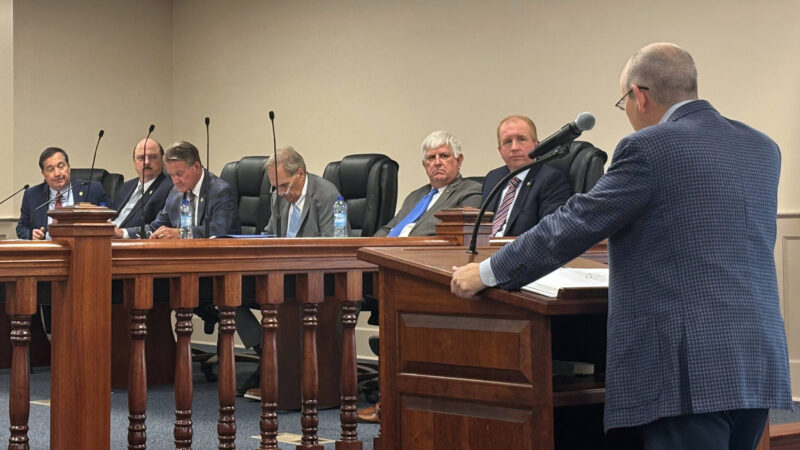
The Alabama Senate unanimously voted to expand the public service commission, and create a Secretary of Energy to address rising electricity prices. A bill in the House would go even further, requiring rate case hearings and limiting utility profits.
Musher from Alabama is going for back-to-back Iditarod wins
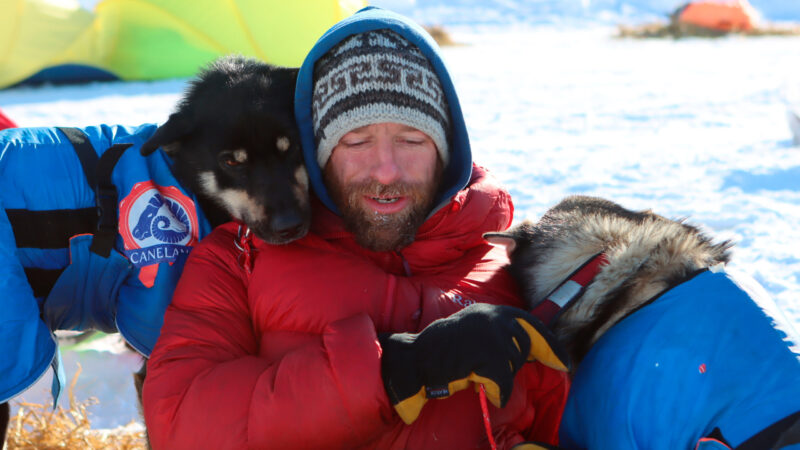
Riches and paid appearances haven’t followed Jessie Holmes since he won the world’s most famous sled dog race, the Iditarod, last year. He doesn't mind.
Bill would move Alabama to closed primaries
Right now, any Alabama voter can participate in a primary election. Lawmakers in Montgomery took up a bill this week that would change that system.
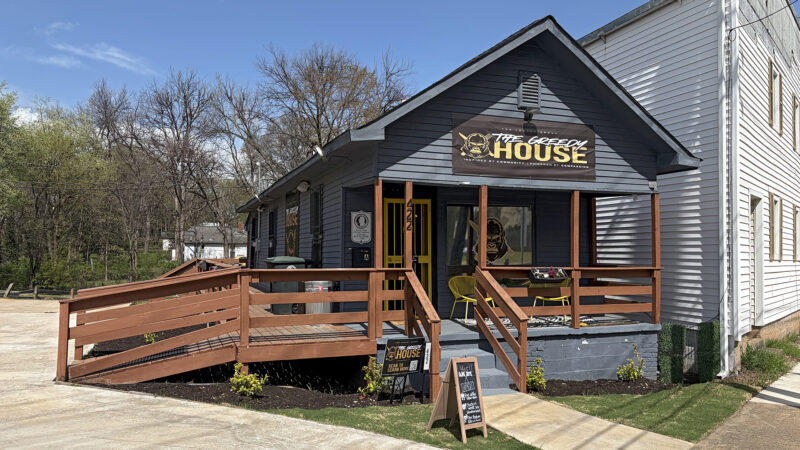
Auburn football player uses NIL funds to open a community hub in Birmingham
Jourdin Crawford, a freshman defensive lineman at Auburn, used earnings from a Name, Image, and Likeness deal to give back to his hometown.
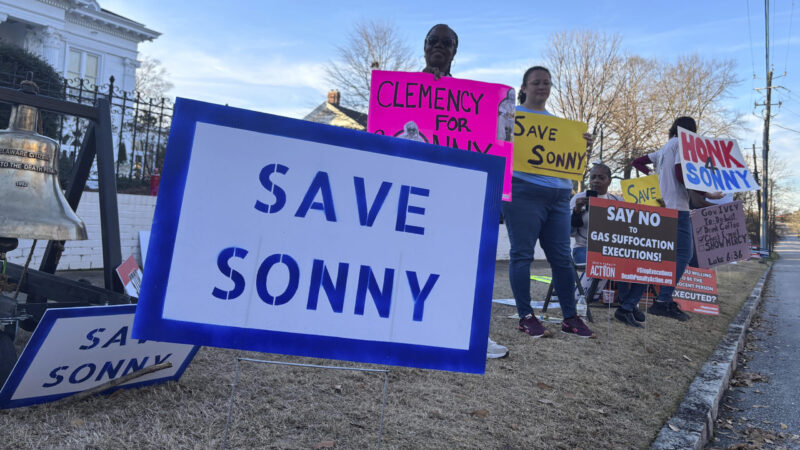
Ivey commutes death sentence of inmate whose accomplice fired fatal shot
Charles “Sonny” Burton was sentenced to death for the killing of Doug Battle during a 1991 robbery. However, another man shot Battle when Burton had left the building.