
Birmingham’s poet laureate releases ‘The Other Revival’ book for Juneteenth
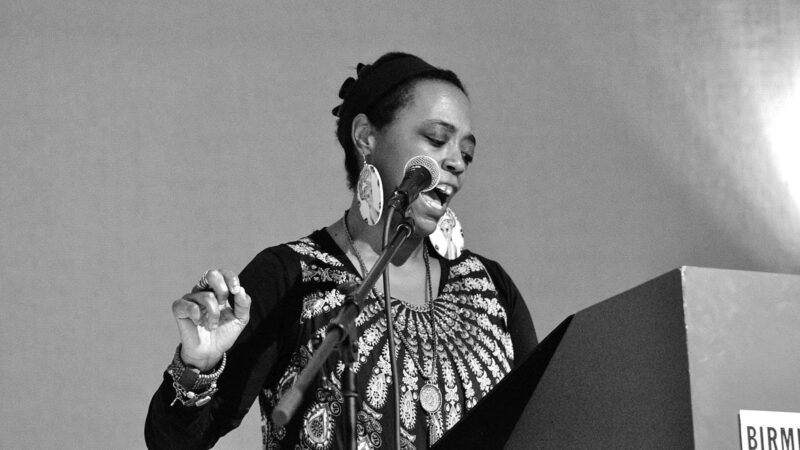
Salaam Green, Birmingham's first poet laureate, released a book for Juneteenth.
Birmingham’s first poet laureate Salaam Green released a new book this week to coincide with the Juneteenth holiday. The Other Revival features poems inspired by descendants of Black enslaved people and white descendants of a central Alabama plantation. The poems explore this history through healing and revival. Green spoke with WBHM’s Noelle Annonen.
This interview was edited for length and clarity.
Tell us about the characters of place and people in this book.
So I was a poet-in-residence at the Wallace House Plantation. As a poet-in-residence I got an opportunity pretty much every week to drive through Shelby County, Alabama, and Harpersville, Alabama. And that is part of the character was the land, the cotton fields, the soybean fields, the road, the county roads, and then the Wallace House, which sits on acres and acres of land. And many of the Black descendants and white descendants still live in Shelby County and Harpersville and in that area. So some of the people are already immersed in the land, already immersed in the space and place and this is home for them. So the characters in the book are real people who I talk about their lived experiences on a daily basis.
The book is being released on Juneteenth. Can you talk to me about the significance of the timing of this book?
In 2020, we did our first descendants’ day at the Wallace House Plantation, which was done on Juneteenth. It happened to be the first time that Black descendants by themselves actually went into the Wallace House Plantation by themselves. And this was a very sacred, serene day. And when I think back to Juneteenth, Emancipation Day for Black people, I think about the importance of emancipation. I think about the importance of liberation. I think of the importance of representation of that day and the importance of culture and heritage kind of colliding together.
I think poetry helps us to write ourselves free. And oftentimes when I talk about freedom, I think about the idea that freedom is something that other people give us. When we think about Juneteenth, when we talk and think about emancipation. These are all things that were written by other people to say, “okay, you’re free now.” But liberation is what we give ourselves.
So I think with poetry, it helps us feel more liberated, but it also helps us see as human beings that there’s hope. But poetry and poets don’t just tell us there is hope. They show us where the hope is. And I think that’s the role poetry plays in healing. So I wanted to make sure that when there was an opportunity for it to come out on Juneteenth. I wanted it to honor the Black descendants who had their very first descendants’ day where they got a chance to walk in the Wallace House as Black folks for the first time together. I wanted them to have this opportunity in one of these stories to come out on that day as well.
Can you talk to me about what it was like for you to experience and write about the history at the Wallace House plantation?
I think being a Black woman who is from the South, a Southern Black woman, poet and writer, who was a poet-in-residence on a plantation, is kind of different. It’s not something we do on a daily basis. But when I entered the Wallace House, this particular space is sparse. So the wallpaper is peeling. The floorboards are cracked. At the time I was there, they didn’t have an AC. There was no bathroom. I felt the weight and the heaviness that was there, unlike I thought I would. And after all that began to happen, I realized, “oh, this is the embodiment of the cells in my body remembering my ancestors, remembering this space.”
It’s the smell. It’s remembering the fingerprints on the walls. And so I wanted the poems to come across in a way. And when people read it, they felt as if they were there putting their fingerprints on walls. And I felt very much so that I was visited by this lady in the yellow apron who has lived at that Wallace House as a ghost. Or a figment of a ghost for many, many, many years. And I felt as if this beautiful woman in a yellow apron and mother ancestor tapped me on the shoulder and said it was time for my revival. I tapped her on her shoulder and said it’s time for her revival. And so we were both able to walk off the plantation and find a new revival.
What was your favorite poem in your book and what is the story behind it?
It’s called “To Black girls who love birds.”
I grew up, like I said, in rural Alabama, in a place called Greensboro, Alabama. And when you’re in the country, you hear birds that you don’t normally hear. If you really pay attention, you’re always hearing birds, especially early in the morning. It’s as if they are singing to you. And I grew up loving birds, but I don’t remember anyone telling me that I could be a bird watcher. And so while I was on the Wallace House Plantation, I thought, I wonder how many Black girls who were enslaved, whose mothers and fathers were enslaved in that space, loved birds too? How many went to the window sill every morning to hear the Alabama Yellowhammer? How many of them sat on the porch to spot a red bird thinking they’ll see an ancestor behind them? How many screamed when they saw a bluebird and tried to chase it?
Because you know, Black girls and Black women and Black men at that time were supposed to work and not pay attention to nature. But when you’re in that space, you’re also a full human and you’re fully alive. And you see beauty as much as you see things that are un-beautiful. And so I wanted to remind people, remind myself, and I wanted to speak back to that Black girl who was enslaved anywhere, at any time.

Crew of fatal US military crash included Alabama father recently deployed
The six U.S. service members who died in the crash of a U.S. military refueling aircraft included an Alabama father who had just been promoted and deployed. The U.S. government released the identities of the deceased service members Saturday.
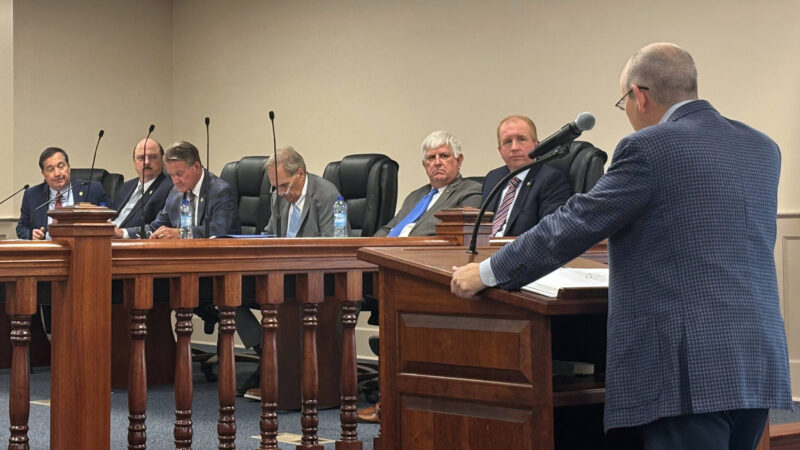
Alabama poised to drastically overhaul utility regulation. Will it lower electric bills?
The Alabama Senate unanimously voted to expand the public service commission, and create a Secretary of Energy to address rising electricity prices. A bill in the House would go even further, requiring rate case hearings and limiting utility profits.
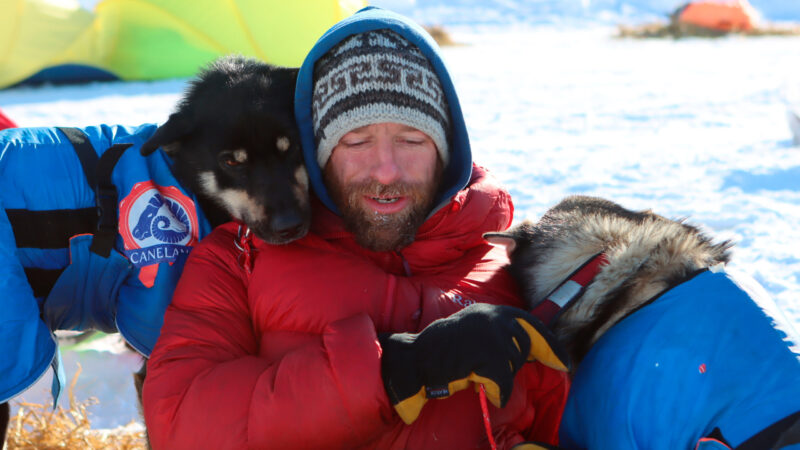
Musher from Alabama is going for back-to-back Iditarod wins
Riches and paid appearances haven’t followed Jessie Holmes since he won the world’s most famous sled dog race, the Iditarod, last year. He doesn't mind.
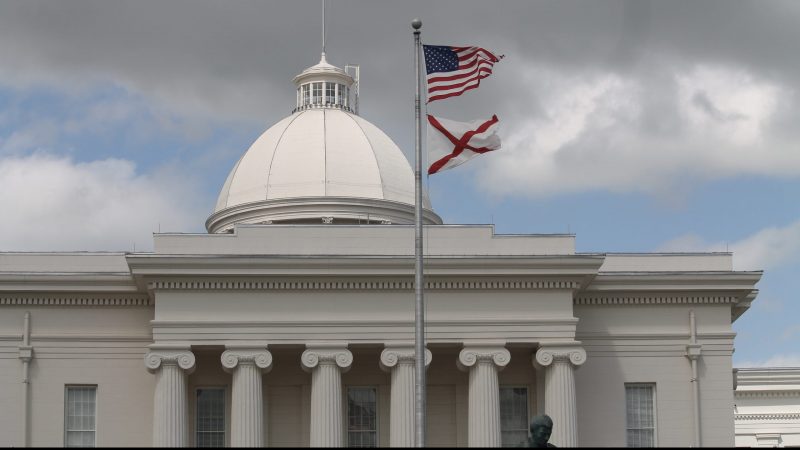
Bill would move Alabama to closed primaries
Right now, any Alabama voter can participate in a primary election. Lawmakers in Montgomery took up a bill this week that would change that system.
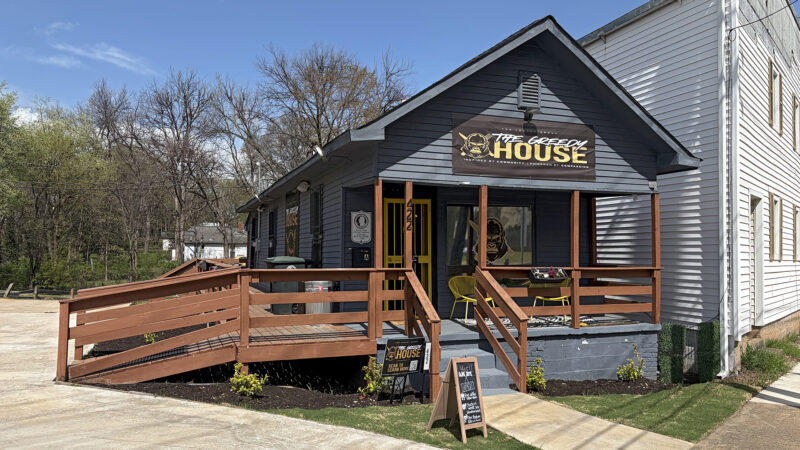
Auburn football player uses NIL funds to open a community hub in Birmingham
Jourdin Crawford, a freshman defensive lineman at Auburn, used earnings from a Name, Image, and Likeness deal to give back to his hometown.
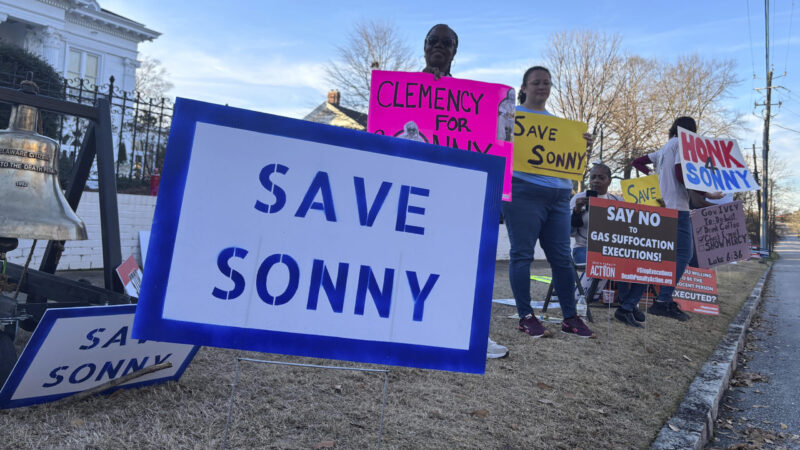
Ivey commutes death sentence of inmate whose accomplice fired fatal shot
Charles “Sonny” Burton was sentenced to death for the killing of Doug Battle during a 1991 robbery. However, another man shot Battle when Burton had left the building.