
20 years after Hurricane Katrina, East Biloxi’s casinos boom while Main Street dries up
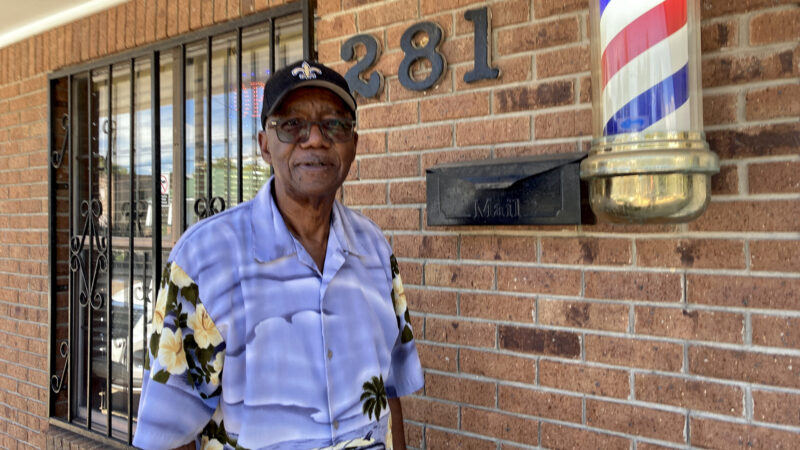
Tyrone Burton stands outside of his barbershop in East Biloxi, Mississippi, on Aug. 14, 2025. Burton has cut hair in the same historically Black neighborhood for more than 60 years, even after his barbershop flooded during Hurricane Katrina.
Twenty years ago, Hurricane Katrina destroyed much of the Gulf Coast, including parts of the railroad that Amtrak ran a commercial line on, connecting New Orleans to Mobile, Alabama.
In mid-August, Amtrak resurrected this route — now dubbed the Mardi Gras Service. The Gulf States Newsroom’s Stephan Bisaha took part in the route’s inaugural trip.
Along the ride, he visited three coastal Mississippi cities that the route makes stops at to tell the story of how Katrina changed the Gulf Coast, and how these towns have worked to rebuild over the past two decades.
East Biloxi’s railroad tracks act like a line that divides the city economically, racially and in recovering from Hurricane Katrina.
East Biloxi received the worst of the damage in the larger city of Biloxi from Hurricane Katrina 20 years ago. The city says that about 80% of the area’s houses were either lost or made unlivable.
South of the railroad tracks were casinos that literally floated on the water. Mississippi law prevented them from being constructed on land, so they were instead built on barges. When Katrina’s storm surge came, the casinos moved with the flooding, in some cases, several blocks up.
Since then, those casinos have rebuilt — on solid land this time — and have boomed. Across Mississippi, casinos generate about $2.5 billion each year and employ about 16,000 workers.
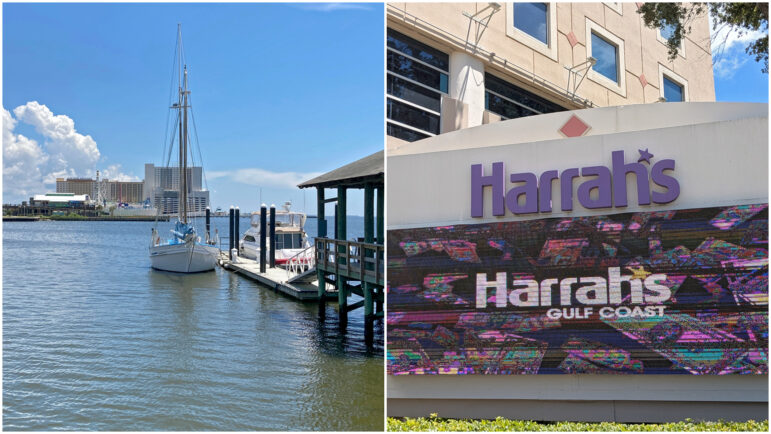
But north of the railroad tracks, along Main Street, are several boarded-up, single-story homes. This section of East Biloxi is a historically Black district. Like many similar districts across the South, Jim Crow restrictions on where Black residents could shop meant these areas became a concentration of wealth within their community.
It’s where Tyrone Burton has been cutting hair for more than 60 years and still has his barbershop. He said this stretch of Main Street used to have a grocery store, laundromat, doctor’s office and other businesses.
“You didn’t have to go out and get a loaf of bread. All you had to do was walk across the street,” Burton said.
But many of those businesses have long left the neighborhood, and Burton said getting that loaf of bread now means traveling about 10 blocks.
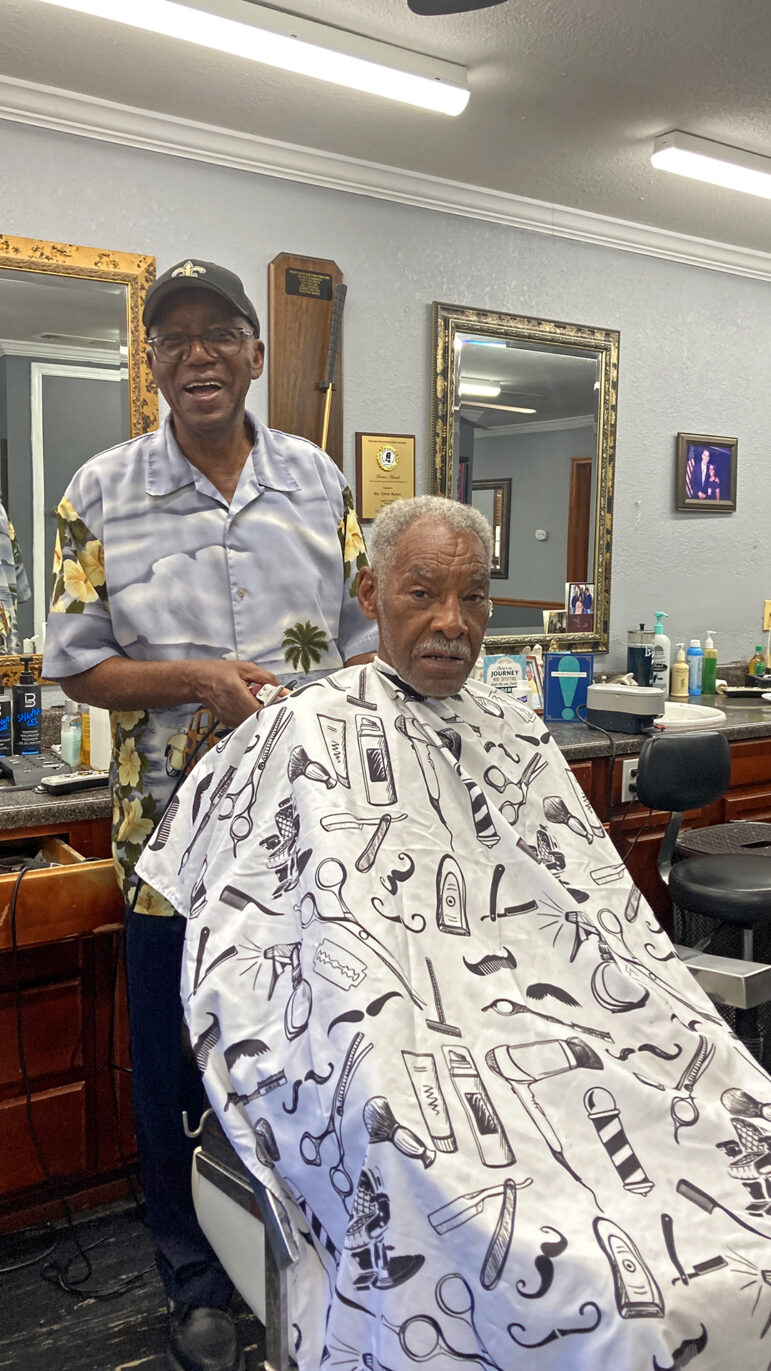
A large part of that was because of the damage from Katrina, but Burton said the decline started well before that. Many historically Black districts struggled after desegregation, when the concentration of Black wealth became free to spend anywhere.
Desegregation also allowed those businesses to open elsewhere, and the decline began in the ‘70s and ‘80s, according to Allytra Perryman, program director at the East Biloxi Community Collaborative. She said the then-new Edgewater Mall on the far west side of Biloxi drew those business owners away from East Biloxi.
And in 2005, Katrina accelerated the neighborhood’s erosion.
“This area was completely drowned,” Perryman said. “The [Biloxi] Bay and the Gulf met. So there was no place in East Biloxi that was dry.”
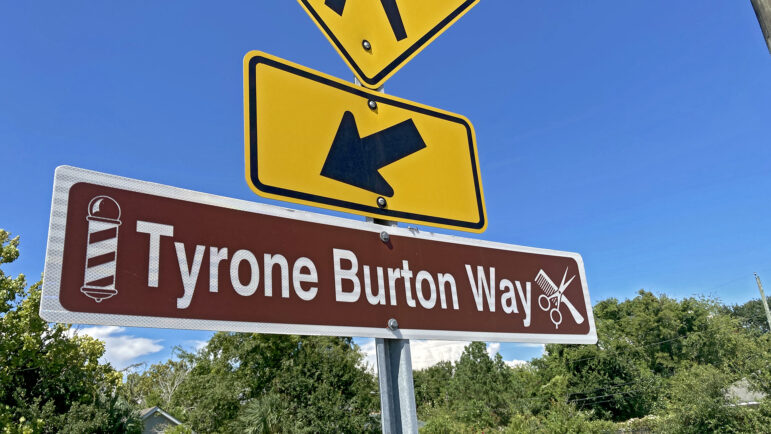
The city of Biloxi recently renamed the stretch of Main Street by Burton’s shop to Tyrone Burton Way in his honor. But Burton said, to him, it looked like the city was just waiting for the neighborhood to dry up so they could take it and expand the city’s casino and recreation industry further north.
Biloxi created a comprehensive rebuilding plan that talked about reconstructing homes in East Biloxi. It points out the area’s environmental problems as a low-lying peninsula vulnerable to flooding. The economic challenges, such as the cost of rebuilding to flood risk standards, are combined with the area’s poverty. All this means new houses and people would likely continue moving north instead, the report predicted.
That’s what Burton has seen happen. Former residents took insurance checks, assuming they got any, and cashed them in to move north rather than stay and rebuild.
“The status right now is down, down,” Tyrone said about the neighborhood.
This story was produced by the Gulf States Newsroom, a collaboration between Mississippi Public Broadcasting, WBHM in Alabama, WWNO and WRKF in Louisiana and NPR.
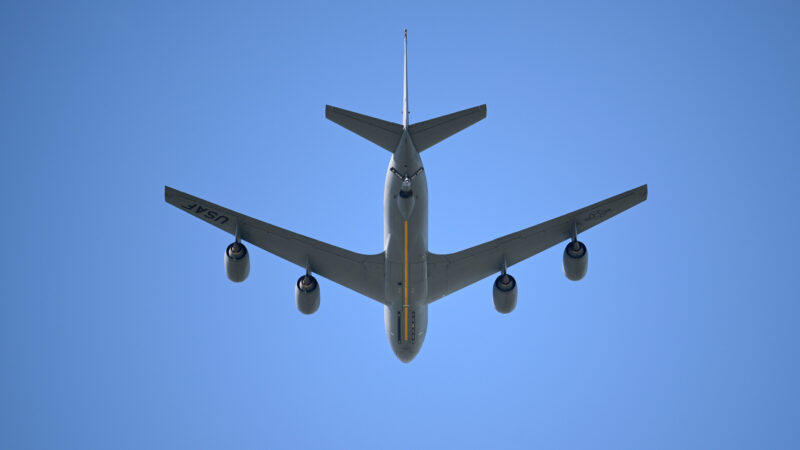
Crew of fatal US military crash included Alabama father recently deployed
The six U.S. service members who died in the crash of a U.S. military refueling aircraft included an Alabama father who had just been promoted and deployed. The U.S. government released the identities of the deceased service members Saturday.
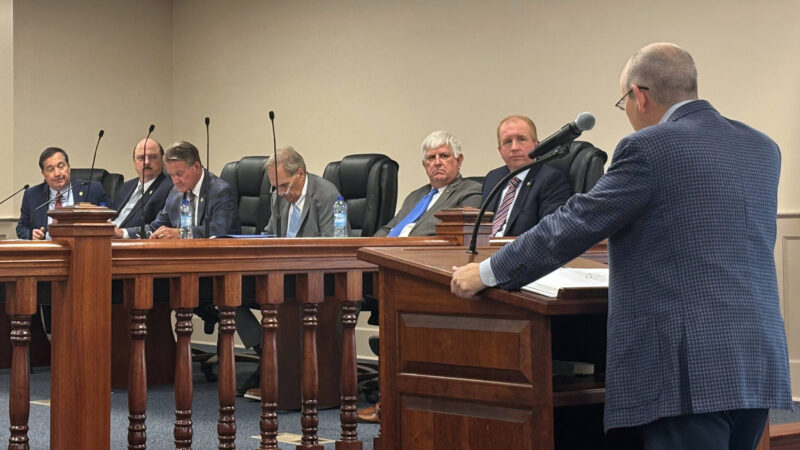
Alabama poised to drastically overhaul utility regulation. Will it lower electric bills?
The Alabama Senate unanimously voted to expand the public service commission, and create a Secretary of Energy to address rising electricity prices. A bill in the House would go even further, requiring rate case hearings and limiting utility profits.
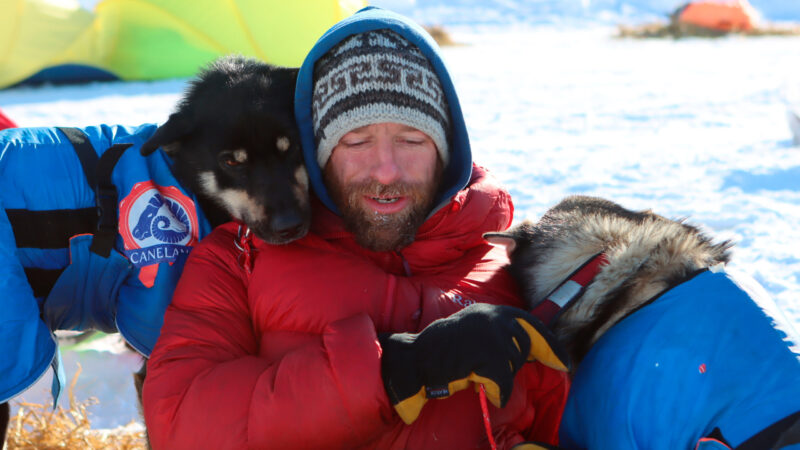
Musher from Alabama is going for back-to-back Iditarod wins
Riches and paid appearances haven’t followed Jessie Holmes since he won the world’s most famous sled dog race, the Iditarod, last year. He doesn't mind.
Bill would move Alabama to closed primaries
Right now, any Alabama voter can participate in a primary election. Lawmakers in Montgomery took up a bill this week that would change that system.
Auburn football player uses NIL funds to open a community hub in Birmingham
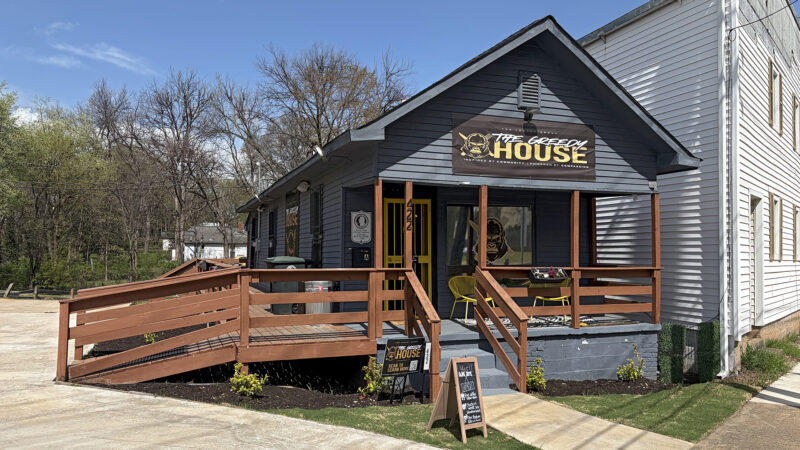
Jourdin Crawford, a freshman defensive lineman at Auburn, used earnings from a Name, Image, and Likeness deal to give back to his hometown.
Ivey commutes death sentence of inmate whose accomplice fired fatal shot
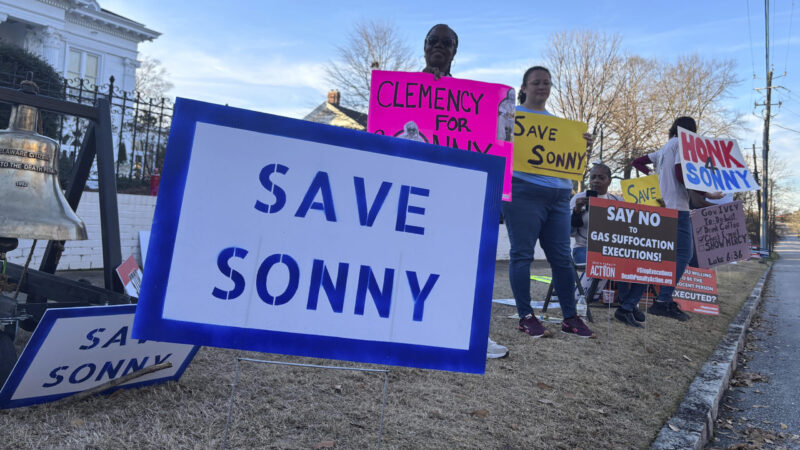
Charles “Sonny” Burton was sentenced to death for the killing of Doug Battle during a 1991 robbery. However, another man shot Battle when Burton had left the building.