Women’s health care in the Gulf South is ‘bleak,’ new report says. Here’s how Alabama ranks
In this stock image, a pregnant Black woman holds her stomach.
The state of women’s health care in the South is “bleak,” according to a new report from the Commonwealth Fund, a research foundation focused on improving health care in the U.S.
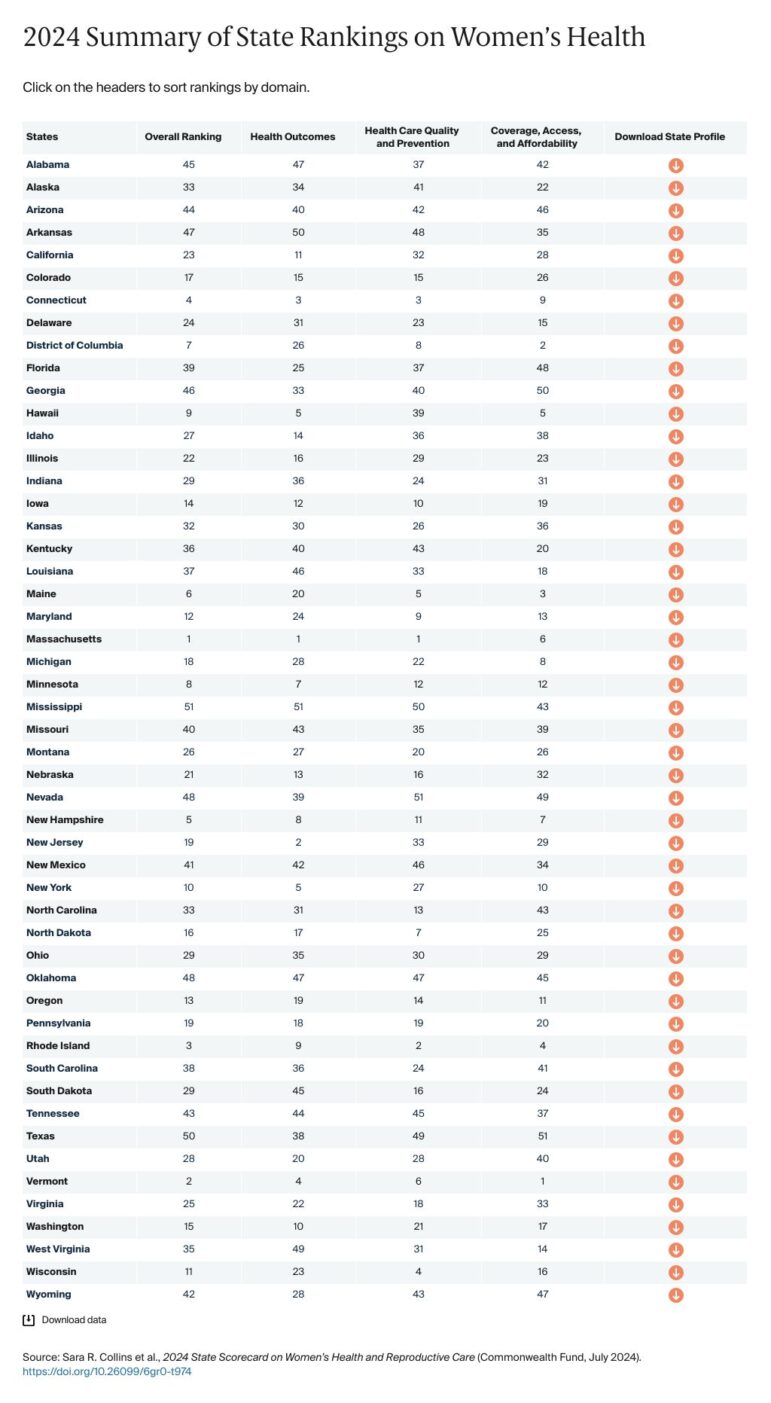
The report assigns a “scorecard” for each state, ranking how well the health system is working for women. Louisiana is ranked 37th overall. Alabama is ranked 45th. Mississippi is ranked 51st — dead last.
Deaths from preventable causes are increasing, and significant racial disparities persist, particularly in maternal mortality and deaths from breast and cervical cancers. Although there was a slight improvement in women’s life expectancy in 2022, it remains at its lowest since 2006.
These alarming health trends are occurring amidst state policy choices and judicial decisions that restrict access to comprehensive health services and reproductive care.
Ten states have not expanded Medicaid eligibility, leaving nearly 800,000 women uninsured. Varied approaches among states to phasing out COVID-19 pandemic-era Medicaid coverage have left millions of women either newly uninsured or facing significant gaps in coverage.
These coverage losses are not only hindering women’s access to care but also putting providers serving low-income women at risk of closure. A recent survey found that 95% of community health centers, which care for 40% of low-income women — nearly half of whom are covered by Medicaid — reported having patients who were disenrolled.
The 2022 U.S. Supreme Court decision overturning Roe v. Wade has further fractured women’s health care access, especially in treating pregnancy complications.
Since the decision, 21 states have imposed new limits or bans on abortion. Florida’s six-week ban, effective April 2024, severely restricts abortion access across the South, where all states now have similar restrictions.
Dr. Joseph Betancourt, president of the Commonwealth Fund, said this report — the first focused on women the organization has done — examined the impacts of these policies.
“We were interested in recent policy choices and judicial decisions restricting access to reproductive care, in particular, that have and may continue to exacerbate, women’s health,” Betancourt said.
Even before the Dobbs decision, these states had few maternity care providers, higher maternal mortality rates — particularly among women of color — and significant racial and ethnic disparities in their health systems. In 2022, more than a third of U.S. counties had limited or no access to maternity care.
The disparities are especially pronounced in the Mississippi Delta. Betancourt said the report identified clear distinctions between states with health systems that perform well for women and those that don’t.
Characteristics of higher-performing systems include investments in health insurance coverage for residents — Medicaid expansion — and making all women’s healthcare, including abortion, legal and accessible.
“When we look at the Gulf states, we see certain characteristics playing out in a negative way,” Betancourt said.
Here’s a quick, state-by-state breakdown of the report’s findings for our region:
Alabama
Data shows that Alabama ranks 47th for health and reproductive care outcomes for women. It also ranks low on insurance coverage, provider access and health care affordability.
The state performed best in women with up-to-date colon and cervical cancer screenings.
Alabama performed the worst in preterm birth rate and infant mortality. The state also ranked poorly for maternity care staff available to women.
Louisiana
Louisiana’s health system for women ranked highest among the Gulf South at 37th, but the state ranked 46th on health and reproductive outcomes — just ahead of Alabama.
Louisiana is ranked 18th for coverage, access and affordability. It is the only Gulf South state that has expanded Medicaid, which might account for the state’s higher ranking than others in the region.
“We see big differences in states that have expanded Medicaid and those who haven’t,” Betancourt said.
Louisiana performed best in women’s breast and cervical cancer screenings, and performed worst in women’s mortality, women’s mental health and preterm birth rates.
Mississippi
Mississippi’s health system did not perform well by any metric. The state is ranked dead last at 51st overall, with the worst rankings on health and reproductive care outcomes, as well as health care quality and prevention.
The state has the highest rates of uninsured pregnant women and maternal deaths. Syphilis infections are also on the rise.
Mississippi performed best in women getting HIV or AIDS tests — though it still ranked low compared to other states in this statistic — and worst in women getting pneumonia vaccines, infant mortality and preterm birth rates.
Health policy can influence health outcomes
Women’s health is in a “fragile state,” Betancourt said, and these gaps could widen further because of recent legislation and court rulings around reproductive care access.
That also means policy can improve women’s health.
The report found investing in and fortifying primary care and maternal health workforce, investing in more prenatal and postpartum checkups and investing in postpartum depression screening could all help boost health outcomes for women.
“Our recommendations fall in line with the evidence. They’re really based on what we see,” Betancourt said. “We see higher-performing states doing better by way of making reproductive health — the entire continuum of women’s health — legal and accessible.”
For more, read the full report here.
This story was produced by the Gulf States Newsroom, a collaboration between Mississippi Public Broadcasting, WBHM in Alabama, WWNO and WRKF in Louisiana and NPR. Support for health equity coverage comes from The Commonwealth Fund.

Crew of fatal US military crash included Alabama father recently deployed
The six U.S. service members who died in the crash of a U.S. military refueling aircraft included an Alabama father who had just been promoted and deployed. The U.S. government released the identities of the deceased service members Saturday.
Alabama poised to drastically overhaul utility regulation. Will it lower electric bills?
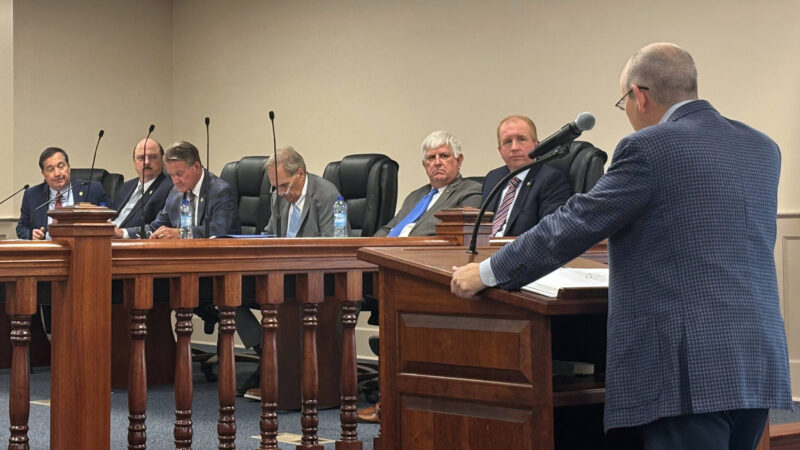
The Alabama Senate unanimously voted to expand the public service commission, and create a Secretary of Energy to address rising electricity prices. A bill in the House would go even further, requiring rate case hearings and limiting utility profits.

Musher from Alabama is going for back-to-back Iditarod wins
Riches and paid appearances haven’t followed Jessie Holmes since he won the world’s most famous sled dog race, the Iditarod, last year. He doesn't mind.
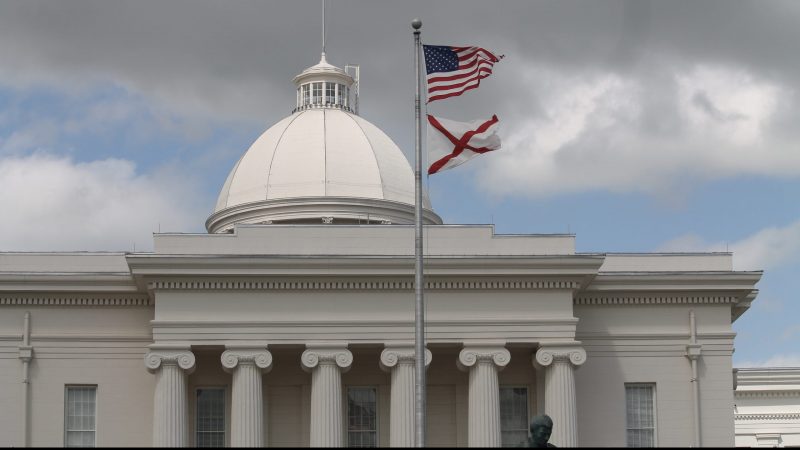
Bill would move Alabama to closed primaries
Right now, any Alabama voter can participate in a primary election. Lawmakers in Montgomery took up a bill this week that would change that system.
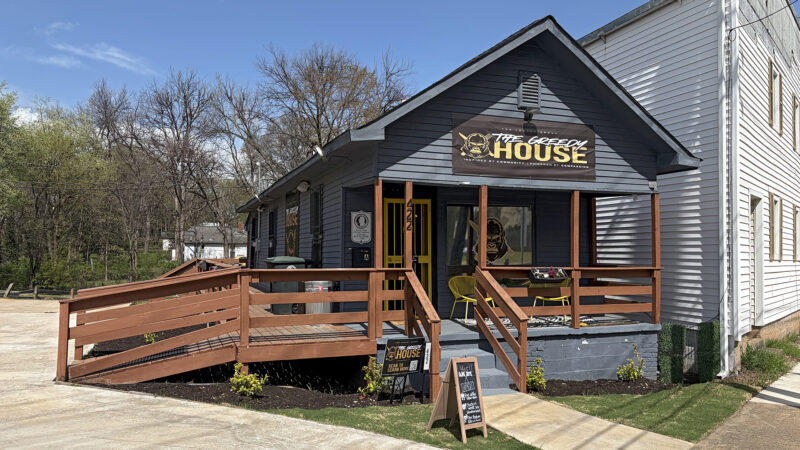
Auburn football player uses NIL funds to open a community hub in Birmingham
Jourdin Crawford, a freshman defensive lineman at Auburn, used earnings from a Name, Image, and Likeness deal to give back to his hometown.
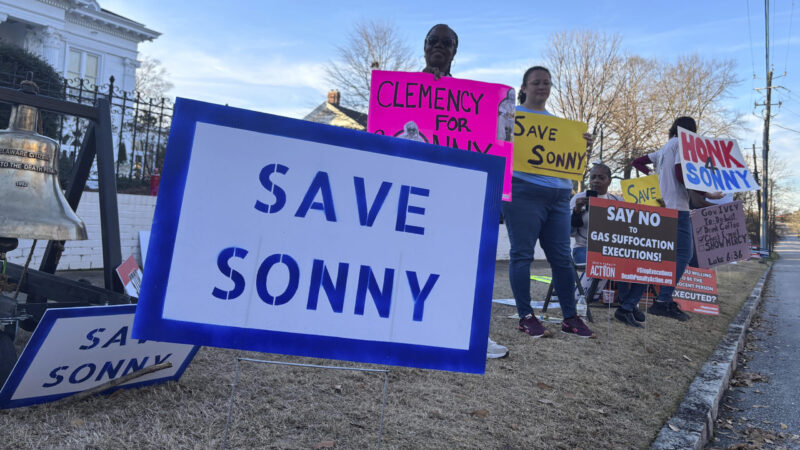
Ivey commutes death sentence of inmate whose accomplice fired fatal shot
Charles “Sonny” Burton was sentenced to death for the killing of Doug Battle during a 1991 robbery. However, another man shot Battle when Burton had left the building.