
Death penalty opponents speak out as Alabama preps for next nitrogen gas execution
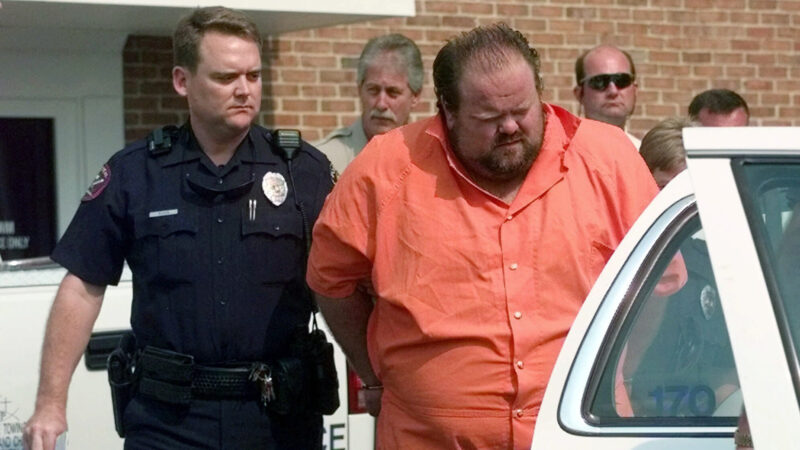
In this file photo, Officials escort Alan Eugene Miller away from the Pelham City Jail in Alabama, Aug. 5, 1999. Miller was the second person executed by nitrogen gas in the U.S. in September.
Back in January, Kenneth Eugene Smith became the nation’s first execution by nitrogen gas. His head is affixed to the gurney and a gas mask is strapped to his face.
His spiritual advisor stood by him. He smiled from ear to ear as he made the ASL sign for “I love you” to his family, who sat on the other side of the window, observing in the witness room at Holman Correctional Facility in Atmore, Alabama.
Smith’s last words were, “Tonight, Alabama caused humanity to take a step backward. I’m leaving with love, peace and light. Thank you for supporting me, love you all.”
Lee Hedgepeth, a journalist who witnessed the execution, said Smith started shaking when the nitrogen started to flow.
“He’s shaking so violently that the bottom of the gurney where the metal frame meets the ground is coming off the ground, up and down,” said Hedgepeth.
After Smith’s shaking weakened, he began retching inside his mask. Hedgepeth has witnessed four executions in Alabama but said he’d never seen a reaction like this.
Smith’s execution shocked witnesses, mainly because state officials said the nitrogen would cause unconsciousness in seconds.
“We were told that it wouldn’t take very long for Mr. Smith to become unconscious, that there would be very little struggle, that this would essentially be kind of a quiet death,” Hedgepeth said.
During the execution, Smith’s wife is wailing the entire time — even though there’s a sign in the witness room that instructs witnesses to remain quiet.
“There’s a printed tag at the top above the window through which you watch the execution that says something like sit down and stay quiet,” Hedgepeth said. “That’s always struck me as emblematic of what the state’s attitude is towards the people who are witnessing the execution.”
Alabama is set to execute another person, Alan Eugene Miller, on Thursday using this method — known as “nitrogen hypoxia.” Because of the violent nature of Smith’s death, many opponents have spoken out against using the same method against him.
But state officials have defended the method, including Attorney General Steve Marshall, who said the first execution by nitrogen was “textbook.”
Miller filed a lawsuit earlier this year challenging the execution method, citing concerns that it would be painful and draw out his death. Dr. Joel Zivot, an anesthesiologist and professor at Emory University in Georgia, said it’s the state’s job to make sure that executions align with The Constitution — to not be cruel and unusual punishment.
“It should not fall on Alan Miller to tell them how he should be properly executed. But I understand why he’s doing it,” Zivot said. “All he’s trying to do is not have his death be some kind of torturous experience.”
Miller entered a confidential settlement with the state in August. AG Marshall did not respond to requests for comment, but In a press release, he said the settlement proves that nitrogen hypoxia is effective and humane.
“Miller’s complaint was based on media speculation that Kenneth Smith suffered cruel and unusual punishment in the January execution, but what the State demonstrated to Miller’s legal team undermined that false narrative. Miller’s execution will go forward as planned in September,” Marshall said.
Critics of the method feel the public isn’t well informed about how the state imposes its death penalty. Alison Mollman, with the ACLU of Alabama, said even the term “hypoxia” can be confusing to understand.
“We can sanitize these terms by using the phrase ‘nitrogen hypoxia,’” Mollman said. “But at its core, when someone is deprived of oxygen and is given nitrogen, that is suffocating the person.”
Opponents of the death penalty also feel concerned that there’s secrecy regarding the process. Mollman said that feeling isn’t new.
“The secrecy that’s happening with nitrogen suffocation is just a continuation of the secrecy that the state has had around lethal injection,” Mollman said. “At its core, that secrecy is designed to prevent the public from having the truth about what our state is doing when they kill people. It’s preventing the public from making reasoned decisions when they elect legislators who pass these laws.”
Mollman said it’s unclear who is regulating the chemical for nitrogen gas executions. She cited an incident at NASA, where nitrogen was the cause of death for scientists, and a 2021 Georgia poultry plant accident, where 6 people were killed by asphyxiation due to a liquid nitrogen leak.
“What’s really concerning about how the Department of Corrections is using nitrogen is OSHA does not oversee that,” she said. “There is no regulatory agency making sure that this gas is safely stored, that it’s being used in a manner that wouldn’t put officers, prison staff, the public at risk.”
Mollman said when this method of execution was proposed, it hadn’t been tested. Now that it has, she encourages lawmakers to reconsider. Another incarcerated person on Alabama’s death row has asked that Miller’s execution be recorded so that courts can decide if the use of nitrogen gas is ethical. Louisiana, Mississippi and Oklahoma are among states that may follow suit in using nitrogen hypoxia for executions.
“What we would really encourage our legislature to do is to take another look at this method of execution and decide if it’s really in line with Alabama’s values, with Alabama’s valuing of life,” Mollman said.
This story was produced by the Gulf States Newsroom, a collaboration between Mississippi Public Broadcasting, WBHM in Alabama, WWNO and WRKF in Louisiana and NPR.

Crew of fatal US military crash included Alabama father recently deployed
The six U.S. service members who died in the crash of a U.S. military refueling aircraft included an Alabama father who had just been promoted and deployed. The U.S. government released the identities of the deceased service members Saturday.
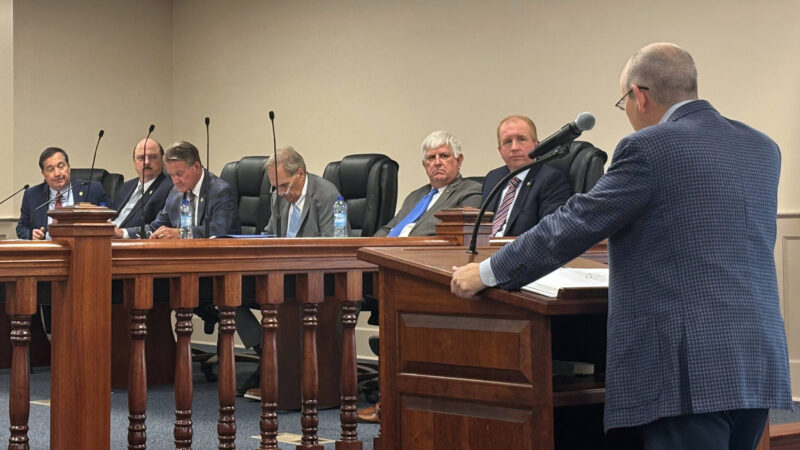
Alabama poised to drastically overhaul utility regulation. Will it lower electric bills?
The Alabama Senate unanimously voted to expand the public service commission, and create a Secretary of Energy to address rising electricity prices. A bill in the House would go even further, requiring rate case hearings and limiting utility profits.

Musher from Alabama is going for back-to-back Iditarod wins
Riches and paid appearances haven’t followed Jessie Holmes since he won the world’s most famous sled dog race, the Iditarod, last year. He doesn't mind.
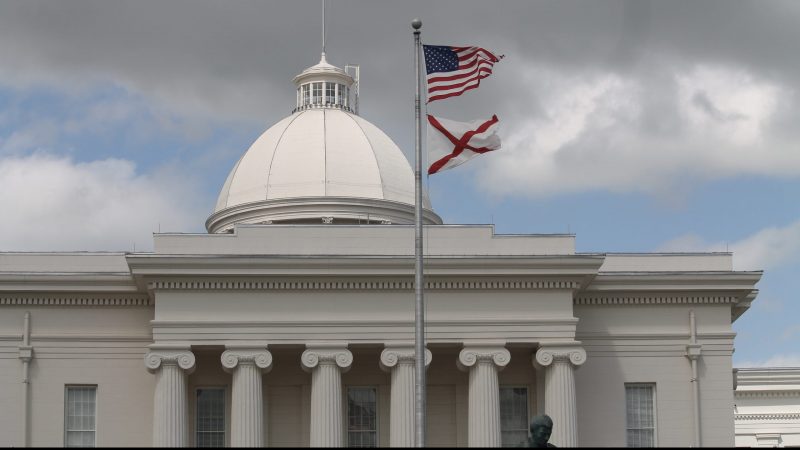
Bill would move Alabama to closed primaries
Right now, any Alabama voter can participate in a primary election. Lawmakers in Montgomery took up a bill this week that would change that system.
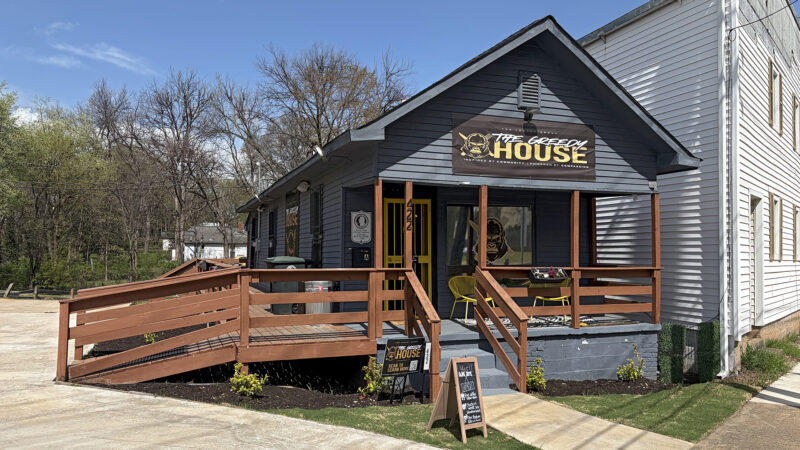
Auburn football player uses NIL funds to open a community hub in Birmingham
Jourdin Crawford, a freshman defensive lineman at Auburn, used earnings from a Name, Image, and Likeness deal to give back to his hometown.
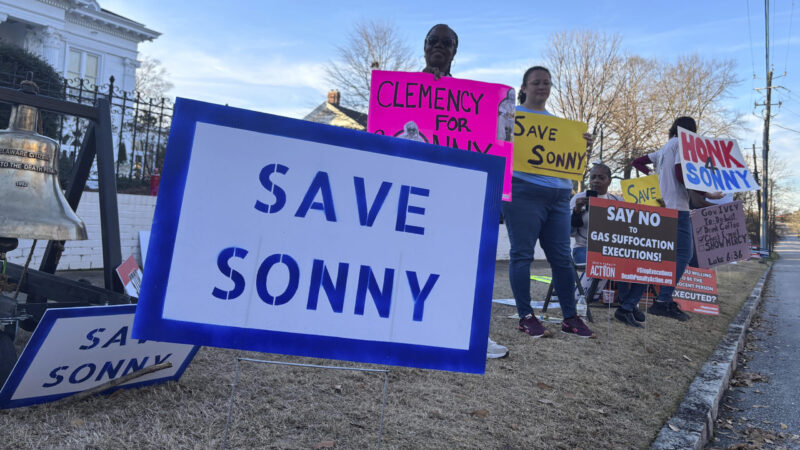
Ivey commutes death sentence of inmate whose accomplice fired fatal shot
Charles “Sonny” Burton was sentenced to death for the killing of Doug Battle during a 1991 robbery. However, another man shot Battle when Burton had left the building.