
Black and other minority farmers are getting $2 billion from USDA after years of discrimination
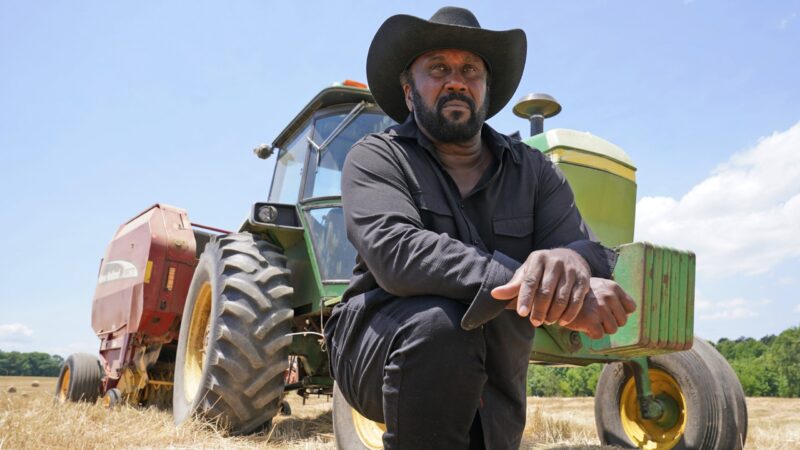
Farmer John Boyd Jr., poses for a portrait during a break from bailing hay at his farm in Boydton, Va., Thursday, May 27, 2021.
By Summer Ballentine
COLUMBIA, Mo. (AP) — The Biden administration has doled out more than $2 billion in direct payments for Black and other minority farmers discriminated against by the U.S. Department of Agriculture, the president announced Wednesday.
More than 23,000 farmers were approved for payments ranging from $10,000 to $500,000, according to the USDA. Another 20,000 who planned to start a farm but did not receive a USDA loan received between $3,500 and $6,000.
Most payments went to farmers in Mississippi and Alabama.
USDA Secretary Tom Vilsack told reporters that the aid “is not compensation for anyone’s loss or the pain endured, but it is an acknowledgment by the department.”
The USDA has a long history of refusing to process loans from Black farmers, approving smaller loans compared to white farmers, and in some cases foreclosing quicker than usual when Black farmers who obtained loans ran into problems.
National Black Farmers Association Founder and President John Boyd Jr. said the aid is helpful. But, he said, it’s not enough.
“It’s like putting a bandage on somebody that needs open-heart surgery,” Boyd said. “We want our land, and I want to be very, very clear about that.”
Boyd is still fighting a federal lawsuit for 120% debt relief for Black farmers that was approved by Congress in 2021. Five billion dollars for the program was included in the $1.9 trillion COVID-19 stimulus package.
But the money never came. White farmers in several states filed lawsuits arguing their exclusion was a violation of their constitutional rights, which prompted judges to halt the program shortly after its passage.
Faced with the likelihood of a lengthy court battle that would delay payments to farmers, Congress amended the law and offered financial help to a broader group of farmers. A new law allocated $3.1 billion to help farmers struggling with USDA-backed loans and $2.2 billion to pay farmers who the agency discriminated against.
Wardell Carter, who is Black, said no one in his farming family got so much as access to a loan application since Carter’s father bought 85 acres (34.4 hectares) of Mississippi land in 1939. He said USDA loan officers would slam the door in his face. If Black farmers persisted, Carter said officers would have police come to their homes.
Without a loan, Carter’s family could not afford a tractor and instead used a horse and mule for years. And without proper equipment, the family could farm at most 40 acres (16.2 hectares) of their property — cutting profits.
When they finally received a bank loan to buy a tractor, Carter said the interest rate was 100%.
Boyd said he’s watched as his loan applications were torn up and thrown in the trash, been called racial epithets, and was told to leave in the middle of loan meetings so the officer could speak to white farmers.
“We face blatant, in-your-face, real discrimination,” Boyd said. “And I did personally. The county person who was making farm loans spat tobacco juice on me during a loan session.”
At age 65, Carter said he’s too old to farm his land. But he said if he receives money through the USDA program, he will use it to get his property in shape so his nephew can begin farming on it again. Carter said he and his family want to pitch in to buy his nephew a tractor, too.

Crew of fatal US military crash included Alabama father recently deployed
The six U.S. service members who died in the crash of a U.S. military refueling aircraft included an Alabama father who had just been promoted and deployed. The U.S. government released the identities of the deceased service members Saturday.
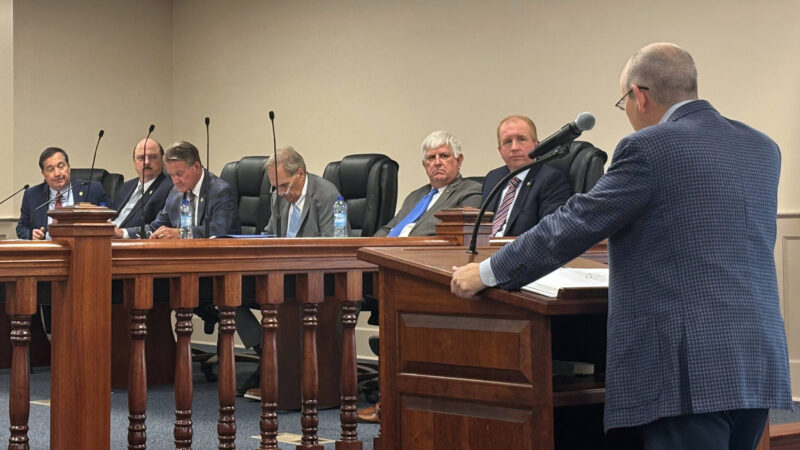
Alabama poised to drastically overhaul utility regulation. Will it lower electric bills?
The Alabama Senate unanimously voted to expand the public service commission, and create a Secretary of Energy to address rising electricity prices. A bill in the House would go even further, requiring rate case hearings and limiting utility profits.

Musher from Alabama is going for back-to-back Iditarod wins
Riches and paid appearances haven’t followed Jessie Holmes since he won the world’s most famous sled dog race, the Iditarod, last year. He doesn't mind.
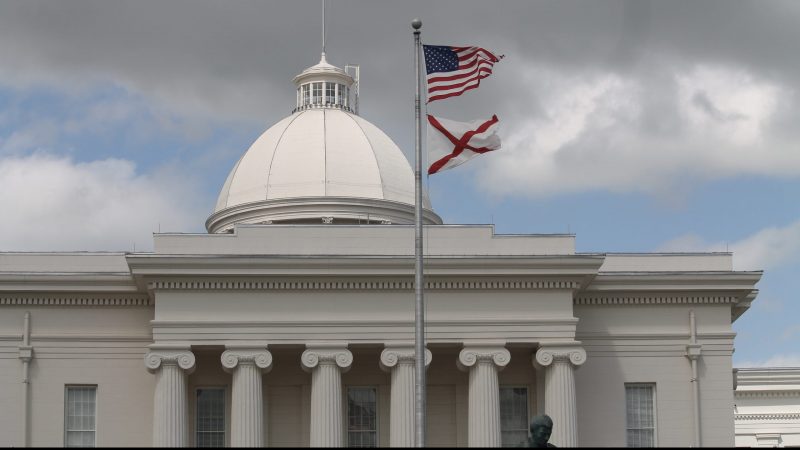
Bill would move Alabama to closed primaries
Right now, any Alabama voter can participate in a primary election. Lawmakers in Montgomery took up a bill this week that would change that system.
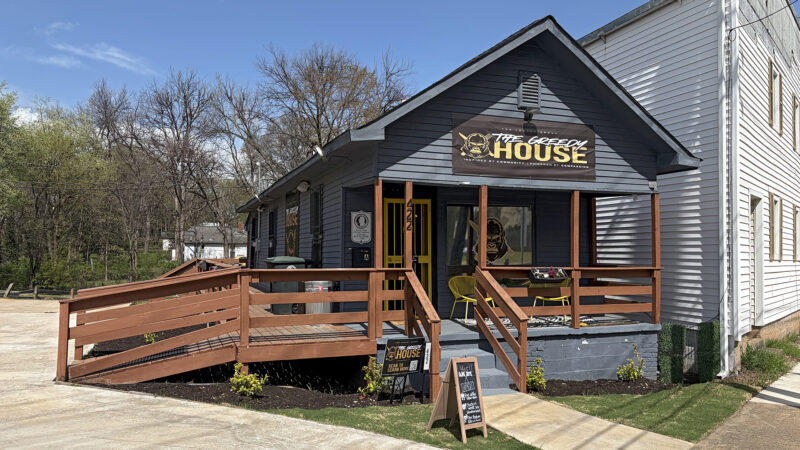
Auburn football player uses NIL funds to open a community hub in Birmingham
Jourdin Crawford, a freshman defensive lineman at Auburn, used earnings from a Name, Image, and Likeness deal to give back to his hometown.
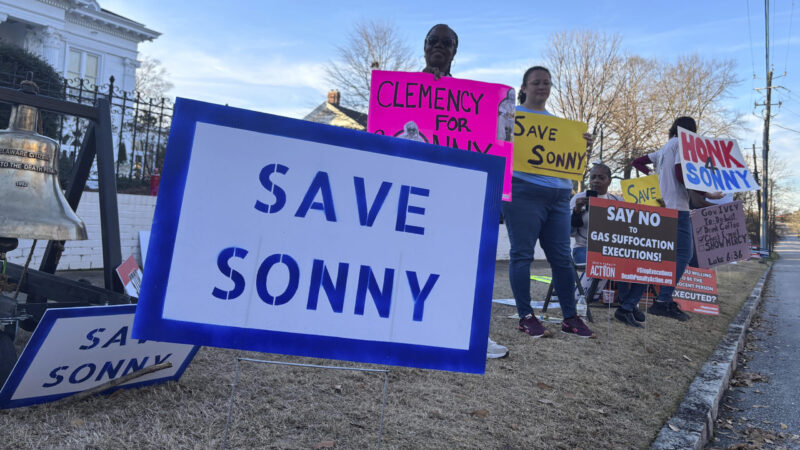
Ivey commutes death sentence of inmate whose accomplice fired fatal shot
Charles “Sonny” Burton was sentenced to death for the killing of Doug Battle during a 1991 robbery. However, another man shot Battle when Burton had left the building.