
Remembering Margaret Walker 50 years later, as her groundbreaking poetry festival returns to Jackson
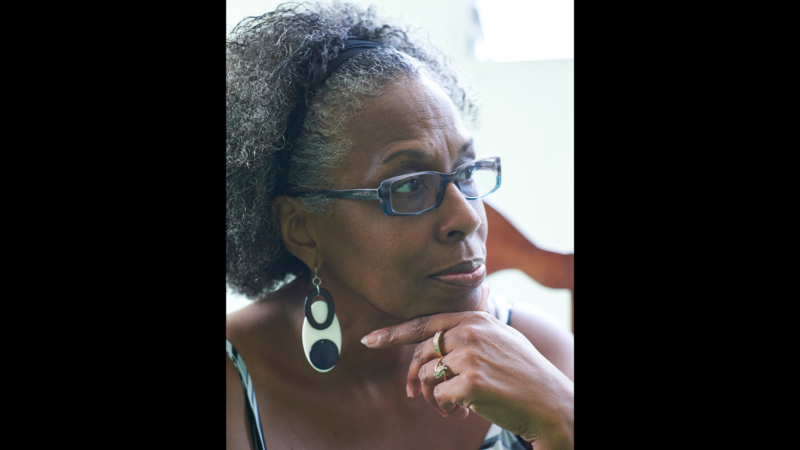
Maryemma Graham will be a guest speaker for “A Tribute to Margaret Walker” at the Phillis Wheatley Poetry Festival in Jackson, Mississippi. In 2022, Graham published the first complete biography of Walker.
In 1973, novelist and professor Margaret Walker Alexander created the Phillis Wheatley Festival. It brought Black poets, writers and creatives to Jackson, Mississippi, and helped preserve Black history through literature.
Fifty years later, the city is again hosting the festival. This year, seven writers who were there in 1973 — including Alice Walker and Sonia Sonchez — will be joined by newer voices like Mississippians Jesmyn Ward and Angie Thomas.
Maryemma Graham recently published the first complete biography of Walker’s life, “The House Where My Soul Lives.” Graham is the University Distinguished Professor of English at the University of Kansas and will be a guest speaker for the closing reception, “A Tribute to Margaret Walker.”
The Gulf States Newsroom’s Maya Miller caught up with Graham to talk about Margaret Walker’s life and legacy.
The following transcription has been edited and condensed for clarity.
For listeners who may not know who Margaret Walker is, could you tell us a little bit about her?
Margaret Walker is a 20th-century figure. Not only was she a poet, novelist, writer, intellectual, she was an academic. She was a teacher, and most of that career was at Jackson State University, where she went in right in the middle of the century — 1949 — and never went anyplace else.
She moved from the radio to the television to film to video, and she had access to all of those networks, but she did it from Jackson, Mississippi.
I think her view was that the state had had such a horrible history. We have tremendous potential in this place to change that image. She started bringing people to Mississippi, and one of the things she did that was so powerful was the Phillis Wheatley Festival in 1973.
She brought attention to the power of Black literature and to the power of Black women’s participation — in this case, inauguration of a tradition.
Margaret Walker faced immense success with “Jubilee.” That was her historical novel about a young enslaved woman in Georgia during the Civil War. But she also faced hardships as a Black academic and a creative. Can you talk a little bit about that?
Absolutely. Walker’s work was recognized. She was honored. Everybody knew that “Jubilee” was an important work, but she also recognized that that work had been plagiarized in Alex Haley’s “Roots.” By the time that truth was uncovered and Haley’s work was proven to be built on other people’s works as well, Haley was dead, but Walker’s career had already suffered.
‘She was jealous,’ people said, and nobody came to her rescue. So, she went from fame to infamy overnight, in a sense, and she never really recovered in terms of her literary career. She remained, of course, a powerful voice, but she suffered miserably as a result of that.
Tell us more about publishing the biography of Margaret Walker, because it was a process that took nearly 20 years.
For me, the question was there’s a lot of story here. First of all, Walker left over 150 journals. She journaled. She recorded her own life, so she left me a treasure trove, and I had to read every single page to know her as best I could. That was the obligation I had as a biographer.
Putting it all together, and then having life happen to me as well, took two decades, but I learned a lot.
And what I have also learned is that we have too far few women’s biographies, particularly Black women. I hope that it encourages people to tell more of those stories. We have very, very few still.
In what ways did you change as a scholar and a creative in the time you began this project to holding the published book in your hands?
Biography is a hard genre to master, is the first thing. You’re responsible for somebody else’s life. It’s easy to get confused with thinking about that being your own life. You are a caretaker. You’re holding onto threads of information that nobody knows but you. Critical decisions that you have to make. Do I leave it in? Do I leave it out? What image do I want to leave of this person?
She didn’t worry about what would happen to her. She accepted it. It was painful. She did not get the support she needed, and that is on us.
I had to tell that story in order for us to think and to realize that, if you are saying that you believe in this, you believe in Black womanhood, you believe in it, then you need to show it. We need to show it. Too many people didn’t show it.
This story was produced by the Gulf States Newsroom, a collaboration between Mississippi Public Broadcasting, WBHM in Alabama, WWNO and WRKF in Louisiana and NPR.

Crew of fatal US military crash included Alabama father recently deployed
The six U.S. service members who died in the crash of a U.S. military refueling aircraft included an Alabama father who had just been promoted and deployed. The U.S. government released the identities of the deceased service members Saturday.
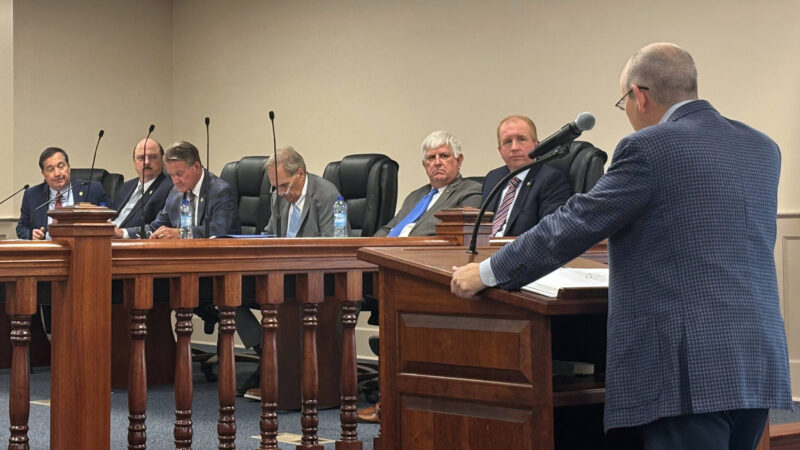
Alabama poised to drastically overhaul utility regulation. Will it lower electric bills?
The Alabama Senate unanimously voted to expand the public service commission, and create a Secretary of Energy to address rising electricity prices. A bill in the House would go even further, requiring rate case hearings and limiting utility profits.
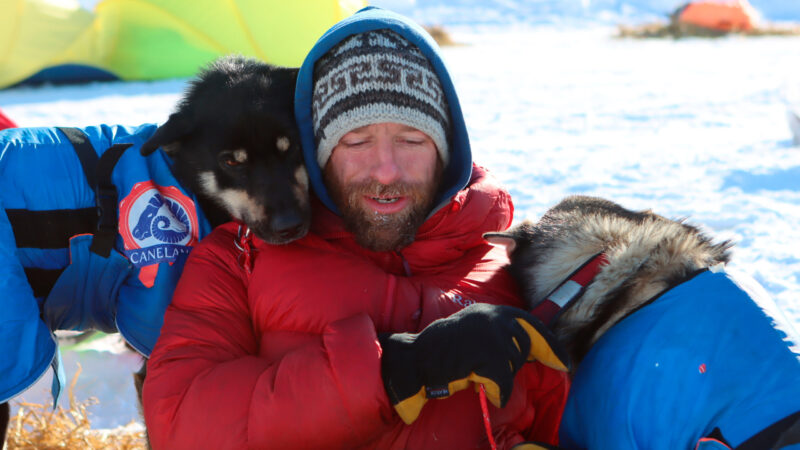
Musher from Alabama is going for back-to-back Iditarod wins
Riches and paid appearances haven’t followed Jessie Holmes since he won the world’s most famous sled dog race, the Iditarod, last year. He doesn't mind.
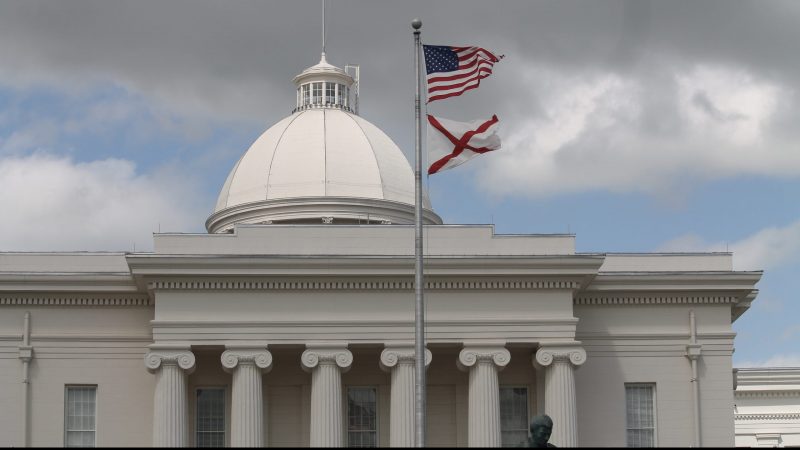
Bill would move Alabama to closed primaries
Right now, any Alabama voter can participate in a primary election. Lawmakers in Montgomery took up a bill this week that would change that system.

Auburn football player uses NIL funds to open a community hub in Birmingham
Jourdin Crawford, a freshman defensive lineman at Auburn, used earnings from a Name, Image, and Likeness deal to give back to his hometown.
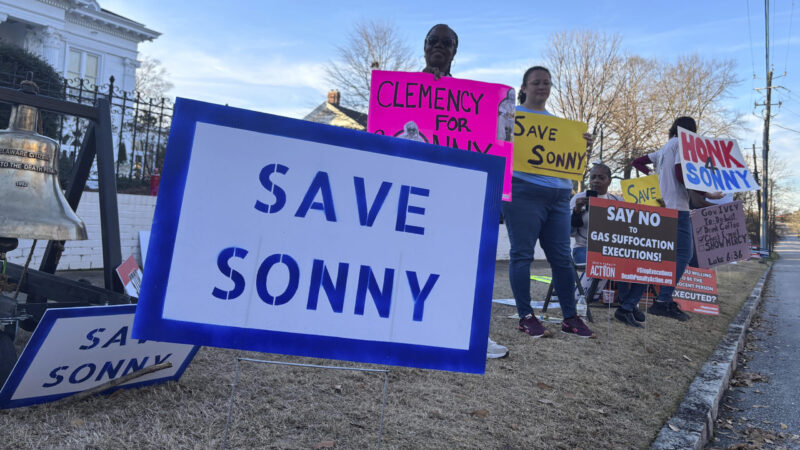
Ivey commutes death sentence of inmate whose accomplice fired fatal shot
Charles “Sonny” Burton was sentenced to death for the killing of Doug Battle during a 1991 robbery. However, another man shot Battle when Burton had left the building.