
New mapping tool gives county-by-county breakdown of air pollution
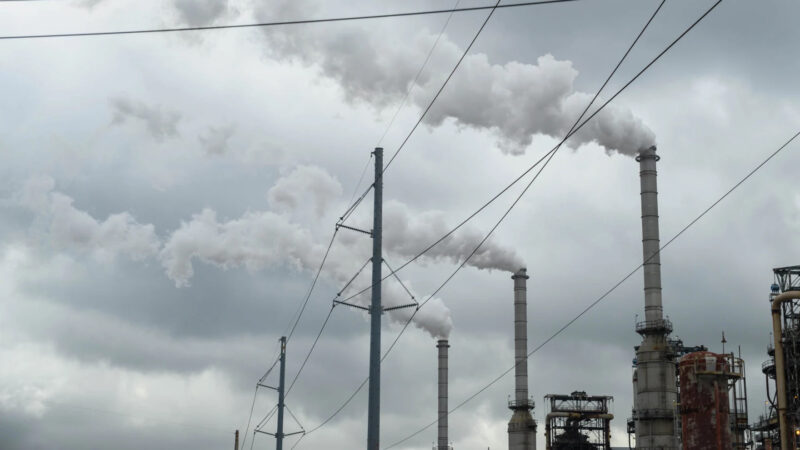
Plumes of smoke rise from three towers at Westlake Chemical's plant in Lake Charles, Louisiana.
By Halle Parker/WWNO
It’s not easy to picture what’s in the air we breathe in Louisiana and Mississippi. But earlier this month, a researcher debuted a new tool that could help. It maps pollution in the region, and some environmental groups are already using it.
Since Louisiana became the first state in the Deep South to develop a plan for tackling climate change, Louisiana Universities Marine Consortium professor Alex Kolker said he’s gotten more questions from people about the quality of the air and where pollution comes from.
“There has been longstanding concern about air pollution and its impact on communities, and I think we’ve seen a renewed interest in that in the last couple of years,” he said.
As one of the scientists advising the state’s first Climate Task Force, Kolker said he wanted to help bridge some of the existing information gaps and make the data more accessible. So, he started mapping air emissions across Louisiana and Mississippi.
He used a giant database managed by the science arm of the European Union. The Emissions Database for Global Atmospheric Research, or EDGAR, estimates the amount of emissions produced across the planet to within 6.5 square miles .
“When I saw this dataset, I realized that it could be useful for us here in Louisiana. I had never seen anything at this level of detail before,” Kolker said.
His team did those calculations at the parish, or county-level for three types of greenhouse gases and 10 air pollutants annually.
“You could almost imagine that we put a cookie cutter, the size of each parish on that global data set,” he said.
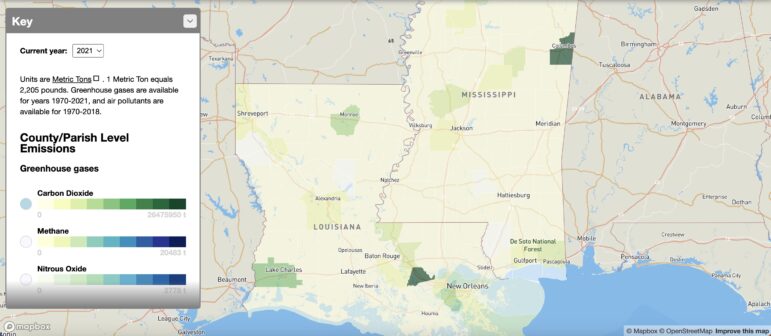
Look at the emissions of methane, one of the most potent greenhouse gases, and the interactive map clearly illustrates the hotspots for emissions across the two states: southwest Louisiana and central Mississippi. Another click and the map shows how methane emissions have changed in that area over time, dating back to 1970.
A user can also toggle between layers that give a snapshot of an area’s demographics or where major greenhouse gas emitting facilities are located.
The emissions data isn’t exact because it’s based on estimates and calculations rather than real-time air monitoring. For greenhouse gas emissions, it’s accurate within 7% to 16% of what’s calculated. It isn’t clear what the margin of error is for other air pollutants.
Despite the limitations, environmental groups have begun planning ways to use the tool.
In Baton Rouge, the Ocean Conservancy’s Nayyir Ransome works with communities on issues surrounding Louisiana’s ports.
Ransome said they’ve gone through training with the new tool and was impressed with the user-friendly design.
“You don’t want to go in certain communities with this high-level scientific jargon. You really want to meet people where they are, so that they can make well-informed decisions,” Ransome said. “It definitely gives a clear visual, and it’s also something that communities can use and play around with and like really kind of get a sense of the impacts in their own like backyards.”
Kendall Dix is the national policy director for Taproot Earth, another environmental advocacy group that works on the Gulf Coast, and he agreed with the power of the map as a teaching tool not only for community members but decision-makers who don’t understand what it’s like to live with chronic air pollution.
“Poor communities, black communities, indigenous communities often aren’t believed when they’re describing their reality. You’ve seen some of that in the way that institutions have denied that ‘Cancer Alley’ even exists,” Dix said.
The term “Cancer Alley” refers to a heavily industrialized, 85-mile stretch of the Mississippi River running from Baton Rouge to New Orleans that holds more than 100 petrochemical plants. A ProPublica analysis found that the region is one of the country’s largest hotspots for toxic air. Kolker has research that hasn’t been published yet – it’s still undergoing journal review – that found that the region also produces a disproportionate amount of Louisiana’s greenhouse gas emissions.
Advocates say data presented by scientists can help support communities in the area as they advocate for themselves in the face of political headwinds.
“Once they’re believed, that’s oftentimes when resources can start flowing in,” Dix said.

Crew of fatal US military crash included Alabama father recently deployed
The six U.S. service members who died in the crash of a U.S. military refueling aircraft included an Alabama father who had just been promoted and deployed. The U.S. government released the identities of the deceased service members Saturday.
Alabama poised to drastically overhaul utility regulation. Will it lower electric bills?
The Alabama Senate unanimously voted to expand the public service commission, and create a Secretary of Energy to address rising electricity prices. A bill in the House would go even further, requiring rate case hearings and limiting utility profits.
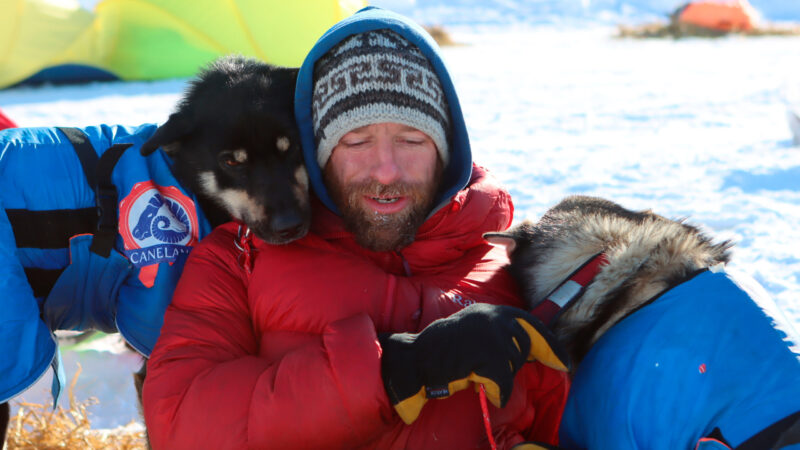
Musher from Alabama is going for back-to-back Iditarod wins
Riches and paid appearances haven’t followed Jessie Holmes since he won the world’s most famous sled dog race, the Iditarod, last year. He doesn't mind.

Bill would move Alabama to closed primaries
Right now, any Alabama voter can participate in a primary election. Lawmakers in Montgomery took up a bill this week that would change that system.
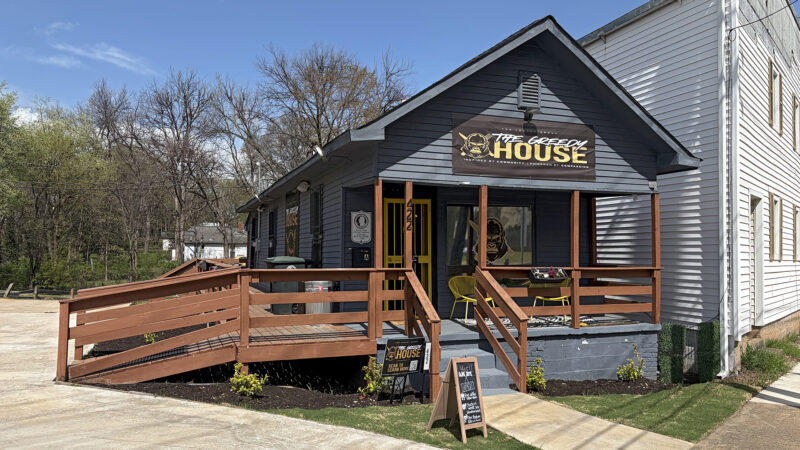
Auburn football player uses NIL funds to open a community hub in Birmingham
Jourdin Crawford, a freshman defensive lineman at Auburn, used earnings from a Name, Image, and Likeness deal to give back to his hometown.
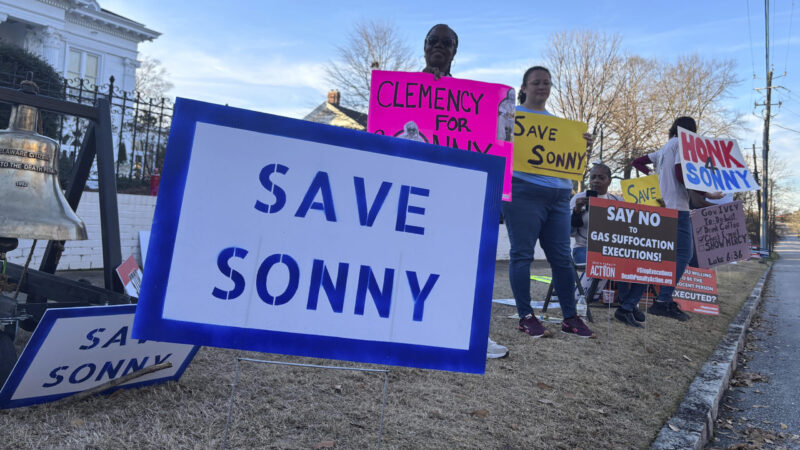
Ivey commutes death sentence of inmate whose accomplice fired fatal shot
Charles “Sonny” Burton was sentenced to death for the killing of Doug Battle during a 1991 robbery. However, another man shot Battle when Burton had left the building.