
Meet the Alabama scientists connecting soaring global temperatures to carbon dioxide
This story is part of a series “Alabama’s Hot Topic: What Climate Change Could Bring.” Read additional stories in the series.
Climate scientists Rebecca Totten and Jim McClintock are time travelers, or at least something akin to it.
McClintock, a professor of polar and marine biology at the University of Alabama at Birmingham, studies ice cores extracted deep from Antarctica. Taken from as far down as a mile below the surface, those tubes of ice can show past levels of atmospheric carbon dioxide as far back as 800,000 years.
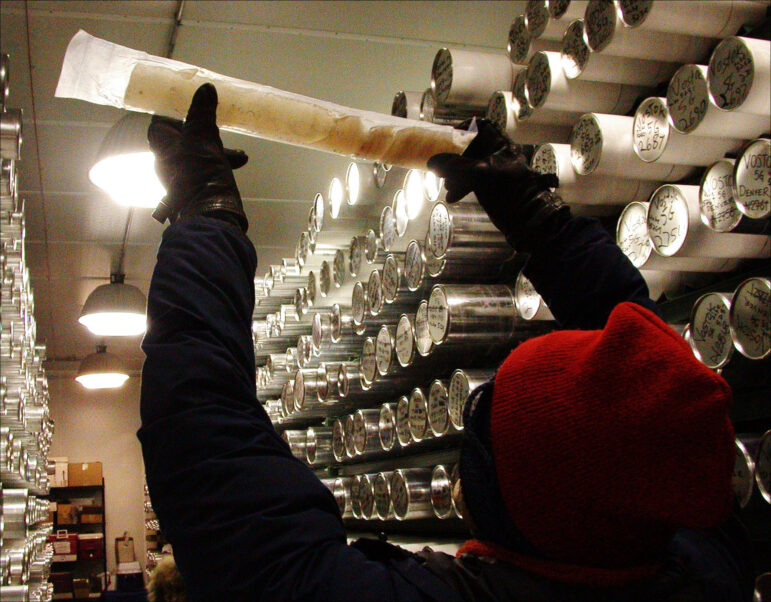
Totten, a geologist at the University of Alabama, dials the time machine way back to 5.5 million years. She analyzes sediment below the ocean floor for the remains of tiny bugs called foraminifera.
Totten said information gathered from the shells of those creatures, “tells you directly what the temperature was during the past and how much ice volume we had.”
“It directly correlates with the ice core records,” Totten said.

“The amount of CO2 never goes higher than 300 parts per million over that entire period, until we reach the beginning of the Industrial Revolution,” McClintock said about the ice cores.
According to the National Oceanic and Atmospheric Administration (NOAA), the atmosphere is up to about 420 parts per million, an increase of almost 50% since fossil fuels were burnt in large quantities.
“You could just look at how dramatically our CO2 in the atmosphere has increased outside of the normal range for the last million years and say, ‘Okay, something’s different here,’” Totten said. “The last time that we had CO2 increase this high and temperature increase this fast would have been what we call the Paleocene Eocene thermal maximum.”
That was 56 million years ago.
Nearing the breaking point
Assertions concerning the rapid rise in temperatures and how global warming is directly related to increases in carbon dioxide are backed up by the latest report from the Intergovernmental Panel on Climate Change, released in March of this year. Published by the World Meteorological Organization and United Nations Environment Programme, the IPCC study stated the planet has warmed 2 degrees Fahrenheit as compared to the pre-industrial era.
That’s dangerously close to the 2.7 degrees climate scientists say is the point at which climate disasters will become so extreme that people will not be able to adapt. Basic components of the Earth system will be fundamentally altered.
Yet, the planet is still warming fast, in large part because humans continue to burn fossil fuels that in turn produce heat-trapping greenhouse gasses. According to NOAA, 2022 was the 11th consecutive year carbon dioxide rose by more than 2 ppm, the highest sustained rate increase in the 65 years since monitoring began.
“This is very, very compelling evidence that we have a lot to do with the warming that’s going on right now on Earth,” McClintock said.
Looking back to prepare for the future
“I grew up in New Orleans and so I felt the impacts of storms and climate change very directly,” Totten said.
She said the geological record can help one better understand the changes the earth is experiencing today.
“My work is really aimed at giving context for the recent and current changes in our climate and in our ocean to better prepare for our future,” she said.
In addition to her work with foraminifera, Totten studies environmental changes along the Gulf Coast, including Alabama. By studying previous instances of sea level rise, she said we can better understand the impacts climate change will have in coastal areas. The outlook, she said, isn’t good.
“The sea level rise projections that were put forth a decade or two ago, now we’ve met them. And that’s really scary to me, because I always thought when I started this research, ‘Well, this is kind of a hypothetical.’”
It’s very real she said. A report released this spring by researchers out of Tulane University shows sea levels along the Gulf of Mexico and Southeast coasts have risen by about half an inch per year since 2010. That’s about three times more than the global average.
McClintock, too, said he is worried about what we’re seeing now.
“One thing that strikes me … I would never have predicted 20 years ago that [we] would see these impacts. Yeah, I thought it was something that maybe our children, probably our grandchildren, were going to have to start to deal with,” he said. “Maybe it’s good it’s happening now, and it’s a wake up call.”
Crew of fatal US military crash included Alabama father recently deployed
The six U.S. service members who died in the crash of a U.S. military refueling aircraft included an Alabama father who had just been promoted and deployed. The U.S. government released the identities of the deceased service members Saturday.
Alabama poised to drastically overhaul utility regulation. Will it lower electric bills?
The Alabama Senate unanimously voted to expand the public service commission, and create a Secretary of Energy to address rising electricity prices. A bill in the House would go even further, requiring rate case hearings and limiting utility profits.
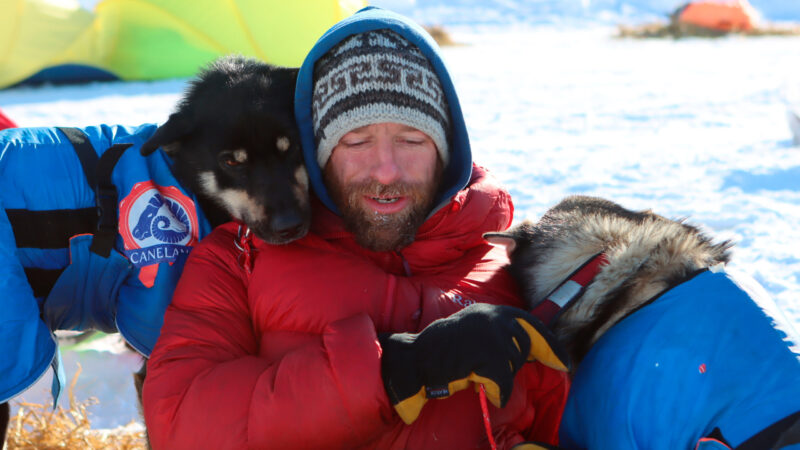
Musher from Alabama is going for back-to-back Iditarod wins
Riches and paid appearances haven’t followed Jessie Holmes since he won the world’s most famous sled dog race, the Iditarod, last year. He doesn't mind.
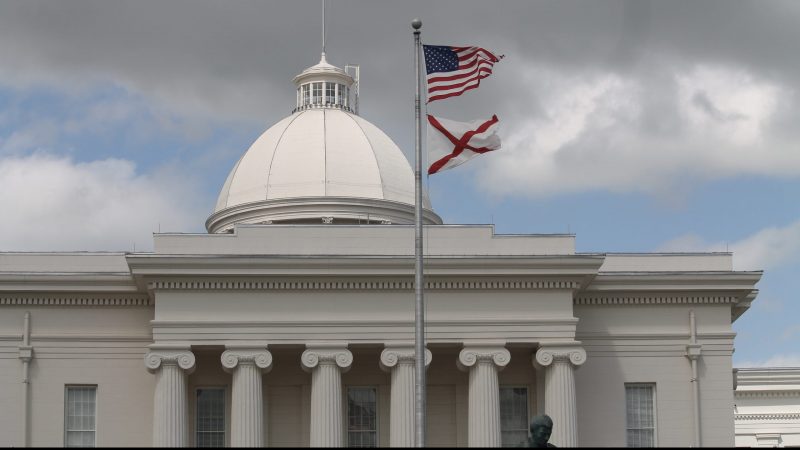
Bill would move Alabama to closed primaries
Right now, any Alabama voter can participate in a primary election. Lawmakers in Montgomery took up a bill this week that would change that system.
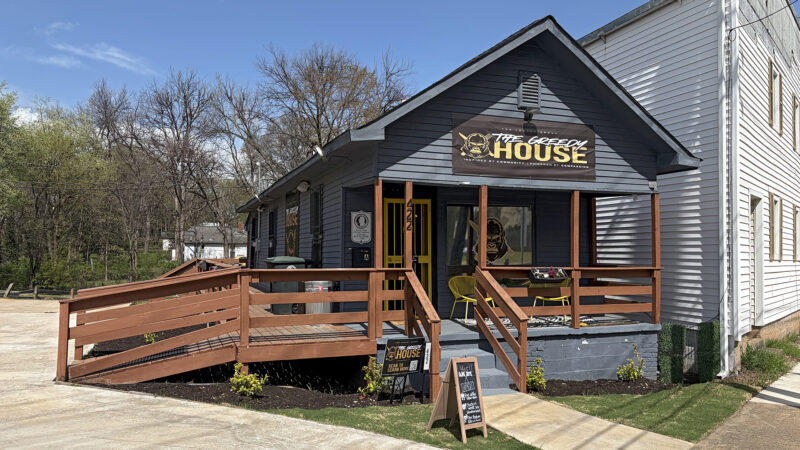
Auburn football player uses NIL funds to open a community hub in Birmingham
Jourdin Crawford, a freshman defensive lineman at Auburn, used earnings from a Name, Image, and Likeness deal to give back to his hometown.
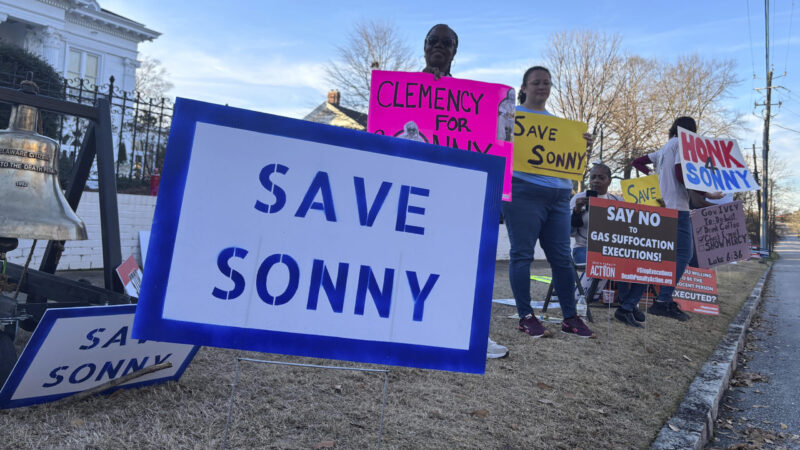
Ivey commutes death sentence of inmate whose accomplice fired fatal shot
Charles “Sonny” Burton was sentenced to death for the killing of Doug Battle during a 1991 robbery. However, another man shot Battle when Burton had left the building.