
Judges aiming to give Black voters more influence in Alabama set to redraw congressional districts
BIRMINGHAM, Ala. (AP) — A federal judge said Tuesday that the court will soon adopt new congressional districts for Alabama, choosing among proposals aimed at giving Black voters a greater opportunity to influence election outcomes in the Deep South state.
U.S. District Judge Stanley Marcus, noting a ruling will be issued “shortly,” said the three-judge panel is aware of the time constraints posed by elections next year when the state’s seven U.S. House seats will be on the ballot. The court could rule as early as this week.
The panel is stepping in to adopt new district boundaries after ruling that the Republican-controlled Alabama Legislature failed to remedy a Voting Rights Act violation when lawmakers adopted new lines this summer. The judges said the state-drawn plan — which had one majority Black district out of seven in a state that is 27% Black — illegally diluted the political power of Black residents. The judges last month wrote that they were “deeply troubled” that Alabama lawmakers flouted their instruction to create a second majority-Black district or something close to it.
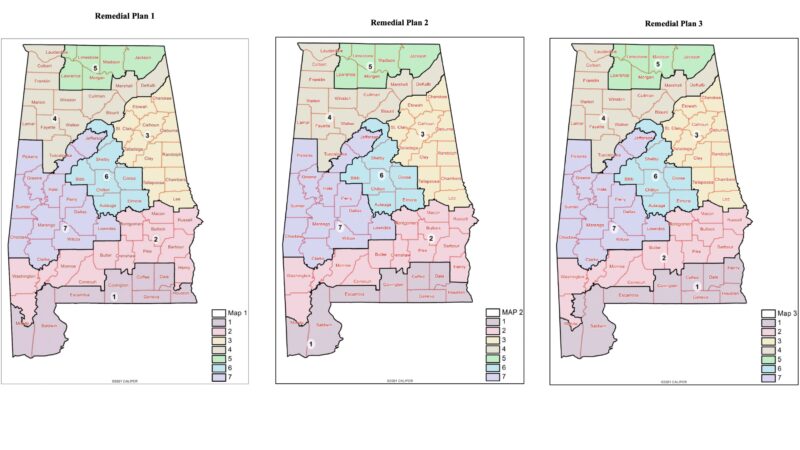
The judges received input Tuesday on three proposals presented by a court-appointed special master.
“I think this is a historic moment for Alabama, a historic moment for Black voters in the state,” said Deuel Ross, deputy director of litigation for the NAACP Legal Defense Fund, following Tuesday’s hearing.
He voiced hope that new district lines could open the way for Alabama to elect a second Black congressional representative.
“There have never been two Black congressional districts and two Black members of Congress elected from Alabama. So our hope is that this remedial plan will finally provide the representation that our clients are entitled to,” Ross said.
The three proposals presented Tuesday would shift the boundaries of Congressional District 2 so that Black voters comprise between 48.5% to 50.1% of the voting-age population. By contrast, the district drafted by GOP lawmakers had a Black voting-age population of 39.9%, meaning it would continue to elect mostly white Republicans, according to an analysis by plaintiffs who filed a lawsuit over that plan.
Ross and another attorney representing Black voters in the case told the judges that two of the three proposals would fix the Voting Rights Act violation found by the court.
“We believe under either plan Black voters will be able to realize the promise of the Voting Rights Act,” attorney Abha Khanna told the panel.
The attorneys said their clients preferred one of the plans, which was also the only one to create a second majority-Black district, but both were acceptable. They objected to another they said did not provide an adequate opportunity for Black candidates. Ross said an analysis showed that four of five Black candidates, who ran statewide in the last election, would have lost in that district.
Khadidah Stone and Evan Milligan, both plaintiffs in the Alabama case, said a new map could provide an opportunity for a congressional delegation that better reflects the state’s diversity.
“We’ve gone so long without representation in Congress. Now, there is an opportunity for our needs, and our opportunities and our perspectives to be shared,” Stone said after Tuesday’s court hearing.
The Alabama attorney general’s office told the judges that the state objects to all three plans, but had the strongest objection to the plan preferred by plaintiffs.
Alabama said it plans to appeal the ruling and will argue to restore the state-drawn lines. The attorney general’s office argued the panel is elevating racial targets over traditional redistricting principles.
“We are confident that the Voting Rights Act does not require, and the Constitution does not allow, ‘separate but equal’ congressional districts,” Alabama Attorney General Steve Marshall said in a statement last week after the Supreme Court declined to stop the redrawing of boundaries.
The judges wrote last month that they were “deeply troubled” by the actions of state lawmakers.
An attorney told the three-judge panel that the state’s obstinance should not be rewarded. Khanna said Alabama’s reaction “was a model in how not to remedy” a violation of the Voting Rights Act.

Crew of fatal US military crash included Alabama father recently deployed
The six U.S. service members who died in the crash of a U.S. military refueling aircraft included an Alabama father who had just been promoted and deployed. The U.S. government released the identities of the deceased service members Saturday.
Alabama poised to drastically overhaul utility regulation. Will it lower electric bills?
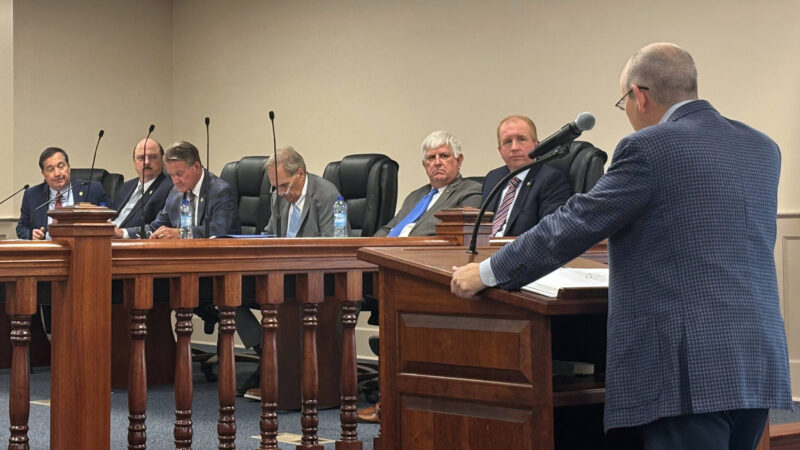
The Alabama Senate unanimously voted to expand the public service commission, and create a Secretary of Energy to address rising electricity prices. A bill in the House would go even further, requiring rate case hearings and limiting utility profits.

Musher from Alabama is going for back-to-back Iditarod wins
Riches and paid appearances haven’t followed Jessie Holmes since he won the world’s most famous sled dog race, the Iditarod, last year. He doesn't mind.
Bill would move Alabama to closed primaries
Right now, any Alabama voter can participate in a primary election. Lawmakers in Montgomery took up a bill this week that would change that system.
Auburn football player uses NIL funds to open a community hub in Birmingham
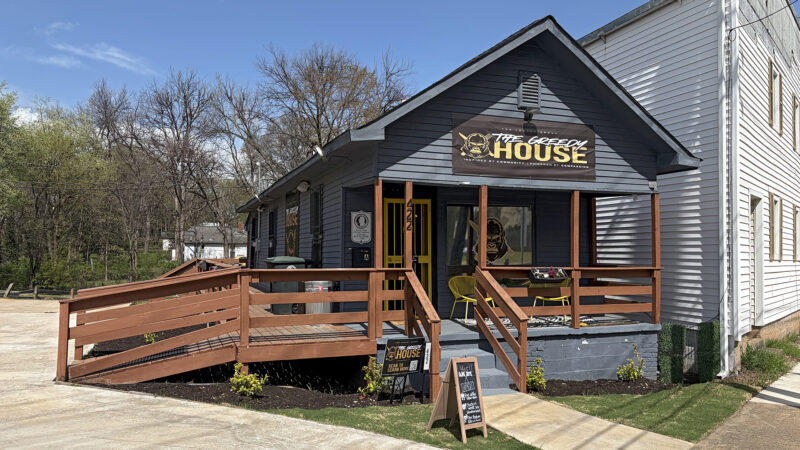
Jourdin Crawford, a freshman defensive lineman at Auburn, used earnings from a Name, Image, and Likeness deal to give back to his hometown.
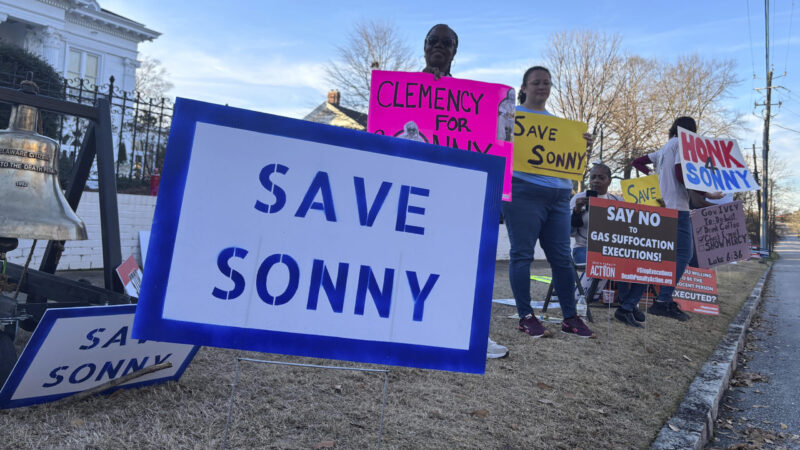
Ivey commutes death sentence of inmate whose accomplice fired fatal shot
Charles “Sonny” Burton was sentenced to death for the killing of Doug Battle during a 1991 robbery. However, another man shot Battle when Burton had left the building.