
In the quest for new cancer treatments, researchers look to outer space
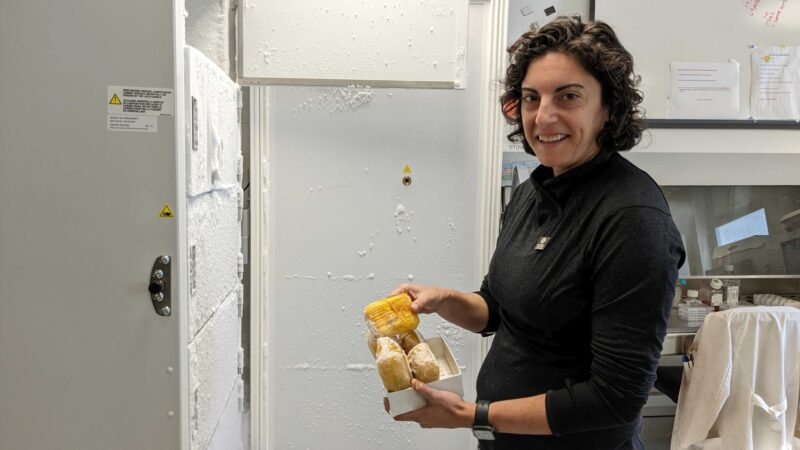
At her lab in Birmingham, Rebecca Boohaker displays frozen control samples of the bacteria sent to space.
Off the coast of Virginia, at a farmhouse roughly three miles from the Wallops Flight Facility, Rebecca Boohaker watches nervously as the Antares rocket launches into space.
The cargo ship is heading to the International Space Station (ISS) more than 200 miles above Earth’s surface. On board are carefully wrapped bacteria samples straight from Boohaker’s lab at Southern Research, where she is the director of oncology and scientific platforms.
“I, even here, hate to have any of my experiments touched by anybody other than me,” Boohaker said.
“Gold mine of discoveries”
Boohaker sent bacteria to space in November to study how the micro-organisms adapt to the unique environment.
“It’s nothing like you can replicate on Earth,” Boohaker said. “There’s just the sheer force of the launch, the temperature changes that you would incur and then the microgravity and then the space radiation. What does that do?”
She suspects the conditions will prompt bacteria to create new protein fragments called peptides, some of which she hopes could help fight cancer.
Already used in some cancer therapies, certain peptides are able to target cancer cells without appearing to affect normal cells and can trigger an immune response to help ward off infections.
Boohaker said the macromolecules contribute to promising treatments, so in an effort to discover more, she’s turning to the cosmos.
“There’s a lot of science going on in space, and it has the potential to be a gold mine for new discoveries,” she said.
Space logistics
To conduct her research, Boohaker is working with Rhodium Scientific, one of a handful of companies authorized by NASA to conduct research on the ISS.
Rhodium’s CEO Olivia Gamez-Holzhaus said space is the next scientific frontier.
“In the history of Earth, we’ve always had all of our science experiments and all of our new product developments under the parameter of gravity. And so when you remove gravity, the biology or the product will change,” Gamez-Holzhaus said.
She said there’s increasing interest from researchers to conduct science in space, but it’s a competitive field.
“It’s pretty space-limited in space,” Gamez-Holzhaus said.
Lab space on the ISS is divided among national and international governments, plus commercial companies like Rhodium. And the station is at capacity, according to Kirt Costello, ISS program chief scientist.
Costello said scientists on board the space station are investigating a wide range of questions, from how the human body reacts in a microgravity environment to how toilets work. But the science looks a bit different than in your typical Earth lab.
“In a one G lab, where you can expect to easily clean up a spill if you have one, in a closed environment microgravity lab, you don’t want that to happen because the spill is not going to really spill. It’s just going to go everywhere,” Costello said.
Crafting an elegant experiment
Planning from her lab in Birmingham, Boohaker kept her experiment as simple as possible.
“A lot of times people say that experiments are elegant and when you say elegant, you think complex. It’s not that.” Boohaker said. “What is the simplest way that you can get to your answer so that there’s as little manipulation and as little outside error as possible?”
After her bacteria samples arrived aboard the ISS, scientists removed them from a freezer for 20 days and then put them back. Then they traveled back to Earth in January.
Boohaker is now studying the bacteria and comparing them to control samples that stayed in Birmingham. She plans to learn from this first round, tweak the experiment, and send another round of samples back to the space station.
“It will drive innovation on Earth to be able to replicate what you see in space,” Boohaker said.
That’s the next challenge. If Boohaker finds a promising new peptide, she will try to figure out how to replicate it on Earth.
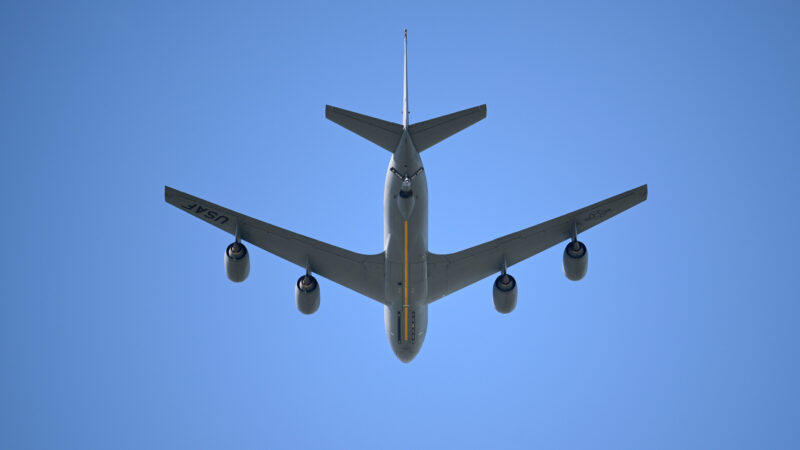
Crew of fatal US military crash included Alabama father recently deployed
The six U.S. service members who died in the crash of a U.S. military refueling aircraft included an Alabama father who had just been promoted and deployed. The U.S. government released the identities of the deceased service members Saturday.
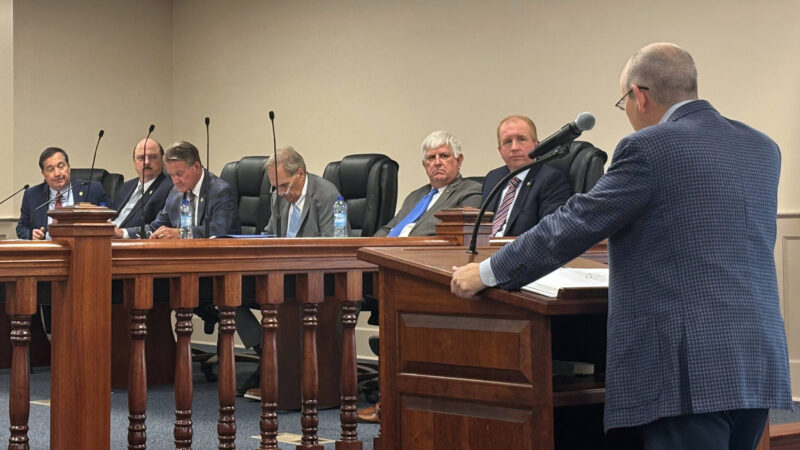
Alabama poised to drastically overhaul utility regulation. Will it lower electric bills?
The Alabama Senate unanimously voted to expand the public service commission, and create a Secretary of Energy to address rising electricity prices. A bill in the House would go even further, requiring rate case hearings and limiting utility profits.
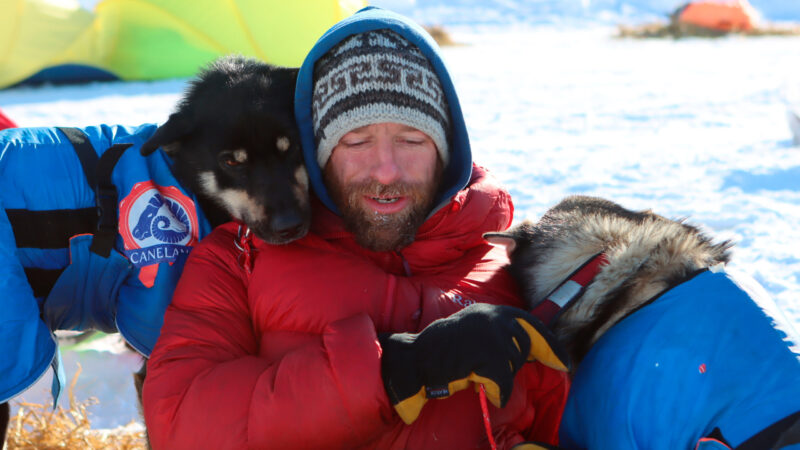
Musher from Alabama is going for back-to-back Iditarod wins
Riches and paid appearances haven’t followed Jessie Holmes since he won the world’s most famous sled dog race, the Iditarod, last year. He doesn't mind.
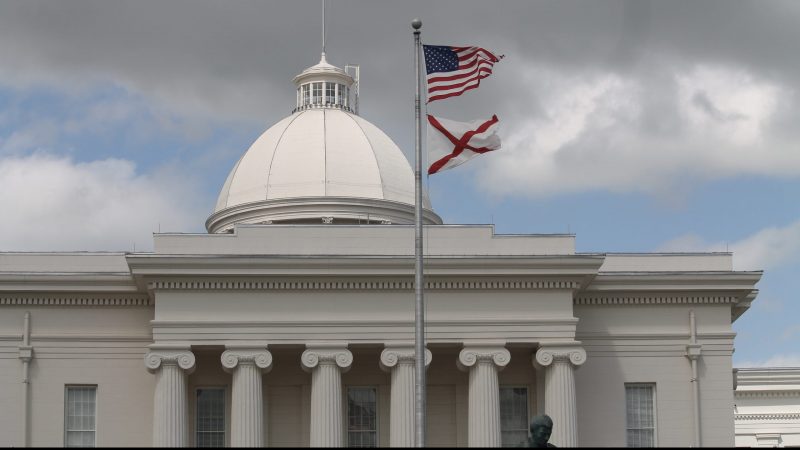
Bill would move Alabama to closed primaries
Right now, any Alabama voter can participate in a primary election. Lawmakers in Montgomery took up a bill this week that would change that system.
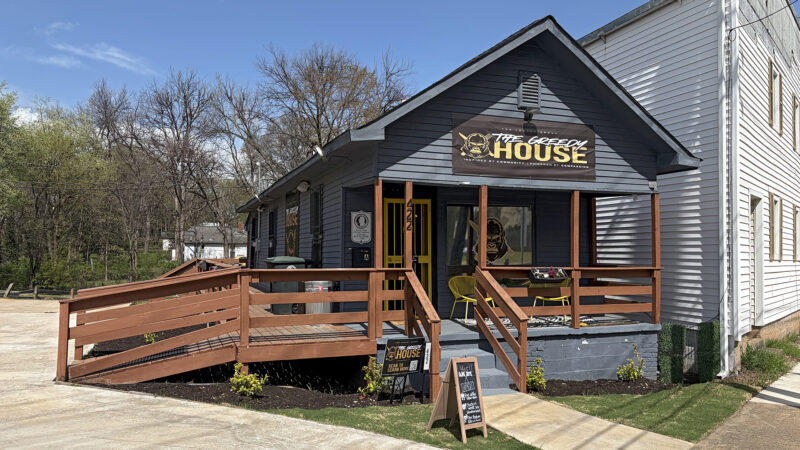
Auburn football player uses NIL funds to open a community hub in Birmingham
Jourdin Crawford, a freshman defensive lineman at Auburn, used earnings from a Name, Image, and Likeness deal to give back to his hometown.
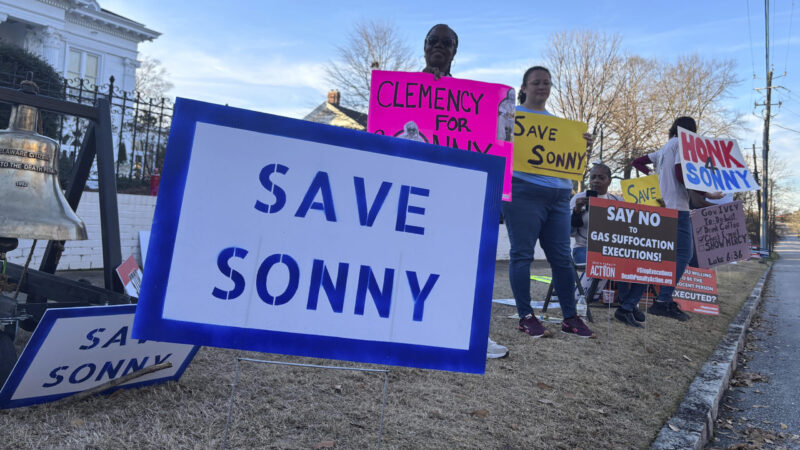
Ivey commutes death sentence of inmate whose accomplice fired fatal shot
Charles “Sonny” Burton was sentenced to death for the killing of Doug Battle during a 1991 robbery. However, another man shot Battle when Burton had left the building.