
In rural Mississippi, E.R. staff are being trained to care for moms and deliver babies
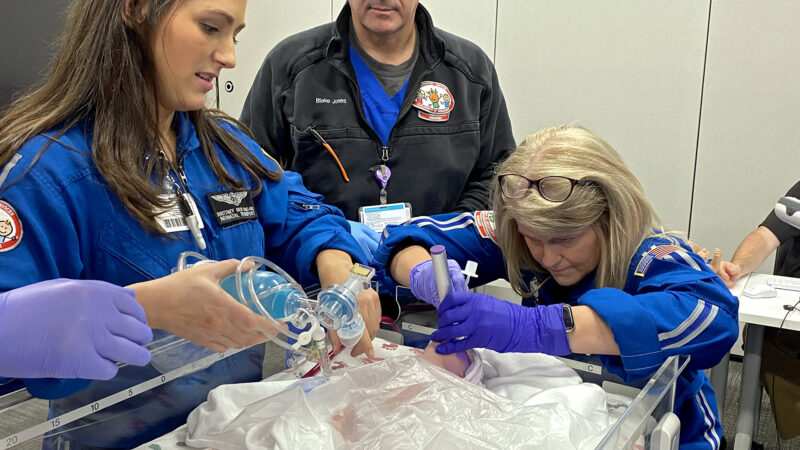
The STORK program launched at UMMC in May. During the 4-hour course, health care providers learn how to help mothers in an emergency and intubate a premature infant, as shown here, Feb. 16, 2023.
Two medical teams wait patiently in the hallway outside of a hospital room at the Mississippi Center for Emergency Services at the University of Mississippi Medical Center in mid-February. It’s quiet as they slip on blue gloves and consult with their team on tasks. One will help the mother. The other will receive the baby.
Dr. Tara Lewis presents today’s patient and students listen carefully as she lays out the scenario, making note of the patient’s age, symptoms and what’s missing from her chart. Then, as the patient — Victoria Tubby — screams through the door, they ready themselves. It’s time to deliver a baby.
But this is no ordinary hospital room, and Victoria is no ordinary patient. For starters, she’s not a real person. She’s a high-tech mannequin that simulates a woman in labor. She bleeds, screams and has a removable belly and placenta.
And the delivery of her baby — a slippery, 5-pound doll — is all part of a STORK training simulation underway at MCES.
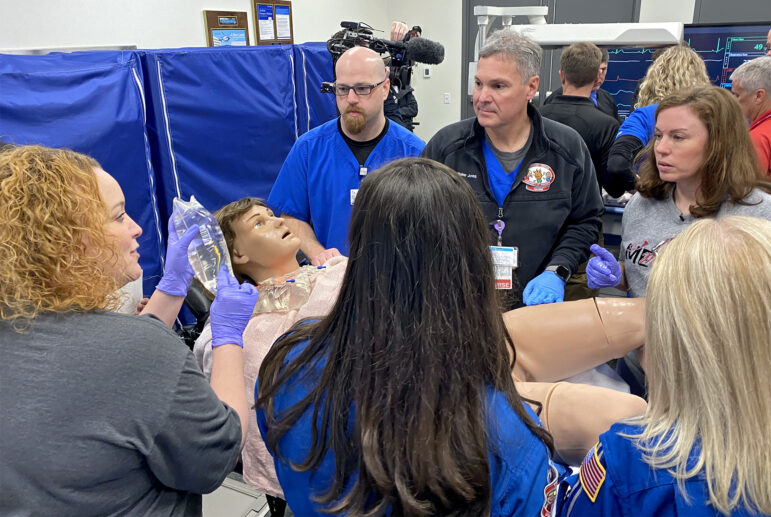
As hospitals in rural Mississippi continue to cut maternal and neonatal services, residents are strapped to find options in an emergency — like going into labor. The STORK program launched in May to prepare paramedics and health care providers for those rising gaps in care.
Lewis, an emergency medicine physician, said the response to STORK has been overwhelmingly positive. At its creation, the plan was to teach 10 classes in a year, but demand turned it into two per month. By the end of the program’s first year, more than 400 people will have attended a STORK session, whether at the MCES or at a hospital across the state.
The training had real-world effects almost immediately.
“We’ve had people reach out to us that we have trained that have delivered babies the next day in their E.R.,” Lewis said.
Giving birth in an emergency room doesn’t seem ideal for most mothers, but across the Gulf States, hospitals have had to downsize, opting to preserve critical care over maternity care and leaving pregnant people to rely heavily on emergency services. Over the past year, as many as four hospitals have suspended labor and delivery services — the most recent being Singing River hospital in Gulfport, Mississippi.
“We see people having to drive two to three hours to get obstetric health care in the Delta specifically,” Lewis said.
Most of the Mississippi Delta qualifies as a maternity care desert, according to the latest March of Dimes report — meaning there are barely any obstetric providers for mothers in the region. Mississippi’s poor health care system also affects babies. With only one children’s hospital in the entire state, even patients with the least critical care needs can expect to travel hundreds of miles.
Adam Bandy, who’s part of the pediatric transport team at MCES, said long ambulance trips are common and his job can take him into some deeply rural areas.
“Make sure you pack your lunch because we’re probably going to be gone for 5 to 6 hours on this trip,” Bandy said. “That’s a routine trip. That’s not if there’s any kind of complications or if we have to provide any kind of next level of care.”
Bandy points to hub cities, such as Jackson and Hattiesburg as having adequate facilities for patients, but in places like Greenwood or Gulfport, sometimes the nearest hospital with a pediatric unit isn’t in the state.
“We’ll go to Louisiana, Alabama [and] Tennessee on occasion, and we will transfer either from here to there, or we will bring them from there for resources since Jackson has the only children’s hospital in the state of Mississippi,” he said.
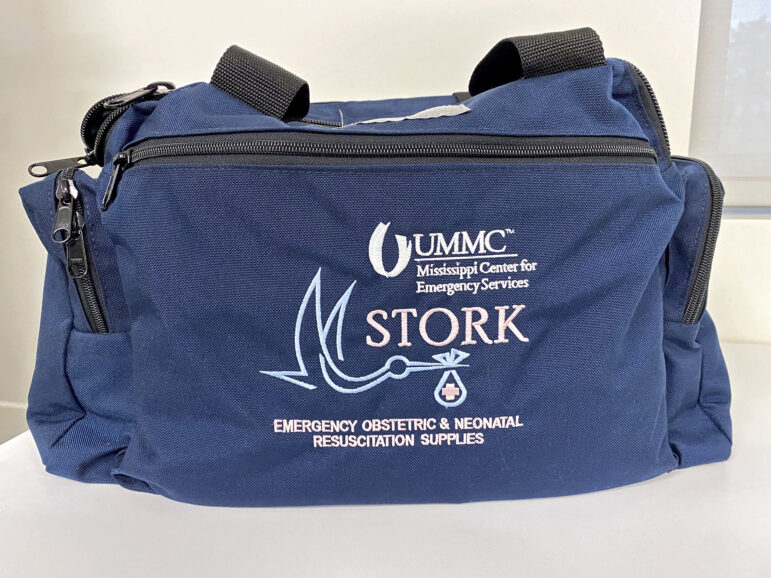
Those resources can be hard to come by, so STORK provides each participant with a duffle bag packed with supplies to deliver a baby or stabilize a laboring mom. If the paramedic uses anything in the bag, STORK will replace it.
Bandy was present at the February STORK training, but it isn’t his first time completing the course. He said it’s vital to keep those skills sharp. Lewis said STORK gives health care providers the opportunity to practice skills they may not use daily. The class is made up of paramedics, flight medics, and nurses, many of whom have never had to deliver a baby.
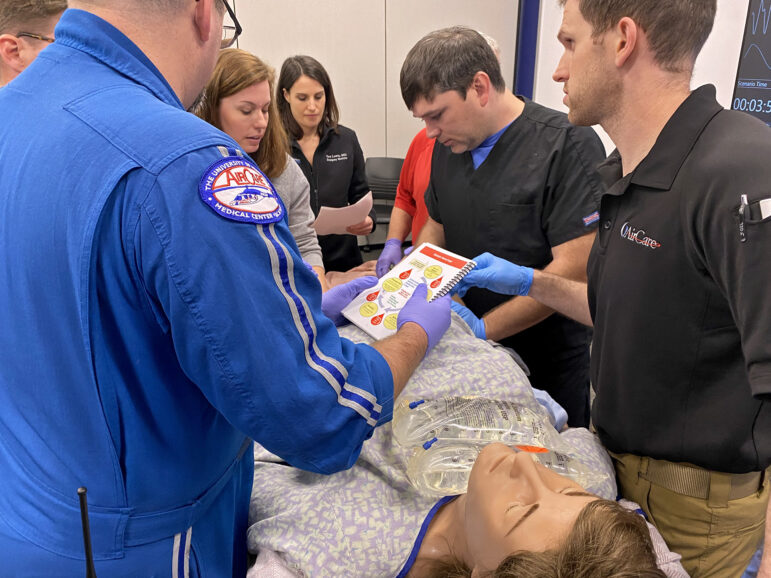
Before the simulation, students attend a lecture to learn how to stabilize a patient, stop a hemorrhage and intubate an infant — emergency procedures that could mean life or death.
In the hospital room, they pay special attention to Victoria and check her and her baby’s vitals on a large screen. Victoria is responsive and offers feedback to her providers while they work. She can be affirming and grateful that they’ve gotten the baby out, or can be difficult, yelling out “don’t touch me!” She sometimes goes into shock, and it’s a scramble to then bring her back, but participants can practice as many times as they want.
“She can simulate things like seizures, postpartum hemorrhage, pre-eclampsia, abnormal presentation of the baby,” Lewis said. “She does it all.”
Students practice multiple best- and worst-case scenarios, offer fluids and medicine and support Victoria through labor. Everyone keeps a watchful eye to help her safely deliver her baby.
“You can actually get your hands on it and catch a baby and do it multiple times because that repetition kind of helps educate people, helps you get that just muscle memory of what to do,” Lewis said.
This story was produced by the Gulf States Newsroom, a collaboration between Mississippi Public Broadcasting, WBHM in Alabama, WWNO and WRKF in Louisiana and NPR. Support for reproductive health coverage comes from The Commonwealth Fund.

Crew of fatal US military crash included Alabama father recently deployed
The six U.S. service members who died in the crash of a U.S. military refueling aircraft included an Alabama father who had just been promoted and deployed. The U.S. government released the identities of the deceased service members Saturday.
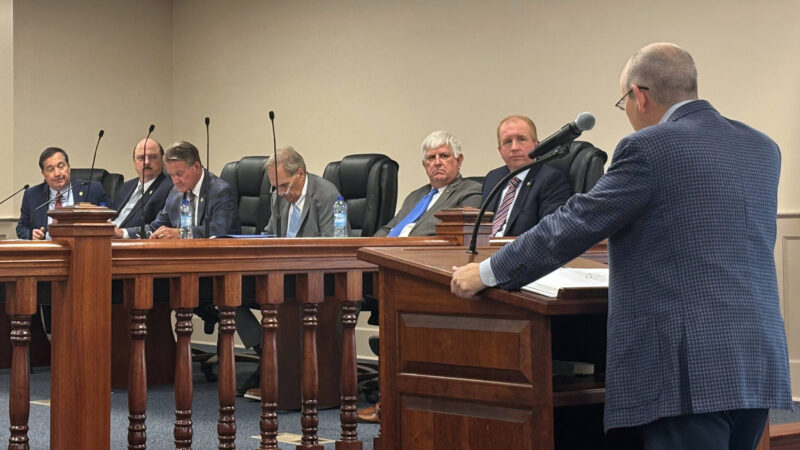
Alabama poised to drastically overhaul utility regulation. Will it lower electric bills?
The Alabama Senate unanimously voted to expand the public service commission, and create a Secretary of Energy to address rising electricity prices. A bill in the House would go even further, requiring rate case hearings and limiting utility profits.

Musher from Alabama is going for back-to-back Iditarod wins
Riches and paid appearances haven’t followed Jessie Holmes since he won the world’s most famous sled dog race, the Iditarod, last year. He doesn't mind.
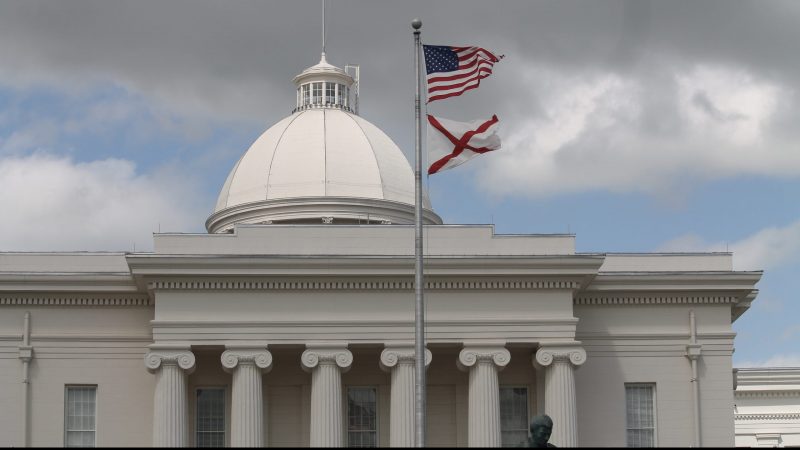
Bill would move Alabama to closed primaries
Right now, any Alabama voter can participate in a primary election. Lawmakers in Montgomery took up a bill this week that would change that system.
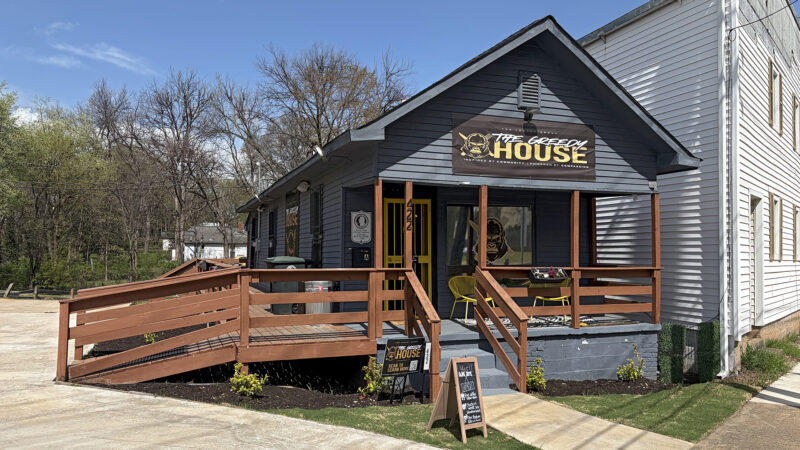
Auburn football player uses NIL funds to open a community hub in Birmingham
Jourdin Crawford, a freshman defensive lineman at Auburn, used earnings from a Name, Image, and Likeness deal to give back to his hometown.
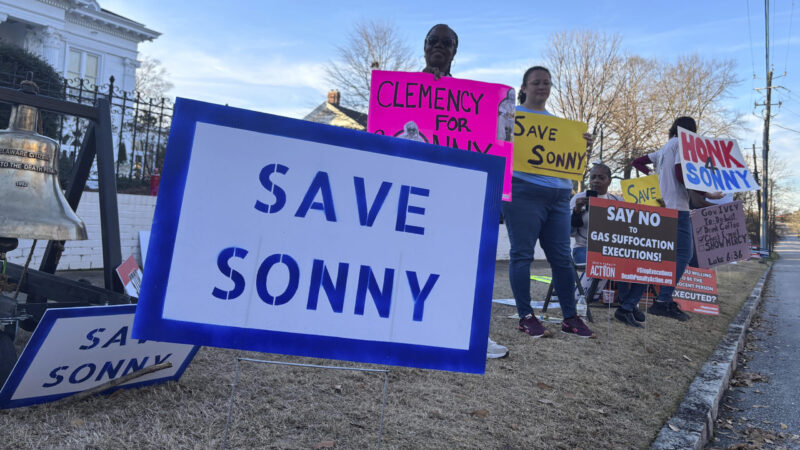
Ivey commutes death sentence of inmate whose accomplice fired fatal shot
Charles “Sonny” Burton was sentenced to death for the killing of Doug Battle during a 1991 robbery. However, another man shot Battle when Burton had left the building.