
How to avoid tax fraud: Staying vigilant this tax season
Tax season can be stressful enough, but imagine receiving a massive penalty for tax fraud – especially if you thought everything was in order. Unfortunately, it’s not uncommon.
“Tax preparation is a vulnerable situation for many Americans,” said special agent James Dorsey, who serves as head of the IRS Criminal Investigation Atlanta Field Office, which oversees Alabama, Georgia, Mississippi and Louisiana.

While most people are familiar with the civil side of the IRS, which focuses on taxpayer prep services and carries out audits, fewer know about the criminal investigation side of the IRS (IRS-CI). This law enforcement division investigates violations of US tax codes ranging from tax evasion to money laundering.
People may unknowingly violate a tax code if they’re not vigilant. So, how can you be vigilant and make sure this tax season goes smoothly?
According to Dorsey, there are three basic types of fraud to look out for.
1. Tax Preparation Fraud
Tax preparation fraud is unfortunate, but common Dorsey said.
“We have out there in the public, unscrupulous return preparers … individuals that knowingly and willfully assist clients and/or themselves to prepare false or fraudulent tax returns,” Dorsey said.
Tax preparation fraud happens when preparers make false claims on tax documents such as incorrect income figures, inflated personal or business expenses, false deductions, unallowable credits or excessive exemptions on returns prepared for their clients.
Last year, a tax preparer in Montgomery was sentenced to 37 months in prison. She filed multiple tax returns that resulted in a loss of over $20,000 to the IRS. In addition to her prison sentence, she was ordered to pay a fine and pay back the IRS which totaled $120,000.
2. Employer Tax Fraud
Dorsey said all employers are responsible for removing around 6.25% of an employee’s income as federal tax for things like Social Security and disability. Fraud occurs when employers withhold those funds, failing to submit them quarterly.
3. Scams
Throughout the pandemic, there’s been a rise in two types of scams: IRS impersonation scams and COVID-19 relief scams.
Dorsey explained that impersonation scams take place through email, social media and phone.
“Individuals will call and say, ‘Hey, you owe a back tax, and if we don’t get that paid in the next day or the next 24 hours, we’re going to come out and we’re going to arrest you. But you can pay it today by sending in a pre-loaded card,’” Dorsey said.
Along with COVID-19 relief fraud, the Paycheck Protection Program set up to assist employers in paying employees during the pandemic have been and continue to be used fraudulently.
What to watch out for to protect yourself:
When choosing a tax preparer, do your research.
Dorsey said there are some practices or signs to watch out for.
“If any preparer says, ‘Hey I can get you a bigger refund than the next guy,’ that should be a red flag,” Dorsey said.
Other red flags include a tax preparer saying that payment for services will vary on a sliding scale depending on the tax returns. Preparers should also never request blank forms with signatures already on them. That brings the potential for perjury.
Meanwhile, Dorsey said a tax preparer at a year-round establishment who is “willing to sit down with you and go line by line so that you fully understand what you’re signing” would be a better option.
Check in to prevent employer tax fraud.
If you’re concerned about if your employer has been allocating your income federal taxes, then connect with the civil side of the IRS. Through the taxpayer services that the IRS offers, a brief audit can occur to verify that income is being appropriately allocated. If there is fraud occurring, then the IRS-CI will get involved.
Scams are easier to get trapped in than you think.
Dorsey urged people, particularly those who are elderly, to be wary of phishing schemes, and note how the person purporting to be from the IRS contacts them.
“If you’re going to be contacted by the IRS, it will be a letter form via U.S. mail. We’re not going to send you an email. We’re not going to send you a social media post,” Dorsey said.
He added any initial letter will be non-forceful. Any emails, phone calls, or social media messages requesting personal information with the threat of a lawsuit or arrest are fraudulent.
The IRS never accepts payments in the form of pre-loaded cards. If you hear this suggested as a form of payment, you’re being scammed.
Watch out for people making claims that it’s possible to take part in COVID-19 relief programs. These programs are meant for businesses, not individuals.
Guard your personal information.
Personal information includes name, Social Security number, bank and credit card information and birth date. If you are contacted by someone claiming to be from the IRS, confirm with a local IRS office about the request before sharing any information.
Identity theft can happen at any time. If your personal information is being used by someone claiming to be you, reach out to the IRS. They will help secure your personal information and prevent financial mishaps.

Crew of fatal US military crash included Alabama father recently deployed
The six U.S. service members who died in the crash of a U.S. military refueling aircraft included an Alabama father who had just been promoted and deployed. The U.S. government released the identities of the deceased service members Saturday.
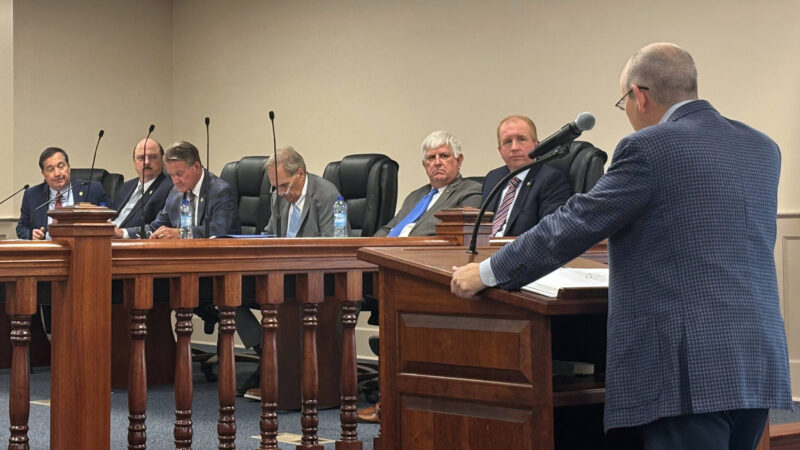
Alabama poised to drastically overhaul utility regulation. Will it lower electric bills?
The Alabama Senate unanimously voted to expand the public service commission, and create a Secretary of Energy to address rising electricity prices. A bill in the House would go even further, requiring rate case hearings and limiting utility profits.

Musher from Alabama is going for back-to-back Iditarod wins
Riches and paid appearances haven’t followed Jessie Holmes since he won the world’s most famous sled dog race, the Iditarod, last year. He doesn't mind.

Bill would move Alabama to closed primaries
Right now, any Alabama voter can participate in a primary election. Lawmakers in Montgomery took up a bill this week that would change that system.

Auburn football player uses NIL funds to open a community hub in Birmingham
Jourdin Crawford, a freshman defensive lineman at Auburn, used earnings from a Name, Image, and Likeness deal to give back to his hometown.

Ivey commutes death sentence of inmate whose accomplice fired fatal shot
Charles “Sonny” Burton was sentenced to death for the killing of Doug Battle during a 1991 robbery. However, another man shot Battle when Burton had left the building.