
Smart homes made affordable for Birmingham residents
One way people can reduce their impact on the climate — and save money on utilities — is to be more economical with energy at home. But making energy-efficient upgrades and installing new technology isn’t cheap.
Last May, Bertina Robinson was driving on First Street South in Birmingham and discovered the homes that are part of “Live on 1st,” a new affordable housing development. Now she lives in one.
“This is a smart system house. I can lock my doors from my phone, I unlock my doors from my phone. I can turn my heat on from my phone, I can turn my air on, from my phone,” Robinson said.
“Live on 1st” is a group of three smart, highly energy-efficient modular homes in the Titusville neighborhood. These homes are the first set of such homes built by Navigate Communities in the city. Navigate Communities is a non-profit that works with the Jefferson County Housing Authority. The organization is taking a modern approach to affordable housing in a city where nearly 25% of residents live in poverty.
Titusville sits on the outer edge of the downtown area. In the last year, there have been some new developments and reconstruction of older homes. As people continue to move into the core of Birmingham, some say that Titusville is next for redevelopment.
“We address gentrification by making sure we target the people that we target. And that’s not the folks that are making, you know, $80-, $90-, $100,000. Not that there’s anything wrong with that. But in this particular element of our work, it’s those folks that are just, you know, $40-$60,000 a year,” Navigate Communities CEO Lisa McCarroll said.
McCarroll said the smart homes are targeted at people who can’t typically afford a home or spend all their money on starting costs and pay expensive utility bills. According to Alabama Power, smart homes are 35% more efficient than standard Alabama homes being built today.
“Now, if I’ve spent all of my money to get into the home, now that I’m paying my utilities and living costs, I can scrape up on 90 bucks. Scraping up on 300 bucks, that’s a little bit harder to do,” McCarroll said.
Alabama Power is providing energy-efficient upgrades and smart home equipment to the “Live on 1st” homes. The utility company is also involved with several other market-rate smart communities across Alabama.
Smart home resident Bertina Robinson, who works full-time at Walmart, said her power bill has never been more than $80 a month. Plus she can tell her home is energy efficient when she walks through the door.
“When I cut my heat off, and when I come home it’s still warm inside my house. And also my light bill is very low. So that tells me also that the home is energy efficient,” Robinson said.

Jason Kirby leads the Sustainable Smart Cities Master’s program at University of Alabama at Birmingham. He said while there may be a learning curve for the public to adopt modular smart homes, that kind of building is the way of the future.
“Modular homes can be built in any size. It doesn’t limit you to square footage,” Kirby said.
Modular homes can sustain most weather conditions just like traditionally built homes. They use the same materials and must pass the same regulations. The biggest difference is that modular homes are built in a factory, which saves energy. They are then shipped in segments to the building site where they are assembled. A traditional home that’s built on-site requires a lot of waste removal and a longer build process. According to Navigate Communities, construction accounts for 61% of the home price, which is why modular homes are more affordable.
Kirby said historically the construction industry hasn’t been very focused on sustainability or environmental impact. But with techniques like modular building, that’s starting to change.
“Trying to build smarter, using better materials, using more energy efficiency. And overall, just trying to improve both the human aspects and environmental aspects of our job.”
An established smart community in Hoover features induction stovetops and heat pump water heaters and relies on a microgrid of solar and battery storage for some of its power.
While Alabama doesn’t have the highest solar potential because of its cloud cover, adding solar to a building project can further reduce its climate footprint, Kirby said.
“We do get a lot of cloud cover. We have a lot of fugitive dust. It’s not as efficient as it is in other parts of the world, but it does generate after construction, essentially free power for us with no emissions.”
With more of these smart homes, more people of various economic means can enjoy lower energy bills and reduce their emissions while living comfortably — demonstrating that energy-saving technologies like heat pumps, induction cooktops and solar power are no longer just for the rich.
Editor’s Note: Updated to clarify the relationship between Navigate Communities and Jefferson County

Crew of fatal US military crash included Alabama father recently deployed
The six U.S. service members who died in the crash of a U.S. military refueling aircraft included an Alabama father who had just been promoted and deployed. The U.S. government released the identities of the deceased service members Saturday.
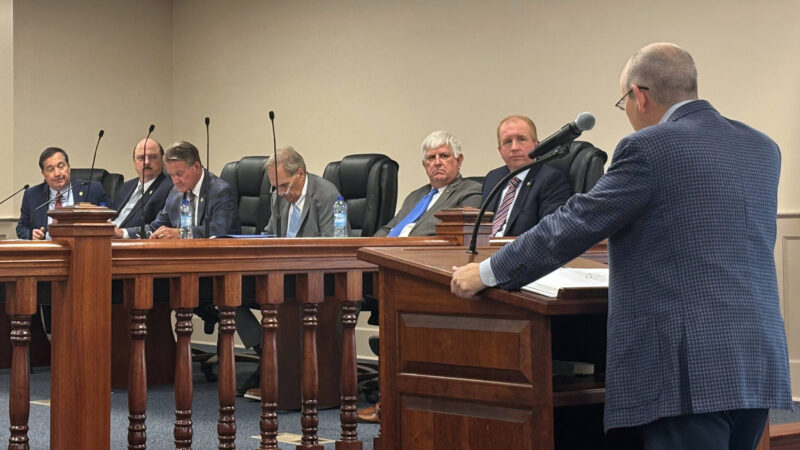
Alabama poised to drastically overhaul utility regulation. Will it lower electric bills?
The Alabama Senate unanimously voted to expand the public service commission, and create a Secretary of Energy to address rising electricity prices. A bill in the House would go even further, requiring rate case hearings and limiting utility profits.

Musher from Alabama is going for back-to-back Iditarod wins
Riches and paid appearances haven’t followed Jessie Holmes since he won the world’s most famous sled dog race, the Iditarod, last year. He doesn't mind.

Bill would move Alabama to closed primaries
Right now, any Alabama voter can participate in a primary election. Lawmakers in Montgomery took up a bill this week that would change that system.
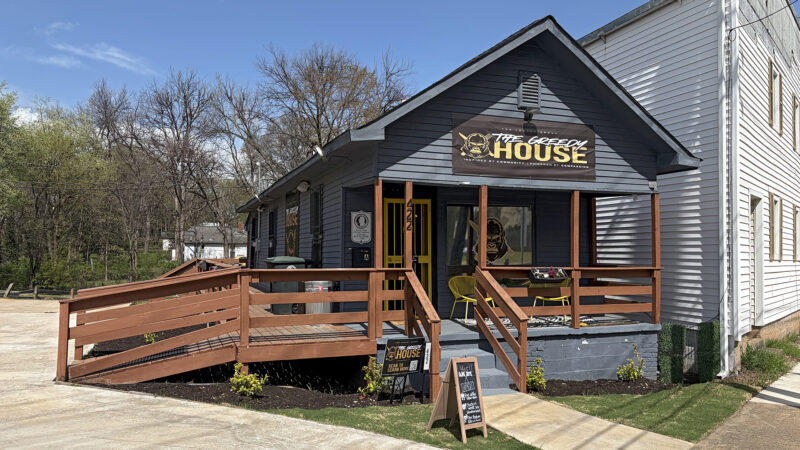
Auburn football player uses NIL funds to open a community hub in Birmingham
Jourdin Crawford, a freshman defensive lineman at Auburn, used earnings from a Name, Image, and Likeness deal to give back to his hometown.
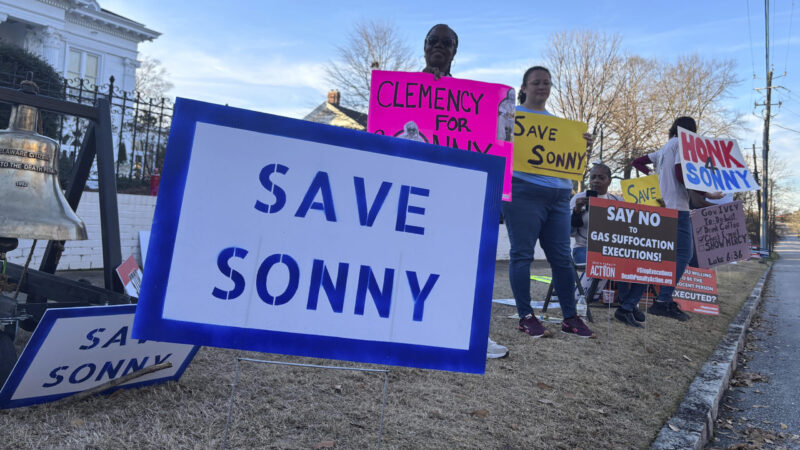
Ivey commutes death sentence of inmate whose accomplice fired fatal shot
Charles “Sonny” Burton was sentenced to death for the killing of Doug Battle during a 1991 robbery. However, another man shot Battle when Burton had left the building.