
Supreme Court Justice Questions Landmark Ruling from Alabama
Recently, the U.S. Supreme Court declined to hear a defamation case against comedian Bill Cosby. Perhaps more interesting than the rejection was a comment from Justice Clarence Thomas. He wrote the court should re-examine a landmark First Amendment case that originated in Alabama.
In 1960, the New York Times ran an ad from a civil rights group criticizing how authorities treated demonstrators, including those in Montgomery. The ad got some details wrong.
It misstated how many times the Rev. Martin Luther King, Jr. had been arrested in Alabama. It mischaracterizes the police response to student protests at the state capitol.
“One of the more petty examples of something not being accurate was [the ad] said that the students had sung ‘My Country ‘Tis of Thee’ on the steps of the Capitol but it was actually the national anthem,” says Steven Brown, an Auburn University political science professor.
Montgomery’s Police Commissioner, L.B. Sullivan, argued the errors meant the ad defamed him as a public official. He sued and won a half-million dollar award in Alabama. The case, New York Times v. Sullivan, went on to the U.S. Supreme Court.
In a unanimous ruling in 1964, the Supreme Court said it took more than factual errors to constitute libel. You have to show “actual malice.”
“Which the court defined as knowing falsity or reckless disregard of the truth,” Samford University law professor William Ross says.
In other words, the media can’t knowingly print information about a public official that’s wrong or in a way that’s reckless. It’s considered a seminal case ensuring freedom of the press.
Justice Clarence Thomas questioned that precedent. He wrote this libel standard isn’t in the Constitution and that the states are capable of striking the appropriate balance between “public discourse” and “reputational harm.”
Ross says it’s not unusual for justices to publicly call for revisiting precedents, and Thomas’ comments fall in line with how he interprets the Constitution
Thomas’ words have gained extra attention because President Donald Trump on multiple occasions has suggested libel law be rewritten. But Ross says the Sullivan decision is not partisan in its effect.
“Every person at some point has some reason to criticize the government and criticize public officials,” Ross says.
Brown says the case might be reconsidered, but in light of today’s online and social media landscape.
“You have so much more speech that’s out there,” Brown says. “So many more ways that people say unkind and perhaps defamatory things about each other. Should the same standard apply?”
Who is a public figure on Facebook? Who is a publisher on Twitter? Those questions weren’t before the court in the 1960s.
The Sullivan case, along with seven others from Alabama, are highlighted in an exhibit created by Brown. It’s on display at Vulcan Park & Museum through May 9th.
Photo by Mark Fischer
EDITOR NOTE: Vulcan Park & Museum is a sponsor of WBHM programming. WBHM’s news and business departments operate separately.

Crew of fatal US military crash included Alabama father recently deployed
The six U.S. service members who died in the crash of a U.S. military refueling aircraft included an Alabama father who had just been promoted and deployed. The U.S. government released the identities of the deceased service members Saturday.
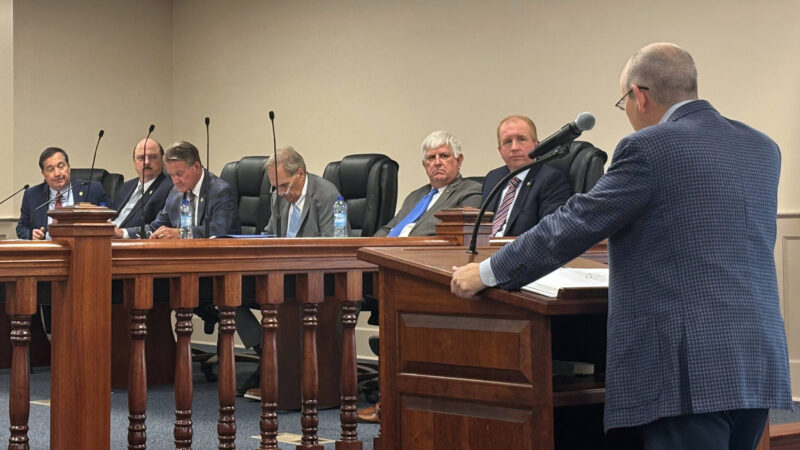
Alabama poised to drastically overhaul utility regulation. Will it lower electric bills?
The Alabama Senate unanimously voted to expand the public service commission, and create a Secretary of Energy to address rising electricity prices. A bill in the House would go even further, requiring rate case hearings and limiting utility profits.

Musher from Alabama is going for back-to-back Iditarod wins
Riches and paid appearances haven’t followed Jessie Holmes since he won the world’s most famous sled dog race, the Iditarod, last year. He doesn't mind.
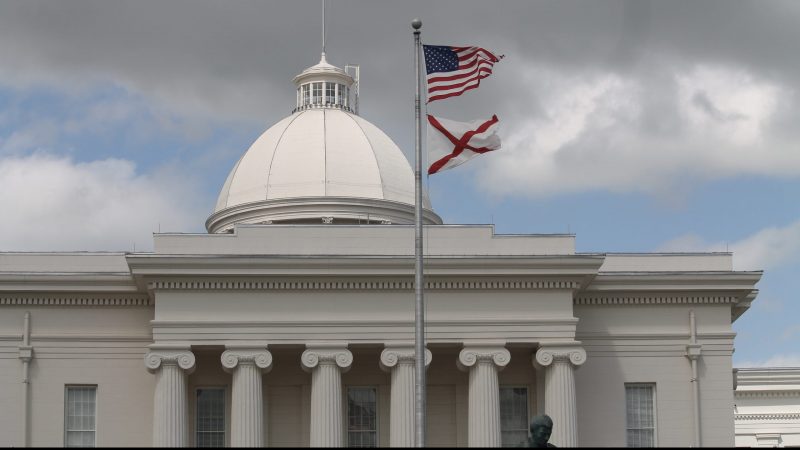
Bill would move Alabama to closed primaries
Right now, any Alabama voter can participate in a primary election. Lawmakers in Montgomery took up a bill this week that would change that system.
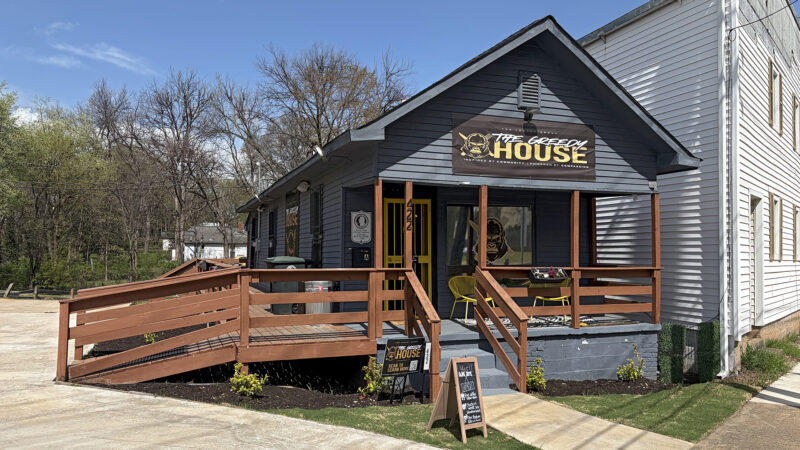
Auburn football player uses NIL funds to open a community hub in Birmingham
Jourdin Crawford, a freshman defensive lineman at Auburn, used earnings from a Name, Image, and Likeness deal to give back to his hometown.
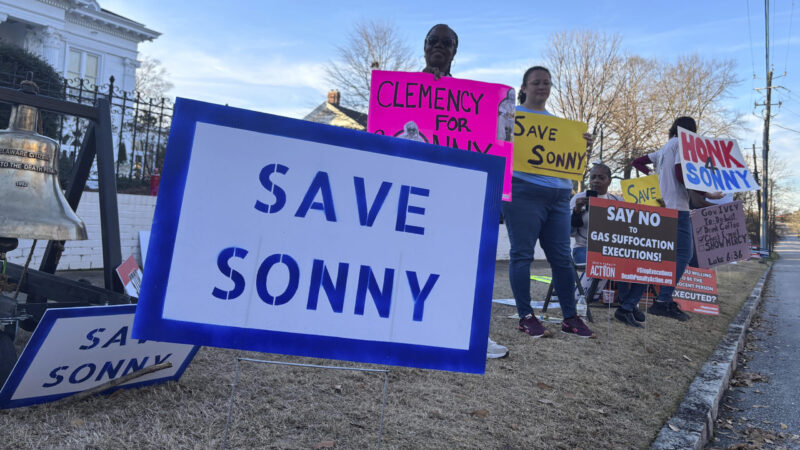
Ivey commutes death sentence of inmate whose accomplice fired fatal shot
Charles “Sonny” Burton was sentenced to death for the killing of Doug Battle during a 1991 robbery. However, another man shot Battle when Burton had left the building.