
Alabama’s Chemical Castration Law Draws Criticism
Some convicted sex offenders in Alabama will soon have to undergo chemical castration in order to get out of prison early on parole. That’s according to a bill signed into law this week by Gov. Kay Ivey.
The term “chemical castration” refers to a treatment that uses hormones such as progesterone to suppress levels of testosterone. Alabama’s legislation applies to individuals convicted of a sex offense involving a child younger than 13. Offenders will have to start taking the medication a month before release on parole and will have to continue taking it until ordered to stop by the courts.
Rep. Steve Hurst, who sponsored the legislation, says the measure is meant to serve one purpose.
“We’re doing this for all the reasons to try to protect children,” Hurst says. “It’s something that’s just, I cannot believe or imagine why someone would harm a small child.”
He says the goal is to prevent child sex offenders from committing future crimes. But Sandy Jung, a forensic psychologist and a member of the Association for the Treatment of Sexual Abusers, says it’s not a good approach.
“It really is a misguided quick fix kind of formula,” Jung says. “It really does nothing to reduce child sex offending.”
Jung says lowering testosterone levels decreases a man’s libido, but it doesn’t eliminate sexual deviancy or antisocial behavior, which are risk factors for sexually abusing children. And she says not all sex offenders are the same. They respond differently to treatment and need to be individually evaluated by a professional.
“Using something like chemical castration can be useful as what we call an adjunct treatment,” Jung says. “It should not be a stand-alone treatment.”
Chemical castration is allowed in a handful of other states, including California and Florida, as well as some foreign countries. It’s unclear how many sex offenders have undergone chemical castration. A few studies show it can reduce rates of recidivism, but experts warn it should be paired with psychological and behavioral therapy. And there are potential side effects from the treatment, including weight gain, high blood pressure, and depression.
Medical considerations aside, some legal experts say making chemical castration a condition of parole is unconstitutional. Attorney Janice Ballucci directs the Alliance for Constitutional Sex Offense Laws, a nonprofit that advocates for the civil rights of sex offender registrants and their families.
“The way that the Alabama law is written,” Ballucci says, “it really does not provide an individual with a choice, but instead it’s coercive.”
She says the law forces convicted sex offenders to choose between the lesser of two evils – to suppress their sexual identity or stay in prison. Ballucci expects the law to be challenged in court. Officials with the American Civil Liberties Union of Alabama have also spoken out against the legislation. In a statement, they said it presents “serious issues about involuntary medical treatment, informed consent, the right to privacy, and cruel and unusual punishment.”
Under the new law, parolees will have to pay for chemical castration themselves unless they qualify as indigent. The costs are still being worked out, according to Hurst. The Alabama Department of Public Health will be responsible for administering the treatment. If sex offenders stop receiving it, they’ll be sent back to prison.
“And we know one fix don’t cure everybody,” Hurst says. “We know that. So that’s why we’re going to have to continue to monitor it and stay after it and try to make it successful.”
Alabama’s chemical castration law takes effect September 1st.
Photo by quimono

Crew of fatal US military crash included Alabama father recently deployed
The six U.S. service members who died in the crash of a U.S. military refueling aircraft included an Alabama father who had just been promoted and deployed. The U.S. government released the identities of the deceased service members Saturday.
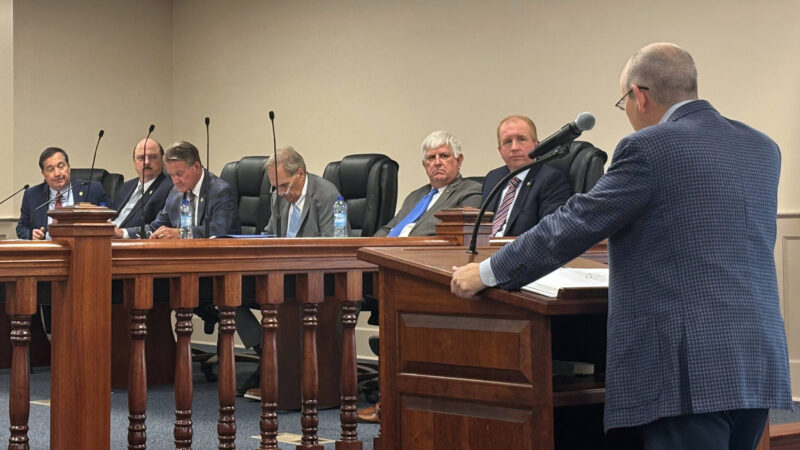
Alabama poised to drastically overhaul utility regulation. Will it lower electric bills?
The Alabama Senate unanimously voted to expand the public service commission, and create a Secretary of Energy to address rising electricity prices. A bill in the House would go even further, requiring rate case hearings and limiting utility profits.

Musher from Alabama is going for back-to-back Iditarod wins
Riches and paid appearances haven’t followed Jessie Holmes since he won the world’s most famous sled dog race, the Iditarod, last year. He doesn't mind.

Bill would move Alabama to closed primaries
Right now, any Alabama voter can participate in a primary election. Lawmakers in Montgomery took up a bill this week that would change that system.
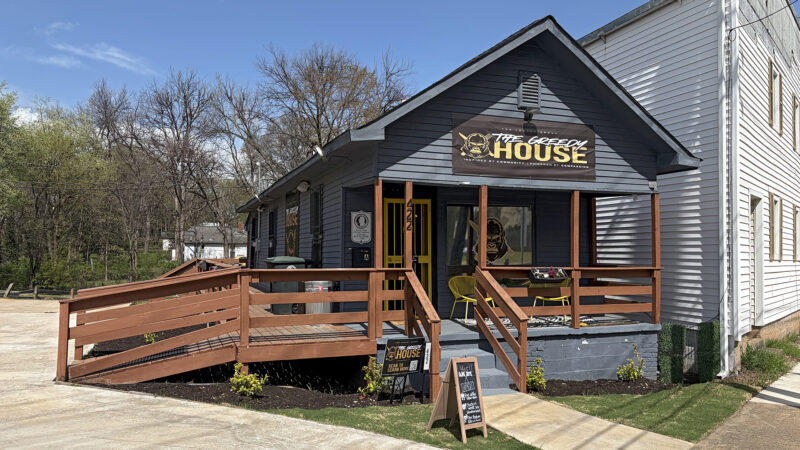
Auburn football player uses NIL funds to open a community hub in Birmingham
Jourdin Crawford, a freshman defensive lineman at Auburn, used earnings from a Name, Image, and Likeness deal to give back to his hometown.
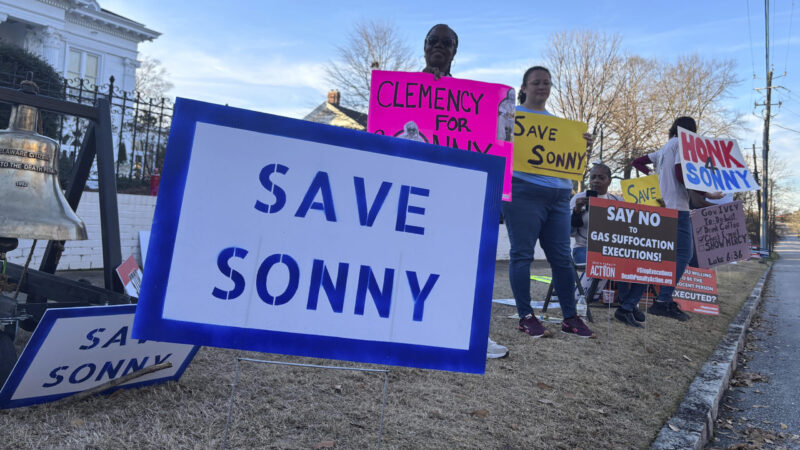
Ivey commutes death sentence of inmate whose accomplice fired fatal shot
Charles “Sonny” Burton was sentenced to death for the killing of Doug Battle during a 1991 robbery. However, another man shot Battle when Burton had left the building.