
Lack of Guidance Leads to Web Access Lawsuits
Almost three decades ago, the Americans with Disabilities Act required public places to accommodate people with disabilities — anything from installing ramps and elevators at schools to putting chair lifts in swimming pools. But back then, long before the Internet grew into what it is now, the law didn’t address the accessibility of websites. Now, with a proliferation of lawsuits, many companies are racing to bring their sites into compliance with industry standards.
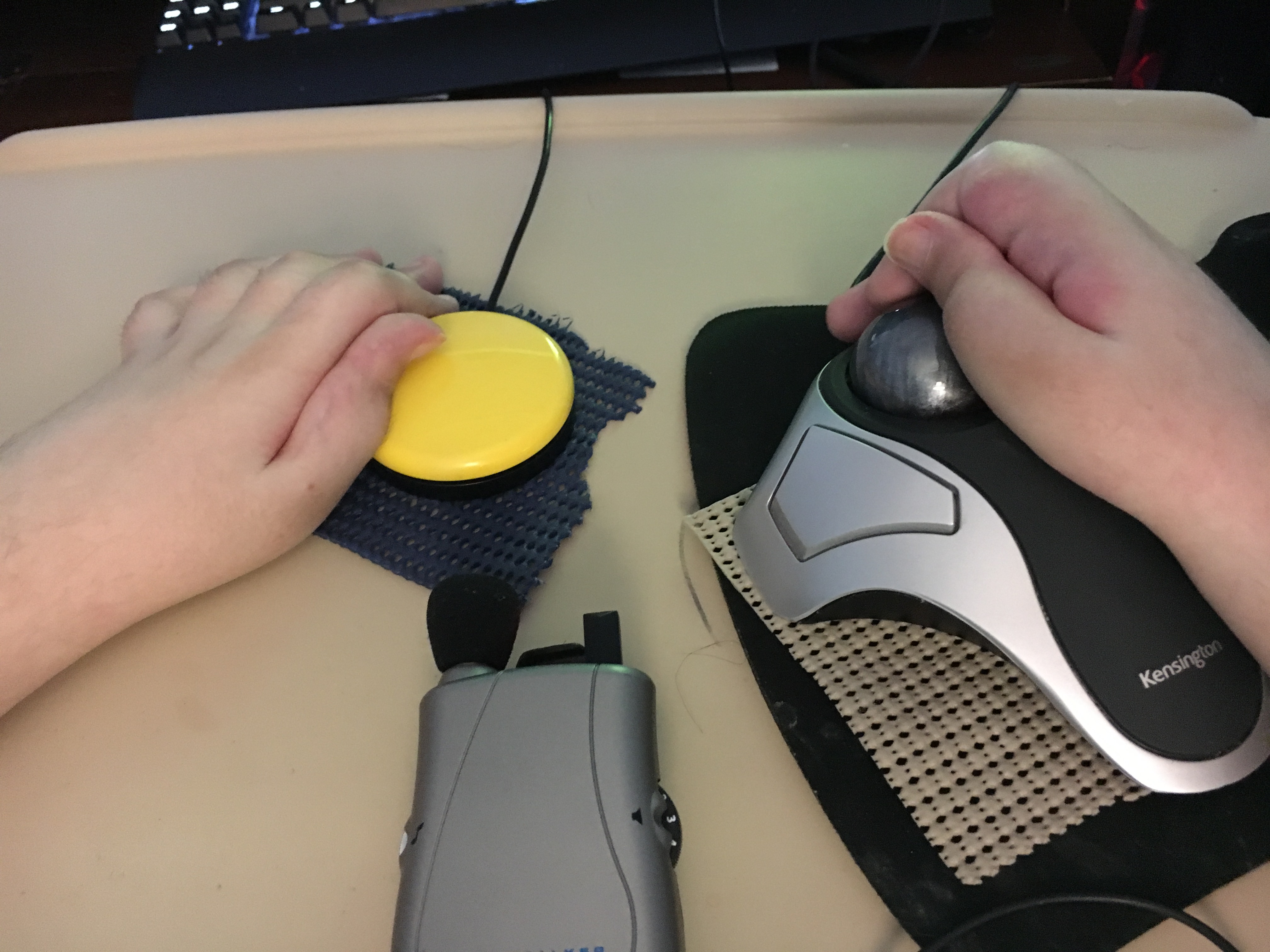
These changes will almost certainly affect Joseph Walter. He’s a 23-year-old college student who takes classes online. He’s also confined to a special chair and a ventilator. He has limited use of two fingers and the thumb on his other hand. But his mind and his cursor are flying all over the internet, thanks to a special clicker and other modifications. I ask Joseph whether most websites are hard for him to use and his mother, Debra Walter, interprets his response:
“He doesn’t think they’re specifically accessible for him.”
And Joseph is something of a coding expert himself. He does research and shops online. And sometimes he tangles with websites that are hard for him to use, but he finds work-arounds on the fly. Many businesses are doing the same, as they scramble to make their sites compliant.
Dan Carsen, WBHM
Joseph’s yellow “buddy button” (a special clicker) and the trac-ball he uses to move his cursor.
“This has gone from a requirement in a project to the most important requirement in a project, just really within the last two or three months,” says Mac Logue, creative director for Fitzmartin, a Birmingham-area marketing agency. He and other web-developers say that’s partly to avoid lawsuits as they try to make their sites accessible. How websites actually do that is evolving, and so are the industry guidelines that have become the de facto standard: the Web Content Accessibility Guidelines, or WCAG 2.0. They’re basically industry best practices to ensure everyone can use websites.
“That includes people with no or low vision, people who may not have physical access to a mouse,” Logue says. “So, to be able to operate an entire website from the keyboard, say, or even a specialized keyboard that you look at but can’t physically touch.”
A site might also have to display captions when you hover over a video. All those are just a few of the needs to address. But the big question is, what is compliance?
In 2010, the Justice Department said it would issue guidance, but that hasn’t happened. Last year, more than 800 federal lawsuits were filed targeting businesses whose websites lawyers say were not accessible to people with disabilities.
“When the ADA was enacted, they did not think about things like websites,” says Leah Dempsey, Senior Director of Advocacy and Counsel for the Credit Union National Association. Credit unions around the country have faced dozens of lawsuits in recent months.
“There’s nothing under the ADA about what is necessary, but there [are] private industry standards. And that’s why there’s so much litigation out there. There’s a legal gray area.”

Dan Carsen, WBHM
What Joseph sees. Note the on-screen keyboard at the top of his screen.
She’s holding out hope for clarity from the DOJ or from the courts. In the meantime, trying to bring websites up to standard is expensive. Depending on the site, that can easily range from $10,000 to $100,000. And legal fees can add tens of thousands of dollars more. The U.S. House of Representatives recently passed a bill giving companies a grace period to make their websites accessible, but the bill’s future is uncertain.
Logue says it’s in everyone’s interest to pay attention.
“You may not be getting sued today, but almost every business is going to be at risk at some point.”
Unless clear guidelines are issued soon, industry-watchers predict more legal battles.

Crew of fatal US military crash included Alabama father recently deployed
The six U.S. service members who died in the crash of a U.S. military refueling aircraft included an Alabama father who had just been promoted and deployed. The U.S. government released the identities of the deceased service members Saturday.
Alabama poised to drastically overhaul utility regulation. Will it lower electric bills?
The Alabama Senate unanimously voted to expand the public service commission, and create a Secretary of Energy to address rising electricity prices. A bill in the House would go even further, requiring rate case hearings and limiting utility profits.

Musher from Alabama is going for back-to-back Iditarod wins
Riches and paid appearances haven’t followed Jessie Holmes since he won the world’s most famous sled dog race, the Iditarod, last year. He doesn't mind.
Bill would move Alabama to closed primaries
Right now, any Alabama voter can participate in a primary election. Lawmakers in Montgomery took up a bill this week that would change that system.
Auburn football player uses NIL funds to open a community hub in Birmingham
Jourdin Crawford, a freshman defensive lineman at Auburn, used earnings from a Name, Image, and Likeness deal to give back to his hometown.
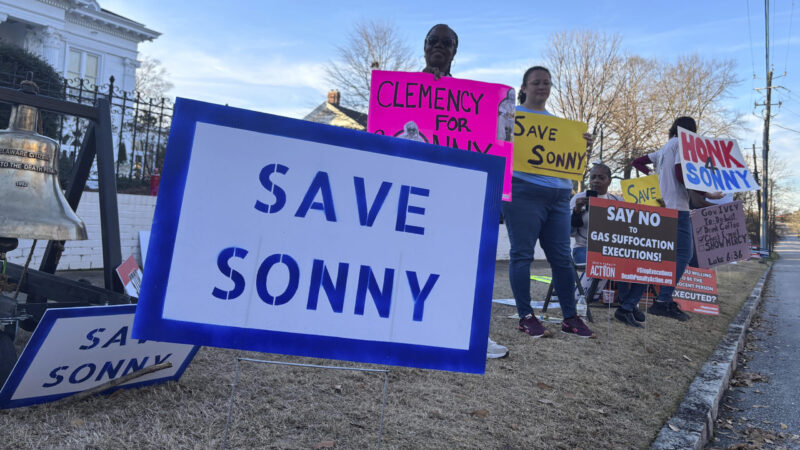
Ivey commutes death sentence of inmate whose accomplice fired fatal shot
Charles “Sonny” Burton was sentenced to death for the killing of Doug Battle during a 1991 robbery. However, another man shot Battle when Burton had left the building.