
“Astonishing” Find Could Be New Pre-Human Species
Last month, scientists in South Africa revealed “Little Foot,” a three-million-year-old pre-human skeleton that could tell us a lot about ourselves. A Birmingham-Southern College scientist is helping to analyze this potential new species, but before we tell you about the present, let’s take you back … a little.
It’s the 1920s. Miners are blasting away in huge caves near Johannesburg. Shattered rocks litter the scene. Some have fossils in them, but the miners don’t care.
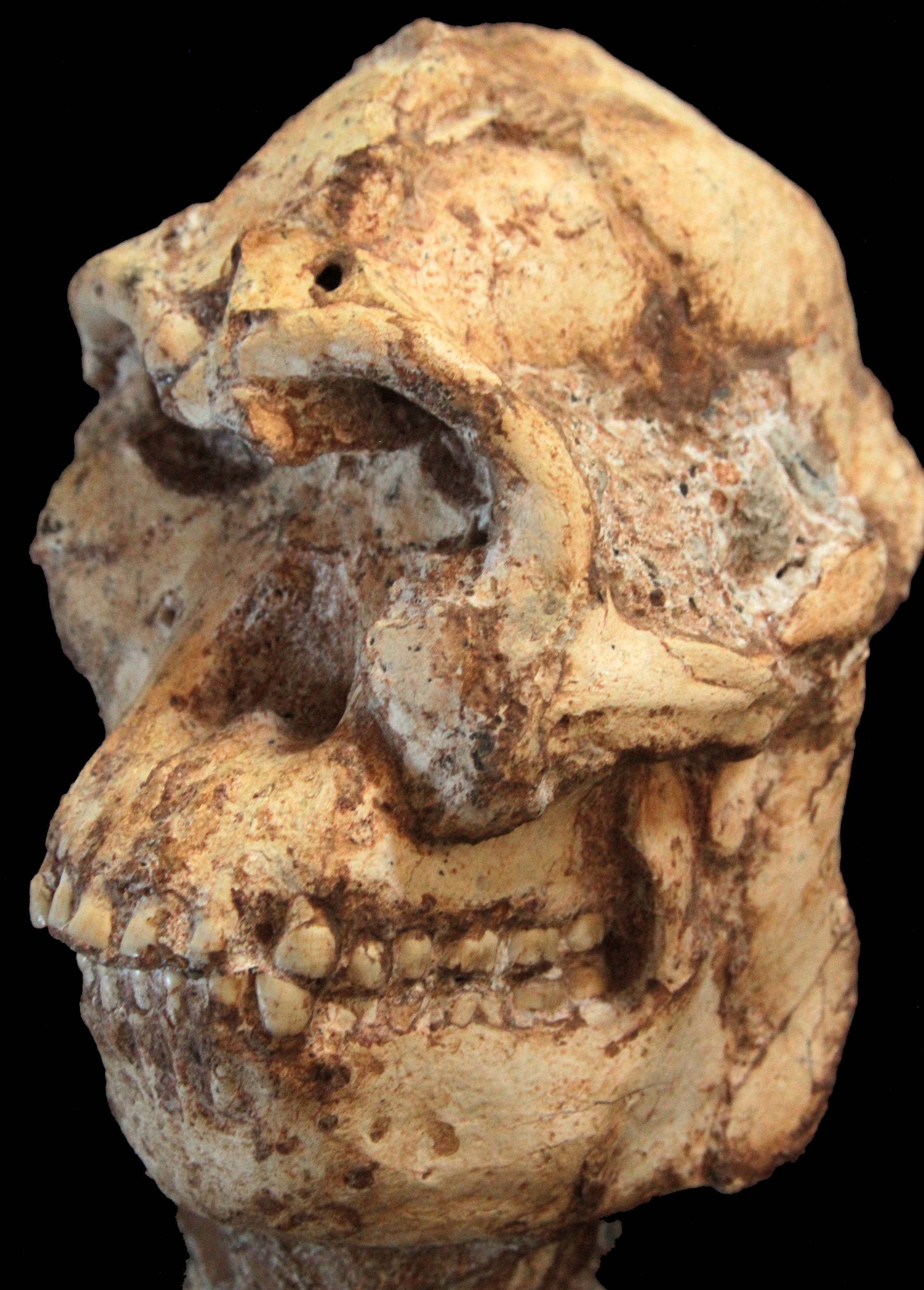
Jason Heaton
Little Foot’s skull, after being painstakingly removed from hard-to-work-with rock called breccia.
Now jump to the 1990s. A researcher named Ron Clarke finds some of those remains in boxes at a university. There were tiny foot bones – that’s where the name “Little Foot” comes from – and a tibia, or a shin bone. People had thought they were from cows, but Clarke saw otherwise.
“He noticed on a tibia that it was broken at the very top – it was a fresh break,” says Birmingham-Southern College anthropologist Jason Heaton. “He asked two of our fossil preparators if they would go and find – in this gigantic, underground, dark cave – a cross-section of that bone. And so they took handheld lamps, and within two days, they found the cross-section, and they were able to find out exactly where Little Foot’s skeleton was.”
Battling some very stubborn rock, Clarke and his team eventually dug out one of the oldest and most complete hominid skeletons ever found. They’ve dated Little Foot at about 3.67 million years – at least as old as the famous “Lucy” skeleton from east Africa. And Little Foot is almost 90 percent whole, compared to Lucy’s 40 percent.
“The reason Little Foot is going to be so dramatically important to what we do is the fact that it’s so complete,” says Heaton, “because when you look at early human prehistory, we only have 10 or 11 partial skeletons.”
That’s because smaller, more delicate bones usually don’t last millions of years, even when they haven’t been chewed up by carnivores. So comparatively, Little Foot is in great shape. And the team thinks it might be a new species. They’re calling it Australopithecus prometheus.
“They’re more ape than human, but they are filling in that gap of a missing link,” Heaton says. “Its anatomy is right between us and chimpanzees. It’ll start filling in how some of these species are related to each other.”
Ian Tattersall, a curator emeritus of anthropology at the American Museum of Natural History, is not involved with the find but agrees it’s a major puzzle-piece:
“I would not be in the least surprised if it were a new species,” he says.

Travis Pickering
Jason Heaton with Little Foot at Sterkfontein in 2016.
After two decades of digging and reconstruction, Little Foot is now in a university vault in South Africa. But thanks to CAT scans and 3-D printing, the analysis continues on several continents, including in Jason Heaton’s lab at Birmingham-Southern. He says he can’t give away too much, but the Little Foot team plans to publish two dozen papers starting this year.
Ian Tattersall says he looks forward to detailed descriptions of Little Foot. And looking back, he’s thankful Ron Clarke happened to find those boxes.
“It is one of the most astonishing stories of discovery ever, in the walls of this gigantic, dark, difficult cave,” says Tattersall. “And it just goes to show how important it is not to think that old stuff is unimportant.”
This particular old stuff will likely boost understanding of our ancestors and of other hominid species that didn’t survive to the present day.
Heaton hopes he and his colleagues can help spread that understanding. In general, researchers have become more willing to share their data publicly.
“They’ve taken 3-D models and made them available on the web, and I’ve seen where people are printing them out for schools,” says Heaton. “This is a skeleton that belongs to all of us – it’s important enough that people should learn about it.”
All because some South African miners blasted a cave almost hundred years ago.
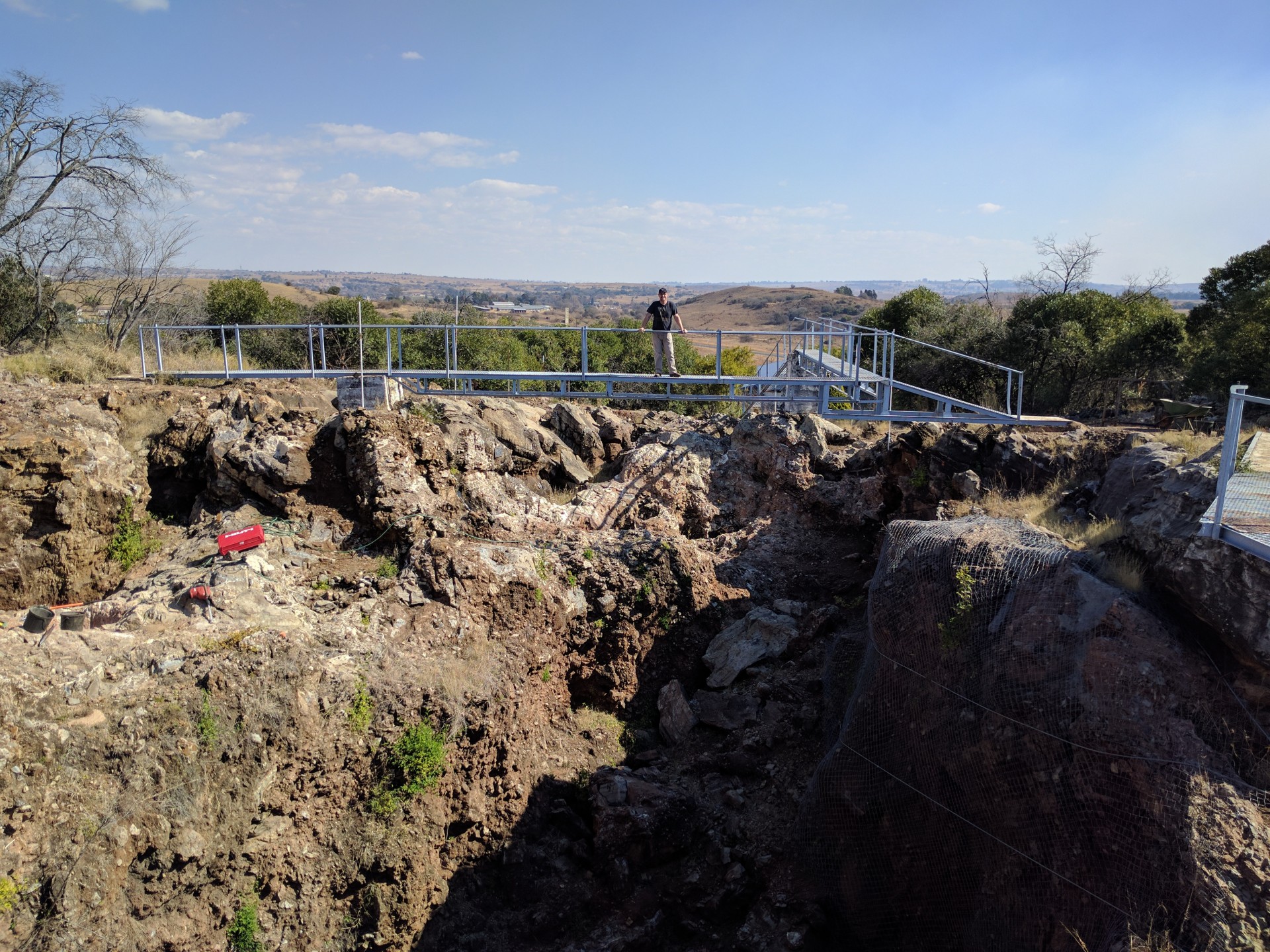
Sarah Catherine Murphy
Jason Heaton on one of his trips to South Africa’s Sterkfontein cave system (he’s lost track of how many times he’s been), coming up from the dark for a breather.

Crew of fatal US military crash included Alabama father recently deployed
The six U.S. service members who died in the crash of a U.S. military refueling aircraft included an Alabama father who had just been promoted and deployed. The U.S. government released the identities of the deceased service members Saturday.
Alabama poised to drastically overhaul utility regulation. Will it lower electric bills?
The Alabama Senate unanimously voted to expand the public service commission, and create a Secretary of Energy to address rising electricity prices. A bill in the House would go even further, requiring rate case hearings and limiting utility profits.
Musher from Alabama is going for back-to-back Iditarod wins
Riches and paid appearances haven’t followed Jessie Holmes since he won the world’s most famous sled dog race, the Iditarod, last year. He doesn't mind.

Bill would move Alabama to closed primaries
Right now, any Alabama voter can participate in a primary election. Lawmakers in Montgomery took up a bill this week that would change that system.

Auburn football player uses NIL funds to open a community hub in Birmingham
Jourdin Crawford, a freshman defensive lineman at Auburn, used earnings from a Name, Image, and Likeness deal to give back to his hometown.

Ivey commutes death sentence of inmate whose accomplice fired fatal shot
Charles “Sonny” Burton was sentenced to death for the killing of Doug Battle during a 1991 robbery. However, another man shot Battle when Burton had left the building.