
For Parents of Children with Disabilities, A Question of How Much Is Enough
The U.S. Supreme Court is weighing a decision on whether public schools are doing enough to educate students with special needs. Under federal law, students with disabilities are entitled to a “free appropriate education.” At issue, however, is what constitutes “appropriate”. In Alabama, there are more than 83,000 children with special needs. And for the parents and educators of those children, meeting educational needs is often a struggle.
It’s a typical day at Mitchell’s Place, a center for pre-schoolers with autism spectrum disorder and other developmental disabilities. Parents are invited to monitor classes in an adjoining room, listening to teacher and child interaction through speakers. Sandy Naramore, executive director of the Birmingham non-profit, says it takes time to teach these children. “Things that you and I pick up very quickly, they don’t. Our little ones here, this is something so many people just assume children know how to play.”
Mitchell’s Place prepares children with special needs for elementary school. But educational choices aren’t easy. No two special needs children are alike. The term “special needs” includes a number of conditions such as muscular dystrophy, chronic asthma, epilepsy, Down syndrome, dyslexia, and autism, among others. There can be a wide range of symptoms, from barely noticeable to extreme. Educational options include alternative schools, home schooling or a mainstream public education.
By federal law, public schools are required to provide “appropriate” educational services without charge for children with disabilities. But what’s considered “appropriate” accommodations or modifications can vary greatly between school districts. Legally, it’s whatever it takes. In reality, it’s not so simple.
Money is a factor, as is community and school culture. Also, teachers’ experience and comfort-level can make a difference, as well as whether there are savvy advocates for special needs students.
Bama Hager, program and policy director for the Autism Society of Alabama, has a teenage son with severe autism. Her son attends public school in Mountain Brook, an affluent area of Birmingham. Hagar works closely with her son’s teachers. “My main goals for him is for him to continue to progress,” Harger says. “So, if it’s at a delayed rate, if he is behind his cohort, if he is behind his grade level, I am ok with that. I want to make sure we’re moving forward and going through grade levels, just as I would be focused on with a typical child going through the school system.”
Haggar and her husband are happy with their son’s progress. But that’s not always the case. If parents feel their child isn’t receiving enough support, they may hire James Gallini, a special education attorney. He works with parents and schools to find solutions in providing the proper resources for the students. It can be difficult.
“Some are doing a good job, some are doing a very bad job, and they find justifications to hide behind in the services they provide,” he explains. “And, I don’t want to sound sinister about it, but there are some schools that I believe exert pressures in order to weed out some parents and force them into the homeschooling realm and it’s very frustrating.”

Suzanne Oswald of Odenville homeschools her daughter, Kimberly. Kimberly attended a public school, but her mother felt she would receive an education better suited for Kimberly if she taught her daughter herself. Photo by Les Lovoy
Suzanne Oswald lives in Odenville, a small rural community about 45 minutes northeast of Birmingham. Her daughter, Kimberly, has autism and is now homeschooled. Kimberly had attended public school but that didn’t work. Living in a small rural town was a part of the problem, and Oswald said the school originally didn’t have the proper resources. So she took matters into her own hands.
“I brought in my own neuropsychologist, met with the school district. They finally agreed to physical therapy, occupational therapy, a different speech teacher,” she says “But for the other speech teacher, I would have to drive Kimberly twice a week, about 25 miles away. The occupational therapist, which would be once every other week, was 30 miles away.”
Legislators across the country have passed laws to provide parents with education savings accounts. These funds help parents pay for resources to homeschool special needs children. Trisha Powell Crain, former executive director of the Alabama School Connection, an education advocacy organization, says Rep. Ken Johnson introduced a bill that would bring education savings accounts to Alabama.
“Initially, he had a wide eligibility component and that was unacceptable to the House Education Policy Committee, Craine says. “So, he narrowed it down to only children with disabilities. It got passed by the House Education Policy Committee. It went to the floor of the house and it didn’t even get a consideration.
Suzanne Oswald, Kimberly’s mother, says she’s not surprised by the legislature’s inaction and plans to continue to help her daughter the best she can. However, advocating for her daughter and understanding the law can also be the equivalent of a full-time job. As for education savings accounts, attorney James Gallini says they can be helpful to parents. But he cautions, parents may not have the resources to create a curriculum for their child, and if parents are facing hard economic times, they may be tempted to spend the money on needed living expenses instead of educating their child.

Crew of fatal US military crash included Alabama father recently deployed
The six U.S. service members who died in the crash of a U.S. military refueling aircraft included an Alabama father who had just been promoted and deployed. The U.S. government released the identities of the deceased service members Saturday.
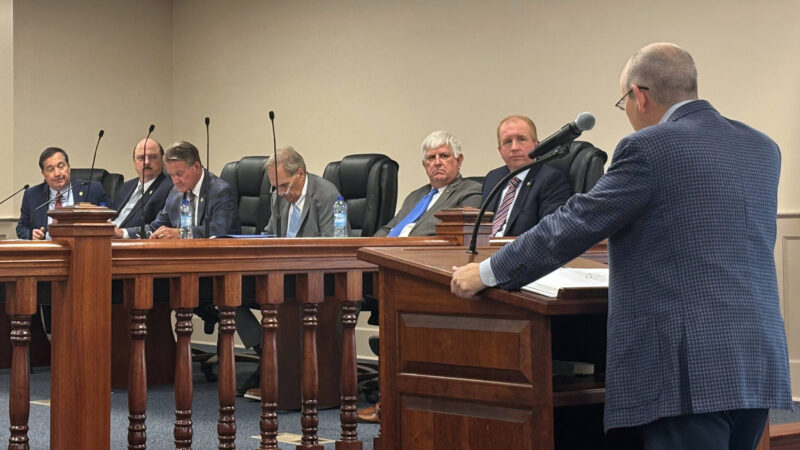
Alabama poised to drastically overhaul utility regulation. Will it lower electric bills?
The Alabama Senate unanimously voted to expand the public service commission, and create a Secretary of Energy to address rising electricity prices. A bill in the House would go even further, requiring rate case hearings and limiting utility profits.

Musher from Alabama is going for back-to-back Iditarod wins
Riches and paid appearances haven’t followed Jessie Holmes since he won the world’s most famous sled dog race, the Iditarod, last year. He doesn't mind.
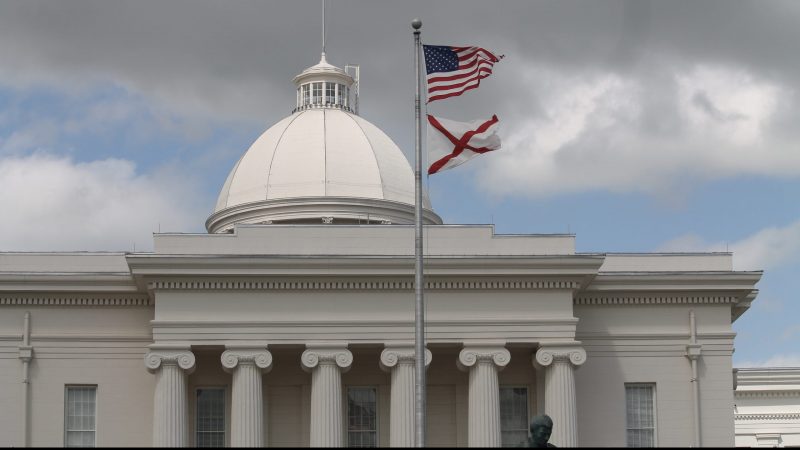
Bill would move Alabama to closed primaries
Right now, any Alabama voter can participate in a primary election. Lawmakers in Montgomery took up a bill this week that would change that system.
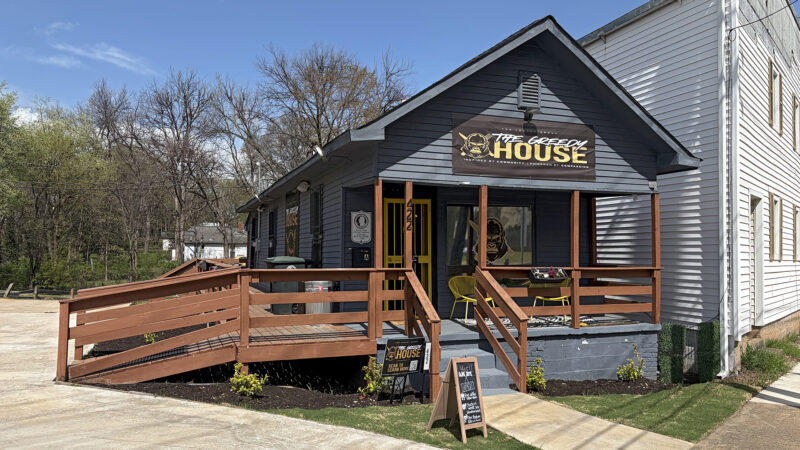
Auburn football player uses NIL funds to open a community hub in Birmingham
Jourdin Crawford, a freshman defensive lineman at Auburn, used earnings from a Name, Image, and Likeness deal to give back to his hometown.
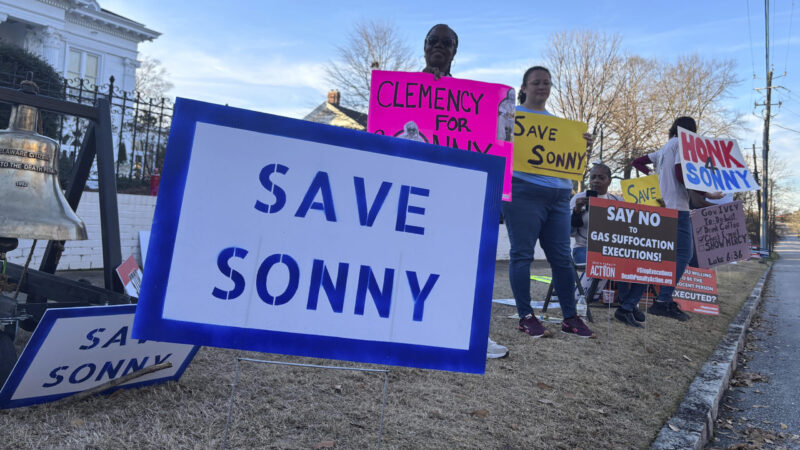
Ivey commutes death sentence of inmate whose accomplice fired fatal shot
Charles “Sonny” Burton was sentenced to death for the killing of Doug Battle during a 1991 robbery. However, another man shot Battle when Burton had left the building.