
Matters of Choice: Race, Economics and Choice in North Carolina
In North Carolina, students get their choice of charter schools, but those schools are increasingly divided by race. In this southern state where some of the nation’s most noted school desegregation battles were waged, a recent Duke University study shows that many schools are either predominantly white or predominantly minority. Reema Khrais of WUNC reports on efforts to change that trend as part of the Southern Education Desk series, “Matters of Choice.”
Kindergartner Emarie breaks out into song as she cleans up.
“Row, row your boat crossly down the stream… life is but a dream!”
It’s toward the end of class at Central Park School for Children in Durham. Emarie and her classmates are putting paint supplies away after a pretty successful day creating masterpieces.
As principal John Heffernan walks around the kindergarten class, he notes it looks and feels different than it did just a few years ago. Frankly, it’s not as white or upper middle class as it used to be.
“There’s a greater diversity of viewpoints. There’s a greater diversity of perspectives,” says Heffernan.
How did this demographic shift happen? A couple of years ago, this school tried something no other charter school in the state has done before: it began giving students from low-income families a better chance of getting in. They get priority on a waiting list of hundreds of kids.
Before this weighted lottery, only six percent of kids qualified for free or reduced meals. Today, according to Heffernan, the number has grown to 18. The goal is 40.
As the school becomes more economically diverse, the number of white students is slowly dropping while the number of Black and Latino kids is slowly rising. It is a story very different from what’s happening outside of its walls.
Helen Ladd, a professor at Duke’s Sanford School of Public Policy, says the state’s charter schools have always been racially imbalanced and it’s only gotten worse.
“We’ve got white charter schools – disproportionately white charter schools – and disproportionately minority charter schools. It’s what we’ve worked hard to avoid. It’s a pattern worth worrying about,” says Ladd.
Initially, black students were over-represented in charter schools. Today, that’s true for white students. The percentage of charter school kids in mainly white schools has almost doubled since the late 1990s.
Ladd applies her training as an economist to help explain why that’s happening. On the demand side, you’ve got the parents. She says a lot of research shows that families do take into consideration the racial mix of a school when deciding where to send their kid.
“The other side is what the charter school operators are trying to do, that’s the supply side.”
Charter schools are public schools – but, unlike traditional ones, they do not have to offer free and reduced meals or bus transportation. Ladd thinks they should, because “if they don’t, then they’re not really open to all students who need those services.”
Joe Maimone, a member of the state’s charter school advisory board, disagrees with that philosophy. He says parents want the best schooling option for their kid, “even if it means they have to sacrifice a little bit more in terms of not having the free lunch or not having the transportation door-to-door versus a stop five or ten minutes down the road.”
Plus, money is tight. Maimone argues that charter schools don’t get the same amount of funding as traditional public schools. Still, options exist, including carpools and buses meeting in central locations.
“Charter schools have done, and will continue to do everything they can to make sure transportation is not a barrier,” he says.
Back at Central Park School for Children, Zoila Salazar has the day off and is walking her kindergartner to class.
Salazar and her son had a higher chance of getting into this school last year because of their socioeconomic status. She also says it was important that the charter school was able to help out with transportation and meals.
“He wouldn’t be here right now if they didn’t provide transportation or free meals, I wouldn’t, because it would’ve been so hard for me to bring him,” says Salazar.
Central Park had to come up with creative approaches to increase school diversity, like using the weighted lottery. Some see it as a way of helping to fulfill one of the big goals of charter schools: to serve disadvantaged students.
This report is supported by a grant from the Corporation for Public Broadcasting.

Crew of fatal US military crash included Alabama father recently deployed
The six U.S. service members who died in the crash of a U.S. military refueling aircraft included an Alabama father who had just been promoted and deployed. The U.S. government released the identities of the deceased service members Saturday.
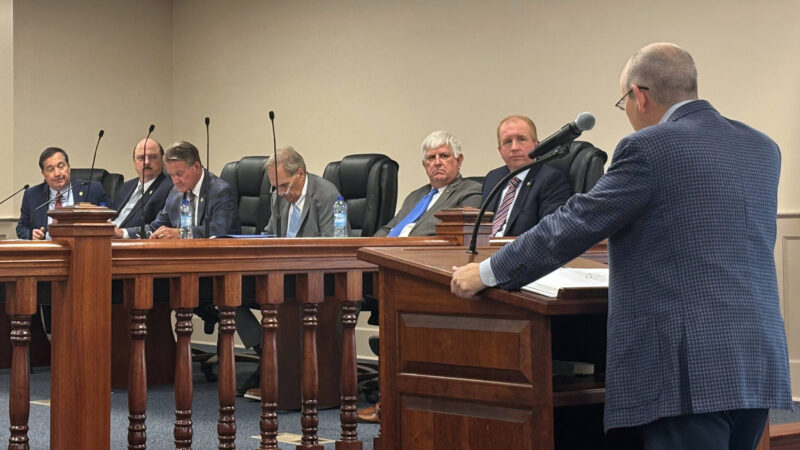
Alabama poised to drastically overhaul utility regulation. Will it lower electric bills?
The Alabama Senate unanimously voted to expand the public service commission, and create a Secretary of Energy to address rising electricity prices. A bill in the House would go even further, requiring rate case hearings and limiting utility profits.

Musher from Alabama is going for back-to-back Iditarod wins
Riches and paid appearances haven’t followed Jessie Holmes since he won the world’s most famous sled dog race, the Iditarod, last year. He doesn't mind.
Bill would move Alabama to closed primaries
Right now, any Alabama voter can participate in a primary election. Lawmakers in Montgomery took up a bill this week that would change that system.
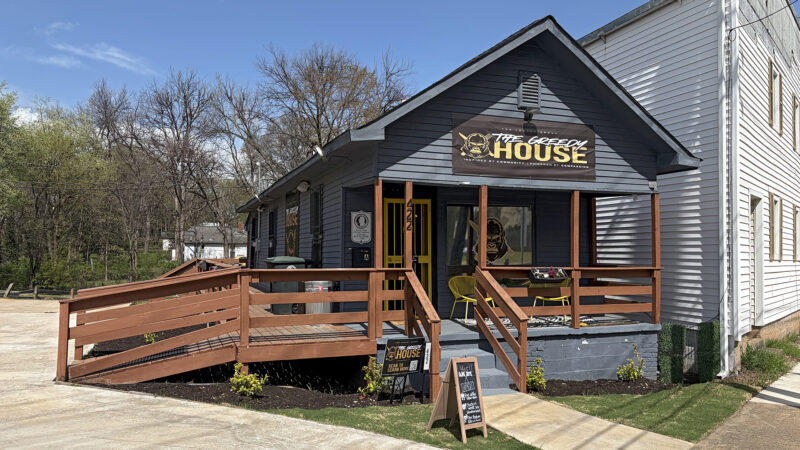
Auburn football player uses NIL funds to open a community hub in Birmingham
Jourdin Crawford, a freshman defensive lineman at Auburn, used earnings from a Name, Image, and Likeness deal to give back to his hometown.
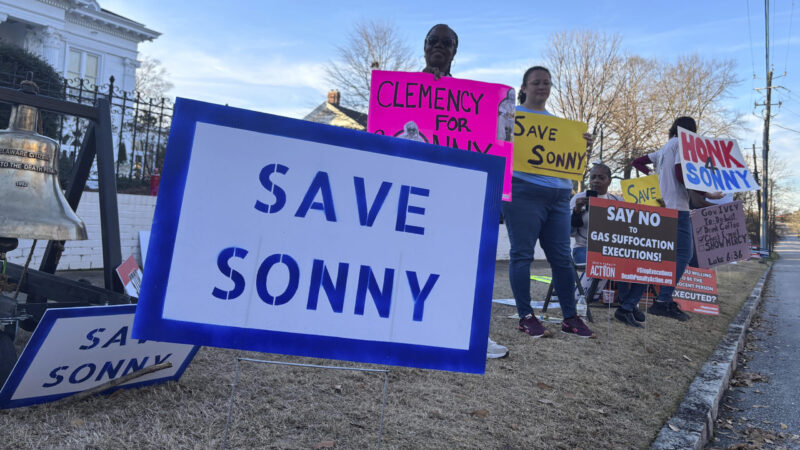
Ivey commutes death sentence of inmate whose accomplice fired fatal shot
Charles “Sonny” Burton was sentenced to death for the killing of Doug Battle during a 1991 robbery. However, another man shot Battle when Burton had left the building.