
Montgomery Catholic Mission Finally Celebrates Its Role in the Selma Marches
This month marks the celebration of the 50th anniversary of the Voting Rights March from Selma to Montgomery. The march was a turn in the Civil Rights Movement. But it also brought about a change in The City of St Jude. It’s not actually a city, but a Catholic mission that takes up two city blocks in west Montgomery. It was started in the 1930s in an attempt to address the lack of education and healthcare for African Americans in the South. Reporter Ashley Cleek brings us this story of a place before its time.
Douglas Watson and his older sister, Dolores Bynum went to St. Jude’s Catholic school in the 60s. They sit, reminiscing about their school days. Watson pulls out an old class photo.
“This is class of 1940. See even then you had one or two whites in here somewhere,” Watson scans the photo.
“Do they?” his sister questions. “I never knew that.”
In the photo, white nuns in habits and about 200 black kids are lined up along the steps of the school. In the middle of the group are two white kids — a boy and a girl.
Watson is now the executive director of the City of St. Jude and he’s found no information about the students. But two white kids at a black Catholic school in the Jim Crow South in the 1940s “would be very unusual,” explains Michael Friedland.
Friedland’s a history teacher in Seattle and wrote a book about the clergy’s role in the civil rights movement. Friedland says the Catholic church in the South built churches, schools, and hospitals for blacks. Father Thomas Joseph Too, the Bishop in Mobile at the time, was dubbed “The Negro Bishop.”
“He set up separate hospitals for African Americans. He called for improved schools for African Americans,” says Friedland. He explains that Toolen abided by the “separate but equal” code of the Jim Crow era and did not support integration.
But quietly the City of St. Jude did.
The school opened in 1938, and while it wasn’t actively “integrated,” anyone could enroll. Dozens of white students did.
St Jude also operated the first integrated hospital in the Southeast.

Then, in the Spring of 1965, the march from Selma to Montgomery came to to the City of St Jude.
On Wednesday March 24th, 1965, 10,000 people marched onto the school’s grounds. They camped out overnight in muddy fields. A stage was built out of coffins, and the marchers held a concert called “Stars for Freedom Rally,” where musicians like Joan Baez, Peter Paul and Mary, and Sammy Davis Junior played into the night.
Watson’s sister, Dolores Bynum, was in 6th grade at the time. She watched out her classroom window the next morning as thousands marched towards the capital.
“I had never seen that many people in my life, much less that many black people in my life,” Bynum remembers.
The Selma to Montgomery march was a turning point for the Bynum and the City of St. Jude.
For Bynum, the march made her self-aware and proud. In class one day, instead of singing the National Anthem, she and her classmates stood up and sang the Negro National Anthem. Her teacher was shocked.
“You’ve got ten-year-old kids, 11-year-old kids, all these people came down here, and they did this, and what could we do?” Bynum remembers, “That was our way to protest.”
For St. Jude’s the turning point was monetary. After the march, Douglas Watson says donations to the City of St. Jude plummeted, and for years the school downplayed its role in voting rights history.
“All of our donations came from white Catholics. So everyone didn’t agree. They agreed with helping blacks, they didn’t agree with Martin Luther King, they didn’t agree with getting involved in all that stuff,” Watson explains.
After the march, Watson says, white families slowly pulled their kids from St. Jude’s school.

But Bynum, remembers one student, Timothy Glackmeyer, who came the next year.
Glackmeyer’s now 61. He lives in Phenix City, Alabama and still describes his year at St. Jude’s school at an ‘eye-opening experience.’
Glackmeyer only went to the school for one year, the year after the march.
He remembers it fondly — the nuns, the class clown.
But he also remembers standing in front of St. Jude’s waiting for the bus that would take him home.
“The white buses would go by, and forgive the language, but if I was called ‘nigger lover’ once, I was called ‘nigger lover’ 1,000 times,” Glackmeyer remembers. “They would throw things out the window at me.”
The next year, Glackmeyer’s parents sent him to another Catholic school. But the year at St. Jude, Glackemeyer says, “put me on the other side of the spectrum.”
For a brief moment, Glackmeyer says, he saw what black students faced daily.
In the 1960s, schools all over the state slowly begun to integrate, but St. Jude’s went the opposite direction. It lost its handful of white students. And then, in the 1970s, the white doctors left St Jude’s hospital.
The school is empty now, it closed last year. But St. Jude still operates a social services division and a church.
And Watson, the executive director, says this year The City of St. Jude is finally going to celebrate the role it played in the Selma to Montgomery march.

Crew of fatal US military crash included Alabama father recently deployed
The six U.S. service members who died in the crash of a U.S. military refueling aircraft included an Alabama father who had just been promoted and deployed. The U.S. government released the identities of the deceased service members Saturday.
Alabama poised to drastically overhaul utility regulation. Will it lower electric bills?
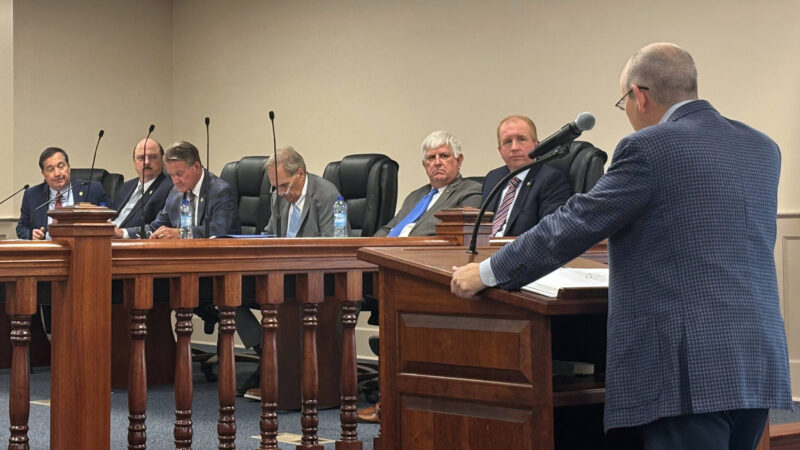
The Alabama Senate unanimously voted to expand the public service commission, and create a Secretary of Energy to address rising electricity prices. A bill in the House would go even further, requiring rate case hearings and limiting utility profits.

Musher from Alabama is going for back-to-back Iditarod wins
Riches and paid appearances haven’t followed Jessie Holmes since he won the world’s most famous sled dog race, the Iditarod, last year. He doesn't mind.
Bill would move Alabama to closed primaries
Right now, any Alabama voter can participate in a primary election. Lawmakers in Montgomery took up a bill this week that would change that system.
Auburn football player uses NIL funds to open a community hub in Birmingham
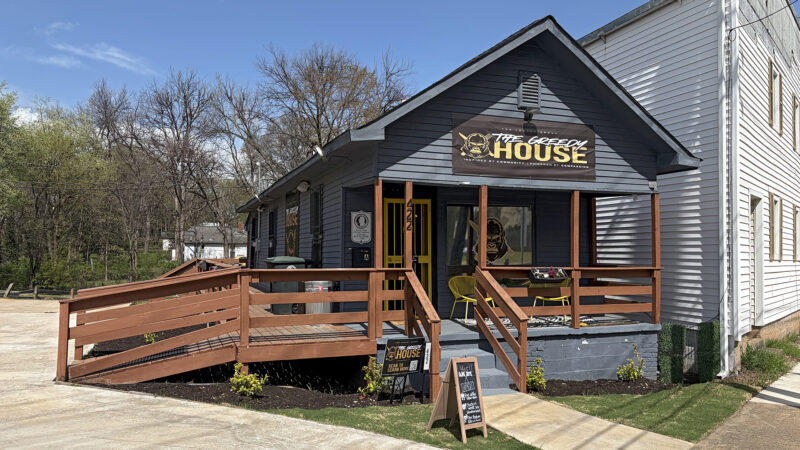
Jourdin Crawford, a freshman defensive lineman at Auburn, used earnings from a Name, Image, and Likeness deal to give back to his hometown.
Ivey commutes death sentence of inmate whose accomplice fired fatal shot
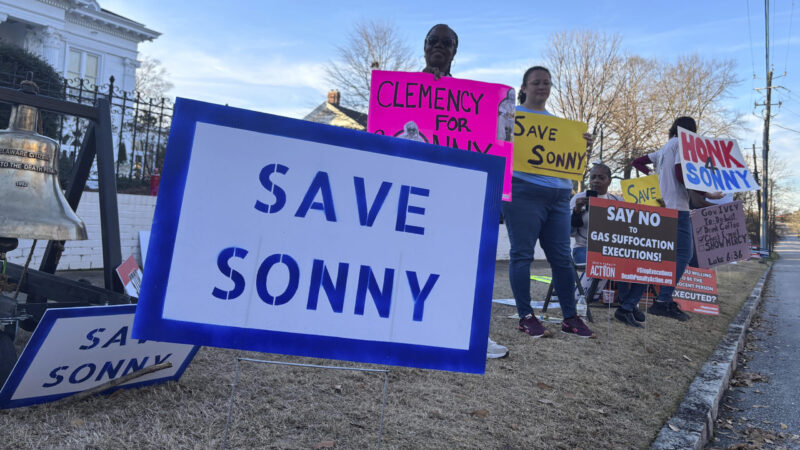
Charles “Sonny” Burton was sentenced to death for the killing of Doug Battle during a 1991 robbery. However, another man shot Battle when Burton had left the building.