
Teaching Tough Topics: NPT Reports
What should school children be taught about Islam, the Confederacy and other topics that are sensitive to some in our society? NPT Reports looks at how curriculum standards are set in Tennessee and why state officials are implementing new procedures to address public concerns as part of the Southern Education Desk‘s series, “Teaching Tough Topics.”
When it comes to teaching difficult or sensitive topics, teachers can use a variety of strategies as long as they follow the mandated curriculum. That curriculum and textbooks are determined far outside the classroom.
In Tennessee, curriculum is set by the Standards Recommendation Committee of the Tennessee State Board of Education. A meeting in November one of the final steps in reviewing standards for math and English language arts, which is the current subject under scrutiny. The review team includes several classroom teachers from across the state, part of a new process in Tennessee to be more transparent and receive more public input. For the first time, the public can comment about curriculum standards on a new web site.
“I think this process is honestly designed to take that input and really use it in a constructive way. So I hope this process will allow people who have strong feelings to be heard and to have comments made and the standards to be adjusted,” says Dr. Sara Heyburn, executive director of the Tennessee Board of Education.
That new process might be tested as never before when the Committee begins its review of social studies standards in January 2016. That review was bumped up by 2 years, in large part due to parent complaints in some districts that the curriculum and textbooks are pro-Islam. Local boards, like the one for Rutherford County Schools, have been facing parent and community complaints about the standards and some textbooks.
“My son was force to read the Koran during the TCAPS social studies test,” says Scott Kozimor, a parent of three children in RCS. “We need to eliminate religion entirely out of the schools, or if we’re going to teach about Islam about Christianity, that they get equal weight and a complete narrative of each one– not just picking parts and pieces.”
“It’s unacceptable indoctrination of Islam—not history,” said Jackie Archer of Murfreesboro. “The teachers are still teaching the five pillars Islam and requiring students to recite and write the Shadah, which says there is no god but Allah and Mohammed is his prophet. No such personal professions of faith are required in other sections on religions, including Christianity.”
In response, the superintendent of Rutherford County Schools encouraged the group to utilize the state’s new online process to register their concerns.
“What you’re wanting to accomplish and the things that you’re wanting to include has got to be directed at those standards,” said Odom. “This board doesn’t set the state standards… We don’t set the test that’s based on those standards that our children have to take.”
Heyburn, who was not with the state board when the current curriculum was set the last time, acknowledges the need to quickly take another look at some requirements in balance with all concerns, complaints and opinions about what students are taught.
“Social studies is more challenging and there’s a lot of material to cover. That’s one of the pieces of feedback at the state that we’ve been getting– that there’s a lot of standards in these current social studies standards,” says Heyburn. “So not only has there been some attention to some of the specific world religions but it’s also the structure and the content. We want to get some of our best teachers to and higher ed faculty to help us wrestle with those tensions between breadth and depth and come out on the right place on the other side.”
Odom points out that tough topics that are relevant to history and social studies can not be simply omitted because they are sensitive to some.
“It’s most likely that religion in some way will be embedded in social studies from elementary school through college,” says Odom. “The key is that it’s presented in a historic manner that is not trying to proselytize or bring students to one religion or the other.”
“Certainly at the state level we can’t control every micro-decision that every teacher in the state is making,” adds Heyburn. “What we can do is create a solid bedrock for the standards which are the basis of their instructional decisions. That’s ultimately what you want is for students to think deeply, wrestle with topics and make their own decisions about how they feel about the world.”
This report is supported by a grant from the Corporation for Public Broadcasting.
Related: Other stories in the “Teaching Tough Topics” series.

Crew of fatal US military crash included Alabama father recently deployed
The six U.S. service members who died in the crash of a U.S. military refueling aircraft included an Alabama father who had just been promoted and deployed. The U.S. government released the identities of the deceased service members Saturday.
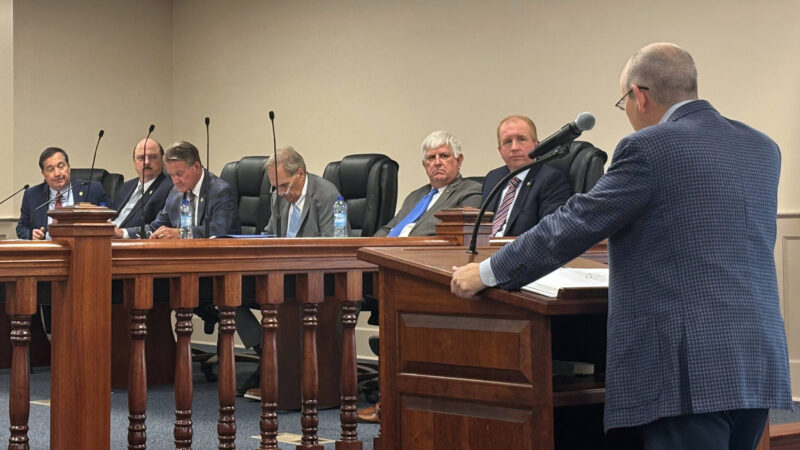
Alabama poised to drastically overhaul utility regulation. Will it lower electric bills?
The Alabama Senate unanimously voted to expand the public service commission, and create a Secretary of Energy to address rising electricity prices. A bill in the House would go even further, requiring rate case hearings and limiting utility profits.

Musher from Alabama is going for back-to-back Iditarod wins
Riches and paid appearances haven’t followed Jessie Holmes since he won the world’s most famous sled dog race, the Iditarod, last year. He doesn't mind.
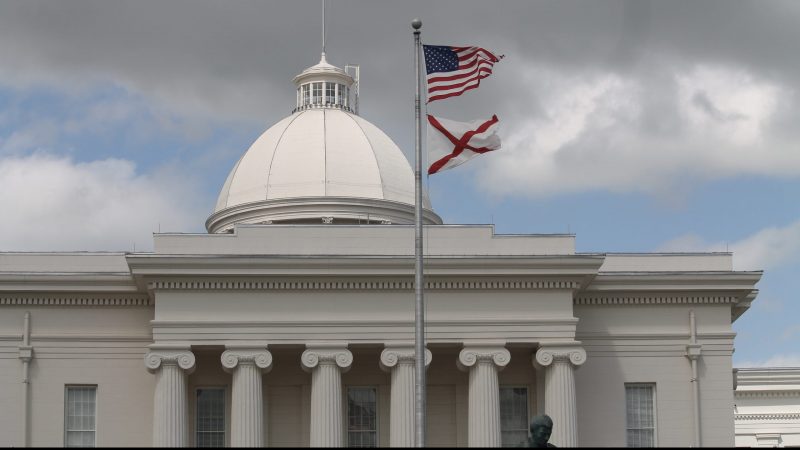
Bill would move Alabama to closed primaries
Right now, any Alabama voter can participate in a primary election. Lawmakers in Montgomery took up a bill this week that would change that system.
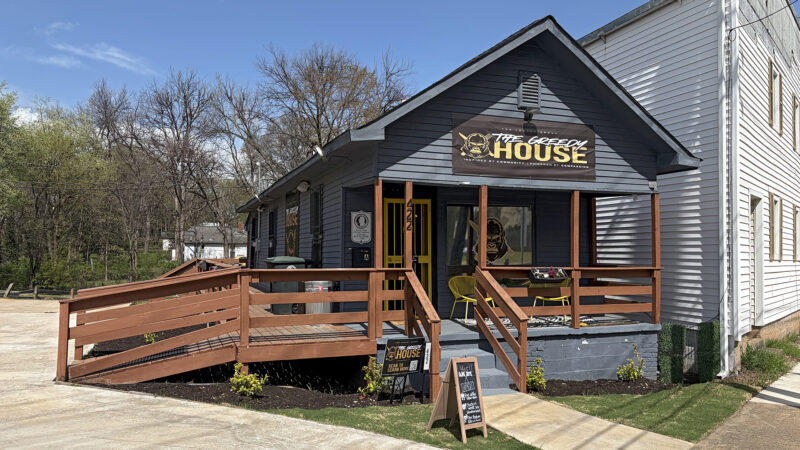
Auburn football player uses NIL funds to open a community hub in Birmingham
Jourdin Crawford, a freshman defensive lineman at Auburn, used earnings from a Name, Image, and Likeness deal to give back to his hometown.

Ivey commutes death sentence of inmate whose accomplice fired fatal shot
Charles “Sonny” Burton was sentenced to death for the killing of Doug Battle during a 1991 robbery. However, another man shot Battle when Burton had left the building.