
For Undocumented Alabamians, Medicaid Cuts Could Make Health Care Even Harder To Find
With Alabama’s more than $200 million budget shortfall, lawmakers are struggling to fund Medicaid, which provides health care for low income individuals and families. Undocumented immigrants can’t receive care under Medicaid, but advocates for the undocumented say any Medicaid cuts could make health care even more difficult to find for this marginalized group.
Some are looking for other ways to help the undocumented pay for care. On a recent Saturday, Spanish cheers echo across the soccer fields at Carver High School in North Birmingham. Men in blue jerseys brave the heat while volunteers prepare fresh tacos and pass out sodas.
“We’re selling chips for a dollar, sodas for a dollar, tacos for 2 dollars,” explain two teen volunteers.
Sitting off to the side, a middle-aged man in a wheelchair rests in the shade and takes it all in. His name is Martin, and he is the center of the day’s’ festivities – a soccer tournament called “Angels Over Wheels.” The event is a community-led effort to raise money for Martin, who explains that he came to the US in search of a better life.
“I arrived in 2001. Like all immigrants, I came here to find work and make money to return to my country,” says Martin.

Mary Scott Hodgin,WBHM
Participants in the “Angels Over Wheels” soccer tournament raise money for Martin’s health care.
But after just two years living and working in the U.S., Martin says he fell from a ladder at his construction job, suffering a severe spinal cord injury. He has not walked since the accident, unable to afford physical therapy that could help him regain control of his legs. He says, “I don’t have insurance, because I don’t have papers.”
Undocumented immigrants in Alabama like Martin cannot receive state or federal assistance to cover the costs of health care. They often use charity clinics or hospital emergency rooms.
Kari White is an assistant professor with UAB’s School of Public Health. She says that less funding for Medicaid would trickle down, leaving providers with fewer resources to help the poor and undocumented. She explains, “a group that already had disparate health care outcomes for a variety of reasons – limited access to care, low socioeconomic status – they’re going to be left further and further behind.”
At Cahaba Valley Health Care in Hoover, volunteers perform vision and dental screenings. This charity clinic caters to the local Hispanic community. Edwinna Taylor started it in 2001; she feels that health care access for the undocumented is already strained. She states, “You know it’s just not a friendly state for undocumented people. And they’re just afraid. They just don’t know who to trust.”
Taylor says even though her clinic does not receive state funding, cuts to the Medicaid budget could increase their patient load. This means more competition for appointments, and less time and money to treat undocumented immigrants. Taylor says it’s already a struggle to find specialized care for undocumented patients with chronic conditions. She explains, “The hard part is finding the specialists; finding the hospitals, finding the ones that will do the tests, that will provide the long-term care. It’s extremely difficult, if not impossible.”
Often, the only option for undocumented patients who need specialized care is through a hospital emergency room. Monique Okoye is an immigration lawyer with Vulcan Law Firm. She argues emergency room care is ineffective and costly for the entire health care system. “We should not be forcing people to use emergency rooms as their primary care physicians,” she explains. “Because number one it’s too expensive and it’s driving up costs for all of us, and number two people are having to wait until they’re desperately ill to be treated.”
Providers like UAB Hospital and Cooper Green Mercy Hospital say they lose millions of dollars every year from unpaid patient bills. If the state opts to cut Medicaid spending, these providers lose even more funds. Hospital officials say it would be increasingly difficult to treat those most in need.
Undocumented immigrants currently represent a small portion of Alabama’s uninsured, but Alabama has one of the fastest growing Hispanic populations in the country. In a way, that might be a good thing, says Okoye. She explains that immigrants, documented or not, support one another.
“It’s amazing how immigrant communities in the United States – and not just Latino communities but all immigrant groups in the United States – how they work together,” says Okoye. “Damage to one person in their community – it ripples.”
The volunteers raising money for Martin agree. Many say they experience the same barriers to health care as Martin, Like Benito. He’s also undocumented, and eager to pitch in. Benito says, “He (Martin) is immobile and unable to fend for himself and we are here hosting an event to help him.”
They day’s event raised around $2,000 to cover Martin’s medical expenses. While he continues to receive checkups from local charity clinics, Martin doubts he’ll ever be able to afford physical therapy. But despite what he’s been through, he says he’s optimistic, stating “I feel good. I feel grateful. The Latino community is very united.”
Organizers say they plan on hosting more events like this. For now, this type of community support looks to be the only financial assistance available to some area undocumented immigrants. They’re hoping cuts to Medicaid don’t push them out of the few places where they can receive care.

Crew of fatal US military crash included Alabama father recently deployed
The six U.S. service members who died in the crash of a U.S. military refueling aircraft included an Alabama father who had just been promoted and deployed. The U.S. government released the identities of the deceased service members Saturday.
Alabama poised to drastically overhaul utility regulation. Will it lower electric bills?
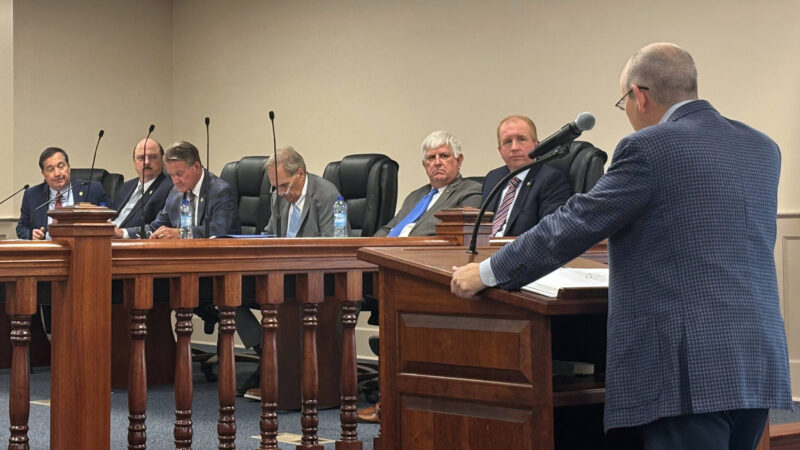
The Alabama Senate unanimously voted to expand the public service commission, and create a Secretary of Energy to address rising electricity prices. A bill in the House would go even further, requiring rate case hearings and limiting utility profits.

Musher from Alabama is going for back-to-back Iditarod wins
Riches and paid appearances haven’t followed Jessie Holmes since he won the world’s most famous sled dog race, the Iditarod, last year. He doesn't mind.
Bill would move Alabama to closed primaries
Right now, any Alabama voter can participate in a primary election. Lawmakers in Montgomery took up a bill this week that would change that system.
Auburn football player uses NIL funds to open a community hub in Birmingham
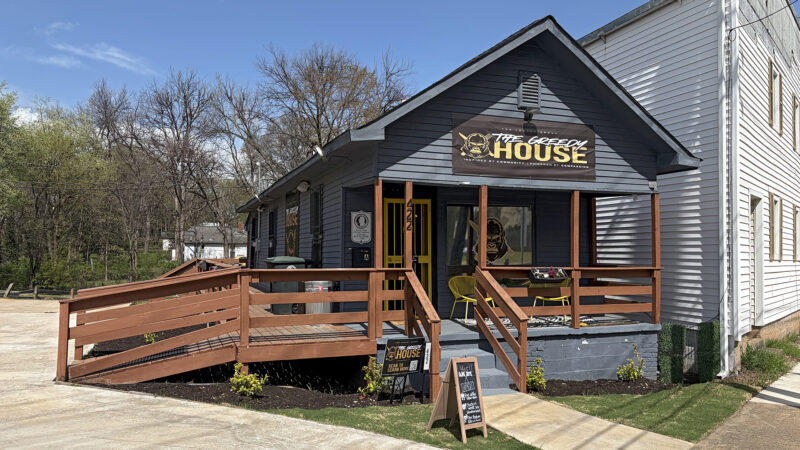
Jourdin Crawford, a freshman defensive lineman at Auburn, used earnings from a Name, Image, and Likeness deal to give back to his hometown.
Ivey commutes death sentence of inmate whose accomplice fired fatal shot
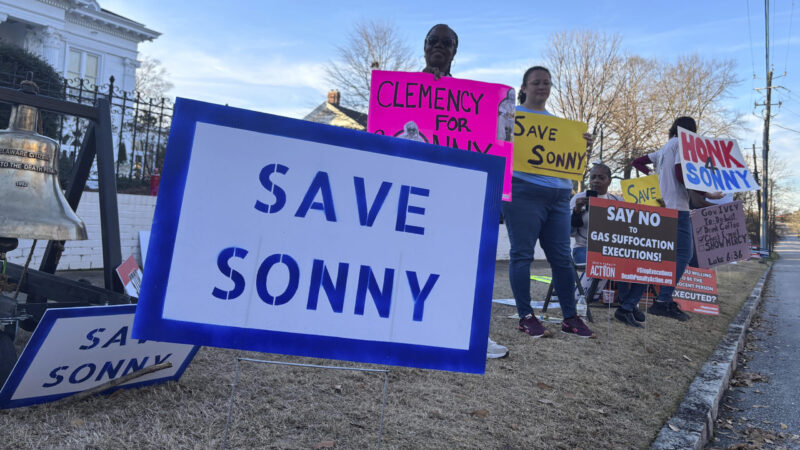
Charles “Sonny” Burton was sentenced to death for the killing of Doug Battle during a 1991 robbery. However, another man shot Battle when Burton had left the building.