
Lessons For New Orleans
Charter schools are changing American education. Some say for the better, some say the worse. This week the Southern Education Desk looks at the charter school movement throughout the south. We start in New Orleans, the testing ground for the movement. Nearly all the city’s public schools have been converted into charters: publicly funded, but privately run. Now other districts are looking to New Orleans as a model for school reform. WWNO‘s Mallory Falk reports on a major lesson that’s emerged.
This summer’s National Charter Schools Conference kicked off with a Mardi Gras parade. Local charter school leaders rode by on floats. They tossed plastic cups and beads to the crowd – made up of educators and policymakers. It was a festive start to a conference focused, in part, on what other school districts can from New Orleans.
There are many lessons. But perhaps one of the largest: even in a decentralized system, schools need oversight.
“You can’t have a completely unregulated system…and expect to have every child educated in the way that they deserve to be educated. There need to be system-level checks on school behavior.”
That’s Joshua Perry, Executive Director of the Louisiana Center for Children’s Rights. One hallmark of New Orleans reform is a heavy focus on testing. That’s brought gains: test scores, graduation and college entry rates are up, according to state data. But it also creates an incentive for schools to push out low-performing students.
“When the only thing that’s important are scores, you can unfortunately start to see bad behavior in service of getting scores up,” said Perry. “And I think there’s no doubt that we did see some of that bad behavior. Young people pushed away from school and out of the school system in the service of a pursuit of scores.”
That can happen on the front end. When students apply to schools. Tulane University’s Education Research Alliance for New Orleans found some charter schools tried to steer away undesirable students. Here’s researcher Huriya Jabbar.
“So even after the student was admitted, having an interview process or some other process where they made sure that they were a good fit. That they could meet the high expectations of the school. And students who they didn’t think could meet those expectations, they suggested that they go somewhere else.”
Schools used other tactics to recruit the right kinds of students, and keep out the wrong ones. Like holding invitation-only promotional events. Or not reporting open seats. The big takeaway, Jabbar says, “Schools need to have some kind of centralized oversight to make sure that parents are able to access schools, that there is a fair marketplace.”
And that once students are in school, they can stay. Until recently, each charter school held its own expulsion hearings. That left room for them to skirt the law. Some had shockingly high expulsion rates.
But there’s been a shift in the past few years. Now the state-run Recovery School District oversees enrollment and expulsions. There’s a central application for most schools. And a central hearing office for expulsions. Both are praised as key steps toward a more equitable system. Where schools can’t cherry pick – or easily kick out – students. Again, here’s Joshua Perry:
“It’s incontrovertible now that the percentage of youth expelled in New Orleans is lower than the state-wide percentage and that’s something that New Orleans should feel really really good about.”
Perry says he’d like to see a similar process for suspensions. And a way for schools to get graded not only on test scores, but on how well they serve every student.
As for parent satisfaction with the landscape – it depends who you ask. Martesha Lancaster chose a KIPP school for her son. She likes the early emphasis on college. The fact that her third grader can rattle off his top five college choices.
“When I was eight, I didn’t even think about college. It’s good that they’re instilling it now. It gives them a focus. It gives them a goal.”
Lancaster’s son got into – and is thriving at – his first choice school. Ashana Bigard and her eight-year-old daughter had a different experience. They didn’t get into their first choice – an A-rated, high demand Montessori school. And Bigard wasn’t thrilled with most of the other options. Her just started her third school, hoping to find the right fit.
“It does feel painful when you’re sending your child to a school that you know is not healthy for them,” says Bigard. “And when my child comes home from school and she’s miserable and doesn’t want to go back and I have to send her back, it hurts.”
New Orleans rebuilt its school system in a rush, after a disaster. For other districts, moving at a slower pace, there’s a critical lesson: create incentives, and provide oversight, so schools educate all students.
This report was made possible through a grant from the Corporation for Public Broadcasting. Tomorrow in Part 2, the Southern Education Desk looks at the marketing and methods for charter schools in student recruitment.

Crew of fatal US military crash included Alabama father recently deployed
The six U.S. service members who died in the crash of a U.S. military refueling aircraft included an Alabama father who had just been promoted and deployed. The U.S. government released the identities of the deceased service members Saturday.
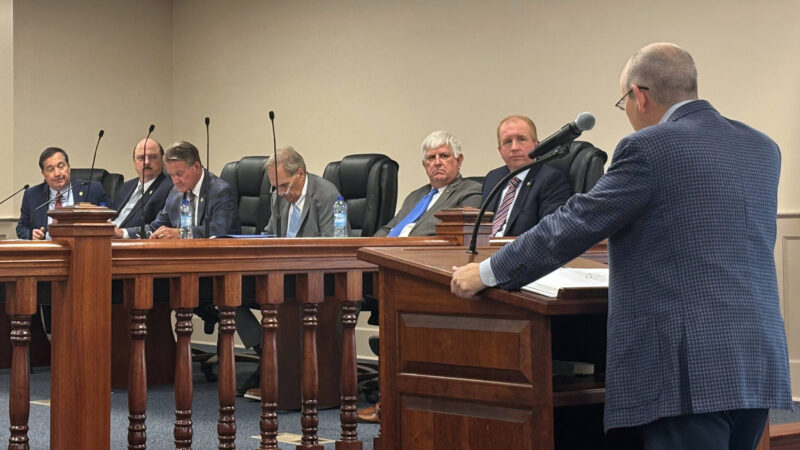
Alabama poised to drastically overhaul utility regulation. Will it lower electric bills?
The Alabama Senate unanimously voted to expand the public service commission, and create a Secretary of Energy to address rising electricity prices. A bill in the House would go even further, requiring rate case hearings and limiting utility profits.

Musher from Alabama is going for back-to-back Iditarod wins
Riches and paid appearances haven’t followed Jessie Holmes since he won the world’s most famous sled dog race, the Iditarod, last year. He doesn't mind.
Bill would move Alabama to closed primaries
Right now, any Alabama voter can participate in a primary election. Lawmakers in Montgomery took up a bill this week that would change that system.
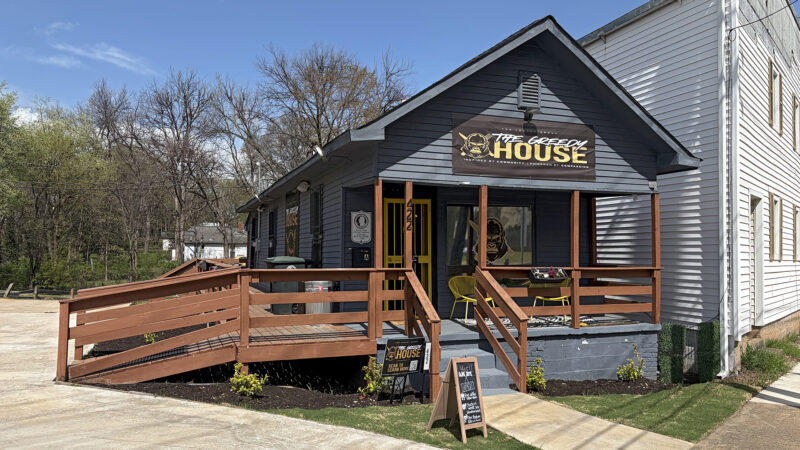
Auburn football player uses NIL funds to open a community hub in Birmingham
Jourdin Crawford, a freshman defensive lineman at Auburn, used earnings from a Name, Image, and Likeness deal to give back to his hometown.
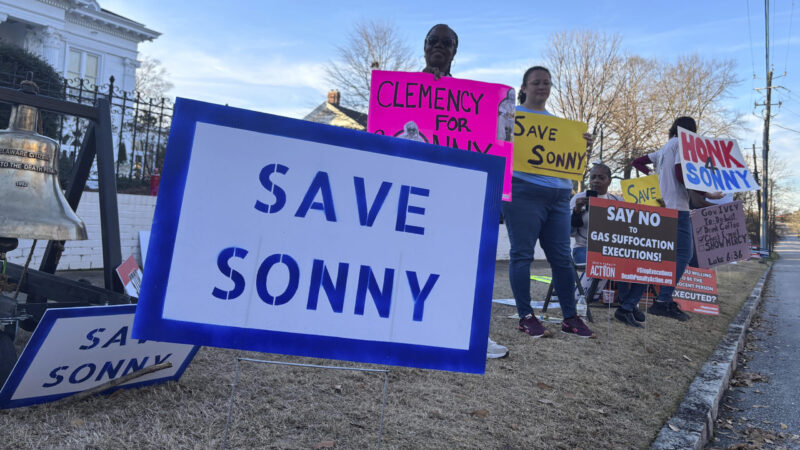
Ivey commutes death sentence of inmate whose accomplice fired fatal shot
Charles “Sonny” Burton was sentenced to death for the killing of Doug Battle during a 1991 robbery. However, another man shot Battle when Burton had left the building.