Mental Healthcare Community Worries More Cuts are on the Way
When Alabama Psychiatric Services suddenly closed in February, 28,000 people who depended on the company for mental healthcare found their treatment thrown into chaos.
Betti Fortier is one of those patients and she found out Alabama Psychiatric Services was closing on Facebook.
“I was just scrolling through my newsfeed and a friend of mine posted a link to an article with the caption, ‘please say it’s not true,’” said Fortier.
But of course it was. Fortier saw an APS doctor in Montgomery. She deals with attention deficit hyperactivity disorder, anxiety and depression. That’s in the midst of an already stressful life. She took early retirement to care for her elderly mother. Her special needs brother lives with her and her husband. Fortier also has a teenage son at home.
Andrew Yeager
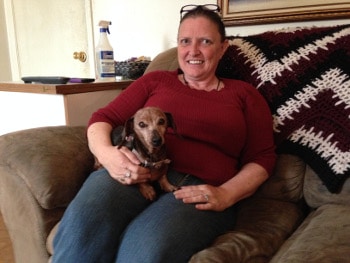
Betti Fortier sits in her home with her dog Trixie. Fortier is a former APS patient in Montgomery.
The news of APS closing was shocking.
“It was just like panic set in,” said Fortier. “What am I going to do now?”
An official letter arrived later that explained the company would close in less than 10 days. A statement from APS at the time blames a “decrease in funding from Blue Cross Blue Shield of Alabama and a change in its model of providing behavioral health.”
A company called New Directions Behavioral Health actually manages mental healthcare for Blue Cross. They’ve done so since January 2014.
That company, New Directions, has done the same thing for Blue Cross Blue Shield of Florida. Their management in the Sunshine State has some Alabama mental healthcare professionals wondering if more closures are possible or if something illegal is happening.
American Psychological Association attorney Alan Nessman explains why. He says when New Directions came to Florida in 2011 they did a big rate cut.
That’s the amount providers are reimbursed from the insurer for services. He says that caused major disruptions because reimbursements are critical to the bottom line, particularly for a private clinic.
“There were situations where people whose practices were heavily dependent on Blue Cross Blue Shield patients actually went out of business,” said Nessman.
Nessman says that shrinks the number of places people can receive care for mental health. But he also has a legal concern.
“Our main view on rates cuts like this is that they’re a violation of the mental health parity act,” said Nessman.
The Mental Health Parity Act is a very complicated law. The idea is when an insurer offers mental healthcare coverage it must be equivalent to the medical or surgical care it offers. Nessman says they believe if reimbursement rates were still reasonable for medical services, while being cut for mental healthcare, that’s illegal. The American Psychological Association filed complaints with Florida and federal regulators. Nessman says the case is ongoing.
“If the regulator process can’t resolve this issue, we may have to think about lawsuits,” said Nessman. “But we’re hoping the regulatory process can bring a resolution to this issue.”
Federal regulators told WBHM they had no record of complaints against New Directions. Regulators in Florida say they have taken action against the company, but for issues separate from the rate cuts.
Other insurance companies around the country have reduced rates too, but several industry observers described New Directions as more aggressive.
What happened in Florida and the sudden closure of Alabama Psychiatric Services sent shockwaves through the mental healthcare community in Alabama.
“The fear is that they will just continue to cut reimbursement rates, which is either going to make it more difficult for providers to stay in practice or it’s going to put a heavier burden on the patient to have to pay a larger co-pay,” said Julie McDonald, a clinical psychologist in Birmingham.
That brings up an important detail. If New Directions is paying out less in reimbursements or fewer patients can access services, the implication is that helps New Directions’ bottom line. That company is owned in part by Blue Cross Blue Shield of Alabama and Florida.
Alabama Psychiatric Services, Blue Cross Blue Blue Shield of Alabama and New Directions did not respond to requests for an interview, so it’s unclear what specific role reimbursement rates may have played in the closure of APS. But in a joint statement, Blue Cross Blue Shield and New Directions say they don’t see the scenario described playing out in Alabama. Also, they are working to minimize disruption to patients after APS closed and that because of changes in the Affordable Care Act many insurers and providers are having to develop new business models.
That’s not much comfort to Betti Fortier, the former APS patient.
“You know I understand they’re in business, but their business is people,” Fortier said. “What about the lives of the people that are hanging in the balance?”
Fortier got a three-month supply of her medication before APS closed, but still hasn’t found new treatment. Fortier hoping her former doctor will open her own practice. In the meantime, she’s in limbo.
Note: Blue Cross Blue Shield of Alabama is an underwriter on WBHM.

Crew of fatal US military crash included Alabama father recently deployed
The six U.S. service members who died in the crash of a U.S. military refueling aircraft included an Alabama father who had just been promoted and deployed. The U.S. government released the identities of the deceased service members Saturday.
Alabama poised to drastically overhaul utility regulation. Will it lower electric bills?
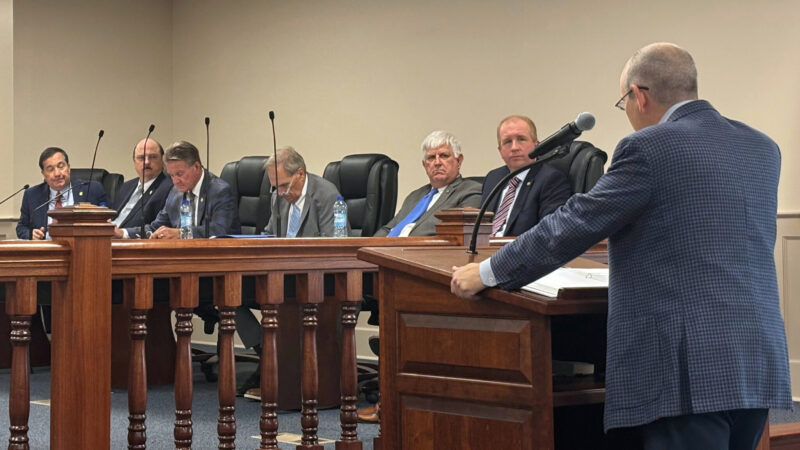
The Alabama Senate unanimously voted to expand the public service commission, and create a Secretary of Energy to address rising electricity prices. A bill in the House would go even further, requiring rate case hearings and limiting utility profits.

Musher from Alabama is going for back-to-back Iditarod wins
Riches and paid appearances haven’t followed Jessie Holmes since he won the world’s most famous sled dog race, the Iditarod, last year. He doesn't mind.
Bill would move Alabama to closed primaries
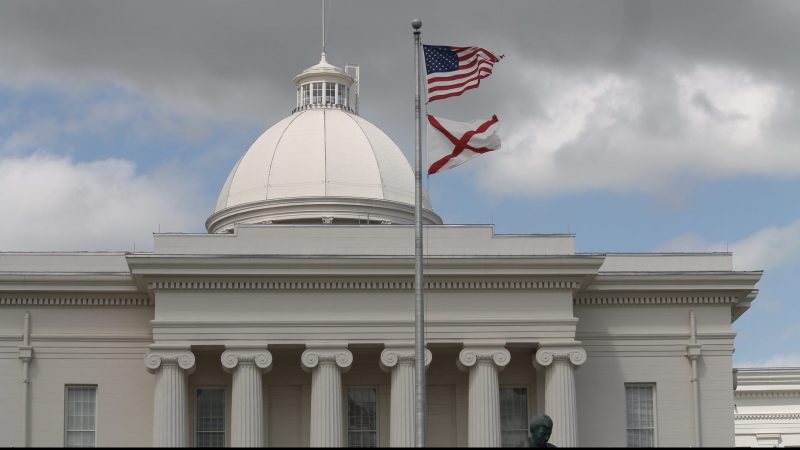
Right now, any Alabama voter can participate in a primary election. Lawmakers in Montgomery took up a bill this week that would change that system.
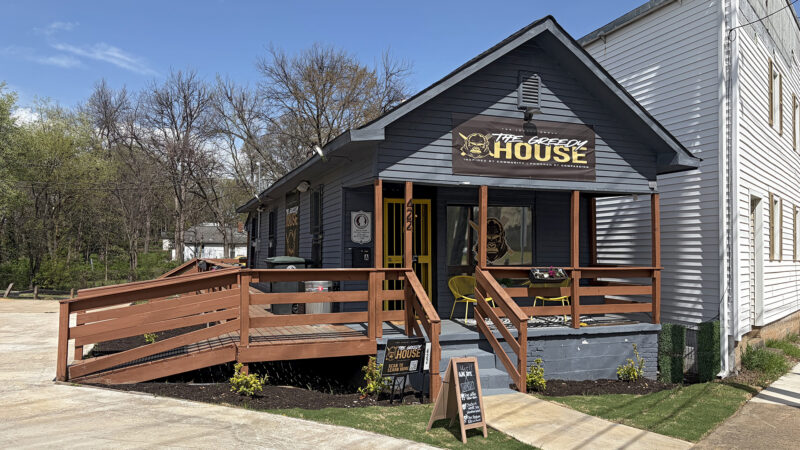
Auburn football player uses NIL funds to open a community hub in Birmingham
Jourdin Crawford, a freshman defensive lineman at Auburn, used earnings from a Name, Image, and Likeness deal to give back to his hometown.
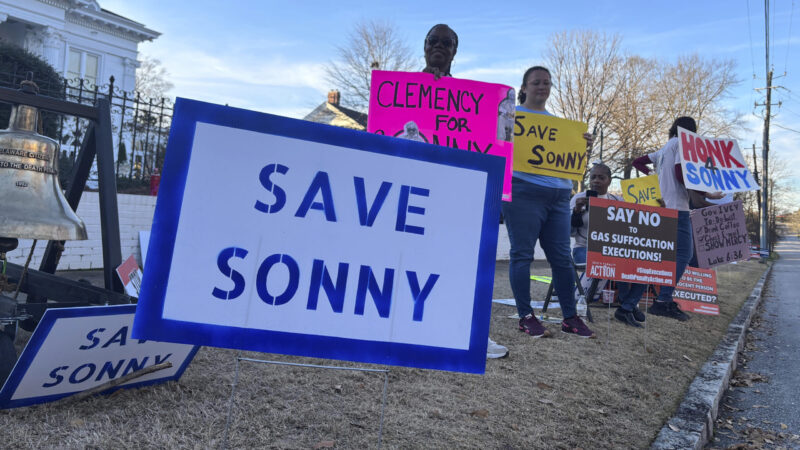
Ivey commutes death sentence of inmate whose accomplice fired fatal shot
Charles “Sonny” Burton was sentenced to death for the killing of Doug Battle during a 1991 robbery. However, another man shot Battle when Burton had left the building.
