Interview: Dr. Edward O. Wilson, Biologist and Alabama Native
Gigi Douban | April 30, 2014
 ========= Old Image Removed =========1Array
(
    [_wp_attached_file] => Array
        (
            [0] => 2014/04/E-O-Wilson-001.jpg
        )

    [_wp_attachment_metadata] => Array
        (
            [0] => a:5:{s:5:"width";i:600;s:6:"height";i:400;s:4:"file";s:26:"2014/04/E-O-Wilson-001.jpg";s:5:"sizes";a:6:{s:6:"medium";a:4:{s:4:"file";s:26:"E-O-Wilson-001-336x224.jpg";s:5:"width";i:336;s:6:"height";i:224;s:9:"mime-type";s:10:"image/jpeg";}s:9:"thumbnail";a:4:{s:4:"file";s:26:"E-O-Wilson-001-140x140.jpg";s:5:"width";i:140;s:6:"height";i:140;s:9:"mime-type";s:10:"image/jpeg";}s:9:"wbhm-icon";a:4:{s:4:"file";s:24:"E-O-Wilson-001-80x80.jpg";s:5:"width";i:80;s:6:"height";i:80;s:9:"mime-type";s:10:"image/jpeg";}s:18:"wbhm-featured-home";a:4:{s:4:"file";s:26:"E-O-Wilson-001-467x311.jpg";s:5:"width";i:467;s:6:"height";i:311;s:9:"mime-type";s:10:"image/jpeg";}s:22:"wbhm-featured-carousel";a:4:{s:4:"file";s:26:"E-O-Wilson-001-398x265.jpg";s:5:"width";i:398;s:6:"height";i:265;s:9:"mime-type";s:10:"image/jpeg";}s:14:"post-thumbnail";a:4:{s:4:"file";s:26:"E-O-Wilson-001-125x125.jpg";s:5:"width";i:125;s:6:"height";i:125;s:9:"mime-type";s:10:"image/jpeg";}}s:10:"image_meta";a:12:{s:8:"aperture";s:1:"0";s:6:"credit";s:0:"";s:6:"camera";s:0:"";s:7:"caption";s:0:"";s:17:"created_timestamp";s:1:"0";s:9:"copyright";s:0:"";s:12:"focal_length";s:1:"0";s:3:"iso";s:1:"0";s:13:"shutter_speed";s:1:"0";s:5:"title";s:0:"";s:11:"orientation";s:1:"0";s:8:"keywords";a:0:{}}}
        )

    [_media_credit] => Array
        (
            [0] =>
        )

    [_navis_media_credit_org] => Array
        (
            [0] => The University of Alabama
        )

    [_navis_media_can_distribute] => Array
        (
            [0] => 1
        )

    [_imagify_optimization_level] => Array
        (
            [0] => 1
        )

    [_imagify_data] => Array
        (
            [0] => a:2:{s:5:"stats";a:3:{s:13:"original_size";i:253947;s:14:"optimized_size";i:179256;s:7:"percent";d:29.41;}s:5:"sizes";a:9:{s:4:"full";a:5:{s:7:"success";b:1;s:8:"file_url";s:54:"https://news.wbhm.org/media/2014/04/E-O-Wilson-001.jpg";s:13:"original_size";i:77615;s:14:"optimized_size";i:47212;s:7:"percent";d:39.170000000000002;}s:9:"thumbnail";a:2:{s:7:"success";b:0;s:5:"error";s:77:"WELL DONE. This image is already compressed, no further compression required.";}s:6:"medium";a:5:{s:7:"success";b:1;s:8:"file_url";s:62:"https://news.wbhm.org/media/2014/04/E-O-Wilson-001-336x224.jpg";s:13:"original_size";i:23529;s:14:"optimized_size";i:17755;s:7:"percent";d:24.539999999999999;}s:9:"wbhm-icon";a:5:{s:7:"success";b:1;s:8:"file_url";s:60:"https://news.wbhm.org/media/2014/04/E-O-Wilson-001-80x80.jpg";s:13:"original_size";i:3682;s:14:"optimized_size";i:3622;s:7:"percent";d:1.6299999999999999;}s:13:"wbhm-featured";a:5:{s:7:"success";b:1;s:8:"file_url";s:62:"https://news.wbhm.org/media/2014/04/E-O-Wilson-001-600x338.jpg";s:13:"original_size";i:53375;s:14:"optimized_size";i:39392;s:7:"percent";d:26.199999999999999;}s:20:"wbhm-featured-square";a:5:{s:7:"success";b:1;s:8:"file_url";s:62:"https://news.wbhm.org/media/2014/04/E-O-Wilson-001-300x300.jpg";s:13:"original_size";i:26500;s:14:"optimized_size";i:19641;s:7:"percent";d:25.879999999999999;}s:18:"wbhm-featured-home";a:5:{s:7:"success";b:1;s:8:"file_url";s:62:"https://news.wbhm.org/media/2014/04/E-O-Wilson-001-467x311.jpg";s:13:"original_size";i:38624;s:14:"optimized_size";i:28726;s:7:"percent";d:25.629999999999999;}s:22:"wbhm-featured-carousel";a:5:{s:7:"success";b:1;s:8:"file_url";s:62:"https://news.wbhm.org/media/2014/04/E-O-Wilson-001-398x265.jpg";s:13:"original_size";i:30622;s:14:"optimized_size";i:22908;s:7:"percent";d:25.190000000000001;}s:14:"post-thumbnail";a:2:{s:7:"success";b:0;s:5:"error";s:77:"WELL DONE. This image is already compressed, no further compression required.";}}}
        )

    [_imagify_status] => Array
        (
            [0] => success
        )

)
1680725785
1398816000
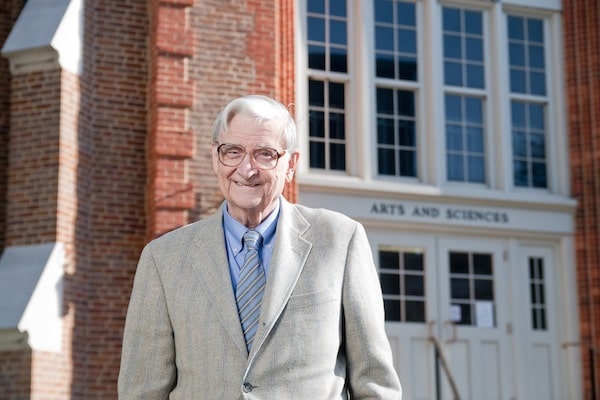
Dr. Edward O. Wilson.
The University of Alabama
Dr. Edward O. Wilson is best known for his work studying ants. Wilson discovered the first fire ant colony in North America, as a 13-year-old playing outside in Mobile.
The world-renowned scientist recently came back to his alma mater, The University of Alabama, for a week-long symposium celebrating Alabama’s biodiversity.
Reporter Gigi Douban talked with Wilson about what makes Alabama so special, what to do when ants invade your kitchen and his recent contributions to UA.