
How Do Newspapers Affect Voting and Community Participation?
Since 2007, more than 250 newspapers have stopped publishing. As newspapers across the country fold or choose to publish less frequently, media experts are asking big questions. If newspapers scale back, will citizens know less, and even care less, about where they live? And does this affect how many people vote? Research says “yes.”
On the heels of Alabama’s June 3 primaries, Les Lovoy reports on the challenges today’s newspapers face, and what it means for civic life around Birmingham – and across the country.
It’s early on a Wednesday morning. Guin Robinson sits in a booth at Bogue’s Restaurant. He sips his coffee, finishes his a white egg omelet, as he flips through The Birmingham News. Robinson says he reads the paper religiously. But he can’t start each morning with the paper like he used to. In September 2012, The Birmingham News stopped publishing a daily newspaper. Now they publish three days a week. Robinson still misses the gap in his routine.
“I stayed engaged. That’s how my family started its day. And so, that’s how we got the news,” Robinson said. “Certainly television news, but to have a paper in your hand, and so I became very accustomed to that, certainly habit, it was how I started my day.”
With no daily newspaper, Robinson says he feels less connected to his community, especially when it concerns politics.
“My criticism and my concern for this community is what about city hall? What about county government? What about state politics?, Robinson asks. “I’ve had to work to find out what going on in Washington or Montgomery. You cannot tell me in any regard that’s not harming our community.”
“One of the things we look at is what news is significant in a community. I’m interested in leading a journalism organization focused in significant community news,” says Michelle Holmes, vice president of content of the Alabama Media Group, the company that owns al.com and The Birmingham News. She says while her organization is still committed to covering local and state politics, there has been a shift in what and how much they cover.
“And while old style journalism did say you’re the stenographer. You go and right down everything at every meeting, it’s pretty clear that the public doesn’t have much interest in that,” she explains.
The public nowadays may not be interested in every detail of every civic meeting, But, according to Lee Shaker, newspapers definitely do affect community involvement. Shaker is a communications professor at Portland State University. He’s examined the death of the Rocky Mountain News in Denver and the Seattle Post-Intelligencer’s print edition in 2009.
“The obvious conclusion was that the closure of these two newspapers had a measurable and negative affect upon citizen civic engagement in their communities.” Shaker noted.
From a research perspective, they couldn’t have expired at a better time. Months earlier the Census Bureau just started collecting data on how deeply citizens were involved with their communities in big cities across the country. Shaker was able to compare the results from Denver and Seattle with 20 other cities in the US.
“So, in my research I found that civic engagement declined significantly on four or five indicators in Denver in 2008 and 2009 and two of five in Seattle between 2008 and 2009,” Shaker said. “Meanwhile, when you look across the country, basically civic engagement was unchanged in pretty much every city in the sample over that same time period.”
He says the evidence is clear: newspapers keep people involved in their communities and government. What happens next? Experts say there are no easy answers. And while less newspapers, or less frequent publication, has real impact, the numbers show many people don’t see a link. Or even care.
In 2009, The Pew Research Center for the People & the Press surveyed about 1,000 adults. Only 43% said losing their local newspapers would hurt civic life in their community “a lot.” A mere 33% said they would miss reading the local newspaper a lot if it were no longer available.
Felicia Mason, executive director of the Alabama Press Association says just because a newspaper prints something, you can’t make someone read it. She says it’s a partnership between the news gathering organization and the reader.
Jason Stverak agrees. He’s president of the Franklin Center for Government and Public Integrity, located in Virginia.
“Yes, it’s the responsibility of the individual and the citizen in their city, their county, their state, their nation to become involved and ask questions,” Stverak explained. “That’s what an active citizen should do. But, it is also the role of the fourth estate, as a newspaper, we are there to comment or media operation. We are there to share information because the public doesn’t know about it.”
As newspapers like The Birmingham News grapple with the new world order of journalism, they’re focused on creating ways and means to get readers to be engaged. For example, Michele Homes of al.com says blogs, live chats and reader comments are creating a new town hall for community involvement.

Crew of fatal US military crash included Alabama father recently deployed
The six U.S. service members who died in the crash of a U.S. military refueling aircraft included an Alabama father who had just been promoted and deployed. The U.S. government released the identities of the deceased service members Saturday.
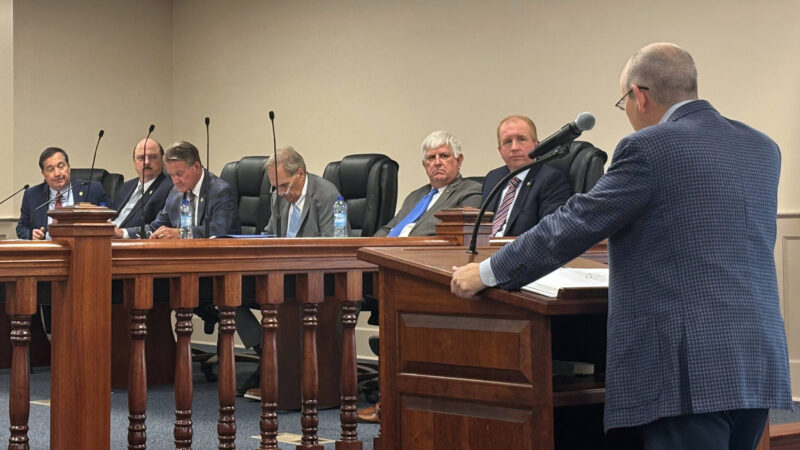
Alabama poised to drastically overhaul utility regulation. Will it lower electric bills?
The Alabama Senate unanimously voted to expand the public service commission, and create a Secretary of Energy to address rising electricity prices. A bill in the House would go even further, requiring rate case hearings and limiting utility profits.

Musher from Alabama is going for back-to-back Iditarod wins
Riches and paid appearances haven’t followed Jessie Holmes since he won the world’s most famous sled dog race, the Iditarod, last year. He doesn't mind.
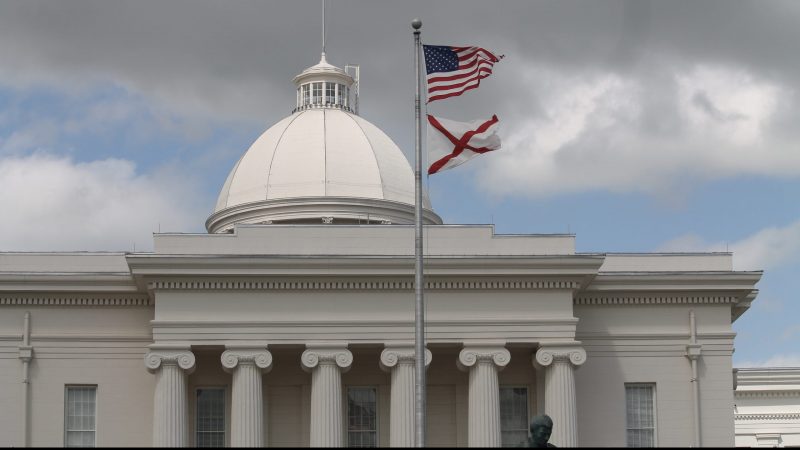
Bill would move Alabama to closed primaries
Right now, any Alabama voter can participate in a primary election. Lawmakers in Montgomery took up a bill this week that would change that system.
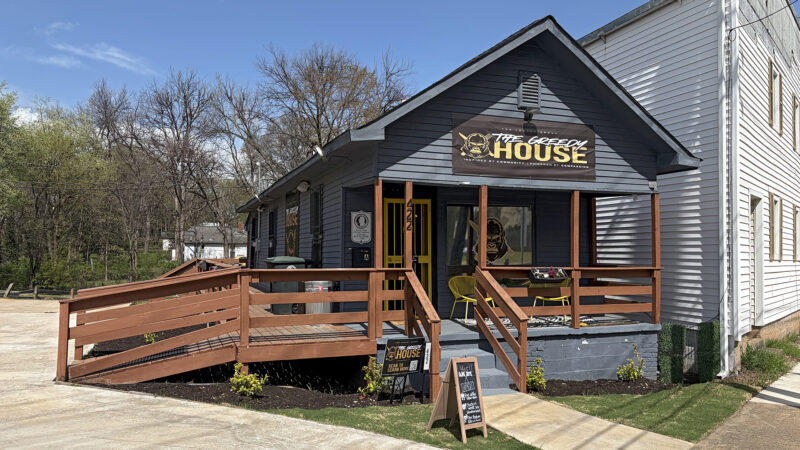
Auburn football player uses NIL funds to open a community hub in Birmingham
Jourdin Crawford, a freshman defensive lineman at Auburn, used earnings from a Name, Image, and Likeness deal to give back to his hometown.
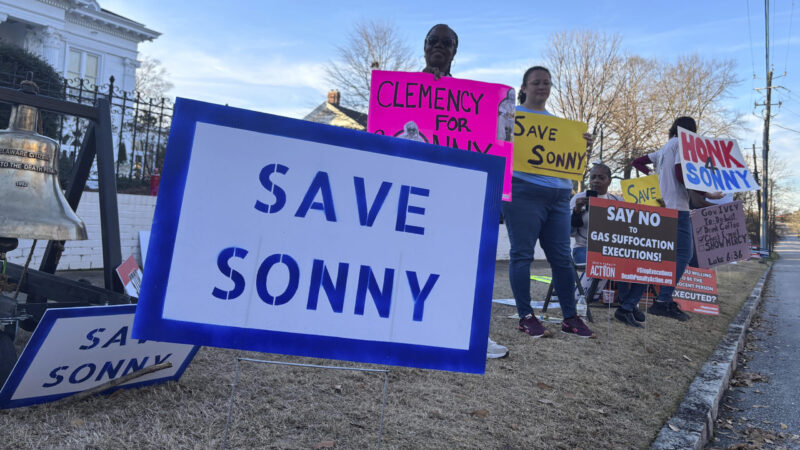
Ivey commutes death sentence of inmate whose accomplice fired fatal shot
Charles “Sonny” Burton was sentenced to death for the killing of Doug Battle during a 1991 robbery. However, another man shot Battle when Burton had left the building.