
Common Core, Part 1: Is The Hype Really Just Hype?
 Birmingham– There’s been a revolution in American K-12 education: the “Common Core State Standards.” Released in 2010, they’re math and language arts standards meant to raise rigor and establish consistency across
the nation. They’ve been adopted in 45 states. But in the first of a three-part series, the Southern Education Desk’s Dan Carsen tells us that even in those places, all is not quiet on the Common Core front:
A wise person once said, “If a liar says it’s daytime, that doesn’t make it dark.” That subtle thought may
apply to the controversy over Common Core. The new standards aren’t exactly fun to read. Most people
haven’t, and that’s part of why pundit Glenn Beck can say this:
“Our kids are going to be indoctrinated with extreme leftist ideology. That should terrify most
people.”
Conservative activists are fired up. That’s certainly true in Alabama, which has adopted Common Core.* According to Elois Zeanah, president of the state’s Federation of Republican Women, “Your child will not be able to escape Common Core materials that are anti-Christian, anti-capitalism, and anti-America, or that are pro-homosexuality, illegal immigration, unions,
environmentalism, gun control, feminism, and social justice … Remember the quote by Hitler, ‘Give me your children, and in 10 years I’ll change society’? The Obama administration intends to do just that.”
But there are also temperate critics of Common Core. State senator Dick Brewbaker sponsored a bill to pull Alabama out of the standards. It failed, but similar measures are popping up in Alabama and across the country. Even so, Brewbaker himself admits some of the criticism is off-base. “Let’s put it this way,” he says: “The only ‘conspiracy’ is one to make money.”
For the record, the National Governors Association and the Council of Chief State School Officers, not Obama,
developed Common Core. But all the guilt-by-association aside, Obama’s education department has used grant
money to encourage states to adopt it. And speaking of money, publishing and assessment companies
do stand to make a ton. “Common Core aligned” is a strong sales pitch.
Brewbaker has misgivings about any trend toward nationalization of education because he says innovation comes from “our 50 laboratories.” And regarding his home state specifically, he adds, “Our problem in Alabama has never been low standards. We’ve had some of the highest graduation requirements in the country. Our problem is we are a low-funding state. We are a state with a very high dropout rate. We are losing far too many students, and I just don’t think content standards are why they’re leaving school.”
Some educators think Common Core will further increase the use of high-stakes tests, boosting pressure to cheat or to
turn schools into test-prep factories where standards become curriculum. In other words, instead of learning a book that’s full
of literary techniques, Johnny gets separate exercises on, say, identifying theme, context clues, and alliteration. The standards themselves become the curriculum, the focus of lessons, as opposed to something learned along the way. That’s actually the opposite of Common Core’s intent, but especially when educators’ jobs are on the line, it often happens that way on the ground.

But supporters point out, among other things, that kids who move from one state to another will be able to make easier
academic transitions under Common Core. Alabama is already using the math standards and is set to implement the language arts standards this fall.
At Walker Elementary in rural Northport, master teacher Beth Moore likes what she’s seeing. Thanks to the new standards, she says, “rather than just hitting the surface on a lot of things, I’m really going deep. It has kicked my job up to a level that has been a real challenge for me, and is an ongoing challenge, in an exciting way. I don’t wanna be an old teacher — you can teach an old dog new tricks, but she’s gotta get in there and work on it. [Common Core] increases the level of rigor tremendously.”
Many foundations, business groups, and education reform organizations support Common Core. So do school
administrators who don’t even want to think about trying to squeeze the metaphorical toothpaste back into the tube, despite
some growing pains.
So, will Common Core be good for American education? It’s too early to tell, but this big ball is
rolling, and there are a lot of adults behind it. And kids in front of it.
* Alabama has also kept a few of its own previous standards. Officially, the state education department calls the combination “The Alabama College and Career Ready Standards,” but it’s basically Common Core with a few homegrown standards mixed in.

Crew of fatal US military crash included Alabama father recently deployed
The six U.S. service members who died in the crash of a U.S. military refueling aircraft included an Alabama father who had just been promoted and deployed. The U.S. government released the identities of the deceased service members Saturday.
Alabama poised to drastically overhaul utility regulation. Will it lower electric bills?
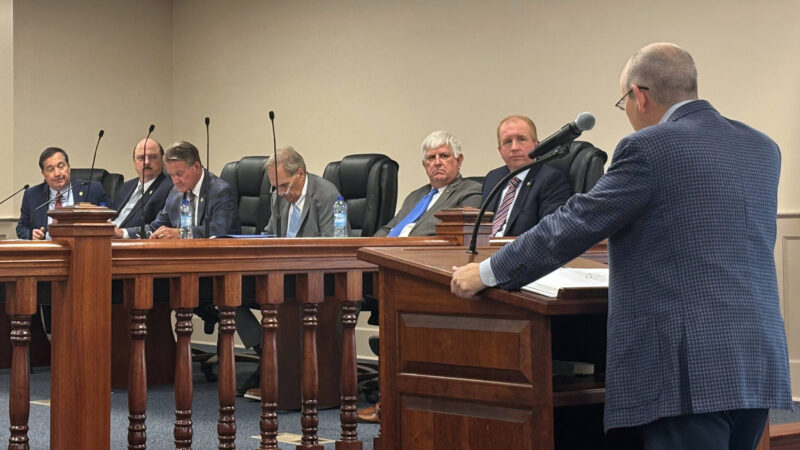
The Alabama Senate unanimously voted to expand the public service commission, and create a Secretary of Energy to address rising electricity prices. A bill in the House would go even further, requiring rate case hearings and limiting utility profits.

Musher from Alabama is going for back-to-back Iditarod wins
Riches and paid appearances haven’t followed Jessie Holmes since he won the world’s most famous sled dog race, the Iditarod, last year. He doesn't mind.
Bill would move Alabama to closed primaries
Right now, any Alabama voter can participate in a primary election. Lawmakers in Montgomery took up a bill this week that would change that system.

Auburn football player uses NIL funds to open a community hub in Birmingham
Jourdin Crawford, a freshman defensive lineman at Auburn, used earnings from a Name, Image, and Likeness deal to give back to his hometown.
Ivey commutes death sentence of inmate whose accomplice fired fatal shot
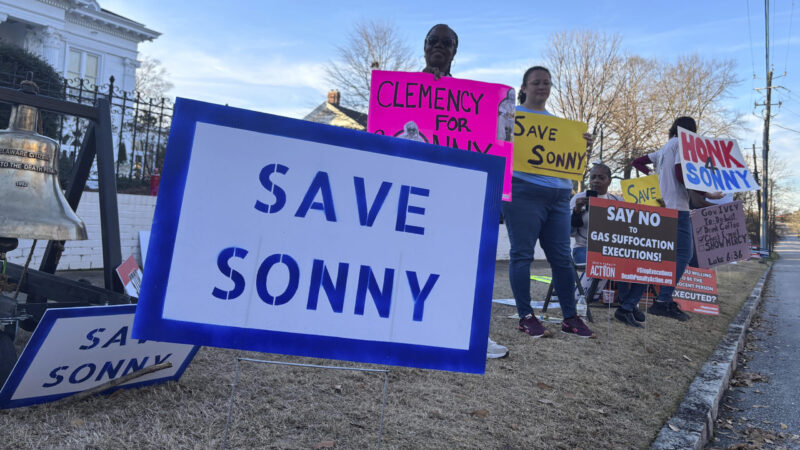
Charles “Sonny” Burton was sentenced to death for the killing of Doug Battle during a 1991 robbery. However, another man shot Battle when Burton had left the building.