
What does the Arizona Ruling mean for Alabama?

 ========= Old Image Removed =========Array
(
    [_wp_attached_file] => Array
        (
            [0] => 2012/04/immigration2.jpg
        )

    [_wp_attachment_metadata] => Array
        (
            [0] => a:5:{s:5:"width";i:1920;s:6:"height";i:1280;s:4:"file";s:24:"2012/04/immigration2.jpg";s:5:"sizes";a:13:{s:6:"medium";a:4:{s:4:"file";s:24:"immigration2-336x224.jpg";s:5:"width";i:336;s:6:"height";i:224;s:9:"mime-type";s:10:"image/jpeg";}s:5:"large";a:4:{s:4:"file";s:24:"immigration2-771x514.jpg";s:5:"width";i:771;s:6:"height";i:514;s:9:"mime-type";s:10:"image/jpeg";}s:9:"thumbnail";a:4:{s:4:"file";s:24:"immigration2-140x140.jpg";s:5:"width";i:140;s:6:"height";i:140;s:9:"mime-type";s:10:"image/jpeg";}s:12:"medium_large";a:4:{s:4:"file";s:24:"immigration2-768x512.jpg";s:5:"width";i:768;s:6:"height";i:512;s:9:"mime-type";s:10:"image/jpeg";}s:9:"1536x1536";a:4:{s:4:"file";s:26:"immigration2-1536x1024.jpg";s:5:"width";i:1536;s:6:"height";i:1024;s:9:"mime-type";s:10:"image/jpeg";}s:9:"wbhm-icon";a:4:{s:4:"file";s:22:"immigration2-80x80.jpg";s:5:"width";i:80;s:6:"height";i:80;s:9:"mime-type";s:10:"image/jpeg";}s:13:"wbhm-featured";a:4:{s:4:"file";s:24:"immigration2-800x450.jpg";s:5:"width";i:800;s:6:"height";i:450;s:9:"mime-type";s:10:"image/jpeg";}s:20:"wbhm-featured-square";a:4:{s:4:"file";s:24:"immigration2-600x600.jpg";s:5:"width";i:600;s:6:"height";i:600;s:9:"mime-type";s:10:"image/jpeg";}s:18:"wbhm-featured-home";a:4:{s:4:"file";s:24:"immigration2-467x311.jpg";s:5:"width";i:467;s:6:"height";i:311;s:9:"mime-type";s:10:"image/jpeg";}s:22:"wbhm-featured-carousel";a:4:{s:4:"file";s:24:"immigration2-398x265.jpg";s:5:"width";i:398;s:6:"height";i:265;s:9:"mime-type";s:10:"image/jpeg";}s:28:"ab-block-post-grid-landscape";a:4:{s:4:"file";s:24:"immigration2-600x400.jpg";s:5:"width";i:600;s:6:"height";i:400;s:9:"mime-type";s:10:"image/jpeg";}s:25:"ab-block-post-grid-square";a:4:{s:4:"file";s:24:"immigration2-600x600.jpg";s:5:"width";i:600;s:6:"height";i:600;s:9:"mime-type";s:10:"image/jpeg";}s:14:"post-thumbnail";a:4:{s:4:"file";s:24:"immigration2-125x125.jpg";s:5:"width";i:125;s:6:"height";i:125;s:9:"mime-type";s:10:"image/jpeg";}}s:10:"image_meta";a:12:{s:8:"aperture";s:1:"0";s:6:"credit";s:0:"";s:6:"camera";s:0:"";s:7:"caption";s:0:"";s:17:"created_timestamp";s:1:"0";s:9:"copyright";s:0:"";s:12:"focal_length";s:1:"0";s:3:"iso";s:1:"0";s:13:"shutter_speed";s:1:"0";s:5:"title";s:0:"";s:11:"orientation";s:1:"0";s:8:"keywords";a:0:{}}}
        )

    [_imagify_optimization_level] => Array
        (
            [0] => 1
        )

    [_imagify_data] => Array
        (
            [0] => a:2:{s:5:"stats";a:3:{s:13:"original_size";i:2017730;s:14:"optimized_size";i:361918;s:7:"percent";d:82.060000000000002;}s:5:"sizes";a:10:{s:4:"full";a:5:{s:7:"success";b:1;s:8:"file_url";s:52:"https://news.wbhm.org/media/2012/04/immigration2.jpg";s:13:"original_size";i:1897878;s:14:"optimized_size";i:271577;s:7:"percent";d:85.689999999999998;}s:9:"thumbnail";a:2:{s:7:"success";b:0;s:5:"error";s:77:"WELL DONE. This image is already compressed, no further compression required.";}s:6:"medium";a:2:{s:7:"success";b:0;s:5:"error";s:77:"WELL DONE. This image is already compressed, no further compression required.";}s:5:"large";a:5:{s:7:"success";b:1;s:8:"file_url";s:60:"https://news.wbhm.org/media/2012/04/immigration2-771x514.jpg";s:13:"original_size";i:115595;s:14:"optimized_size";i:86124;s:7:"percent";d:25.5;}s:9:"wbhm-icon";a:5:{s:7:"success";b:1;s:8:"file_url";s:58:"https://news.wbhm.org/media/2012/04/immigration2-80x80.jpg";s:13:"original_size";i:4257;s:14:"optimized_size";i:4217;s:7:"percent";d:0.93999999999999995;}s:13:"wbhm-featured";a:2:{s:7:"success";b:0;s:5:"error";s:77:"WELL DONE. This image is already compressed, no further compression required.";}s:20:"wbhm-featured-square";a:2:{s:7:"success";b:0;s:5:"error";s:77:"WELL DONE. This image is already compressed, no further compression required.";}s:18:"wbhm-featured-home";a:2:{s:7:"success";b:0;s:5:"error";s:77:"WELL DONE. This image is already compressed, no further compression required.";}s:22:"wbhm-featured-carousel";a:2:{s:7:"success";b:0;s:5:"error";s:77:"WELL DONE. This image is already compressed, no further compression required.";}s:14:"post-thumbnail";a:2:{s:7:"success";b:0;s:5:"error";s:77:"WELL DONE. This image is already compressed, no further compression required.";}}}
        )

    [_imagify_status] => Array
        (
            [0] => success
        )

)
1682722212 
1340668800

What does the Arizona Immigration Law Ruling mean for Alabama?

While Arizona’s immigration law was the first to reach the U.S. Supreme Court, a similar but tougher law in Alabama faces its own legal challenge. That case has been on hold, pending a ruling on Arizona’s law. As WBHM’s Andrew Yeager reports, the question now is — what does Arizona mean for Alabama?

State Senator Scott Beason’s phone has been ringing off the hook.

“Everybody calls and says have you read the opinion yet and my answer is always, ‘no’ been on the phone constantly since…”

Beason sponsored the Alabama law. The Republican stands outside the Gardendale Civic Center, north of Birmingham, as a couple of reporters line up. Beason says the ruling is a mixed bag. He’s happy the so-called “show me your papers” provision was upheld. Not so happy three others were overturned. And he feels the court’s reasoning isn’t clear.

“Because of their ambiguity in the decision, it’s entirely possible that Alabama could fly and do very, very well.”

Or he says, it may not. Alabama’s speaker of the house says the court left the “teeth” of the Arizona law in effect and that’s a victory.

The Southern Poverty Law Center is among the groups which challenged the Alabama bill. Legal director Mary Bauer says while it’s not a perfect ruling it’s a strong blow to anti-immigrant laws. She says the ruling – in general — makes clear a state cannot enact its own immigration policy.

“And I think that means that much of Alabama’s law is sort of dead in the water.”

In addition to Alabama — Indiana, Georgia, South Carolina and Utah have similar immigration laws with legal challenges on hold.

University of Alabama law professor Paul Horwitz says yesterday’s ruling on Arizona, does not make these other cases a forgone conclusion. Courts will weigh provisions not in Arizona’s law. Judges may find wiggle room in the ruling. What it does, he says, is offer guidance.

“The Supreme Court often acts as a kind of traffic signal and it’s steering the traffic in a particular direction now.”

So with these immigration laws in the middle of that process, further legal showdowns are expected– something both sides of the debate do agree on.

~ Andrew Yeager, June 26, 2012.

~ Web version by Em Wiginton



Crew of fatal US military crash included Alabama father recently deployed

The six U.S. service members who died in the crash of a U.S. military refueling aircraft included an Alabama father who had just been promoted and deployed. The U.S. government released the identities of the deceased service members Saturday.
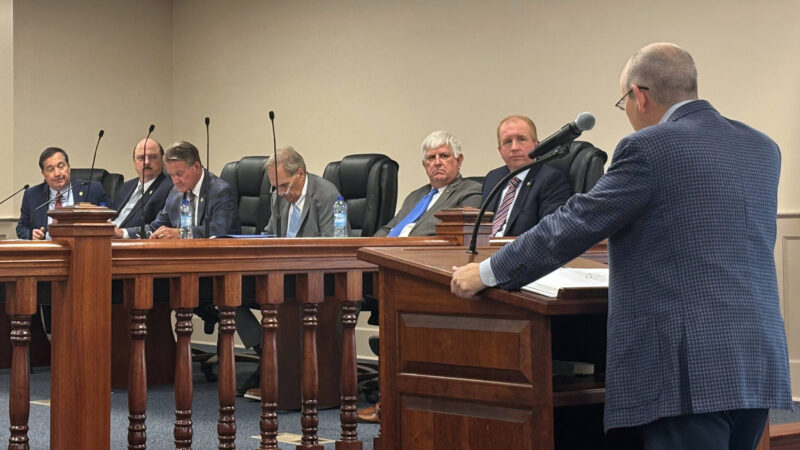
Alabama poised to drastically overhaul utility regulation. Will it lower electric bills?

The Alabama Senate unanimously voted to expand the public service commission, and create a Secretary of Energy to address rising electricity prices. A bill in the House would go even further, requiring rate case hearings and limiting utility profits.

Musher from Alabama is going for back-to-back Iditarod wins

Riches and paid appearances haven’t followed Jessie Holmes since he won the world’s most famous sled dog race, the Iditarod, last year. He doesn't mind.
Bill would move Alabama to closed primaries

Right now, any Alabama voter can participate in a primary election. Lawmakers in Montgomery took up a bill this week that would change that system.

Auburn football player uses NIL funds to open a community hub in Birmingham

Jourdin Crawford, a freshman defensive lineman at Auburn, used earnings from a Name, Image, and Likeness deal to give back to his hometown.
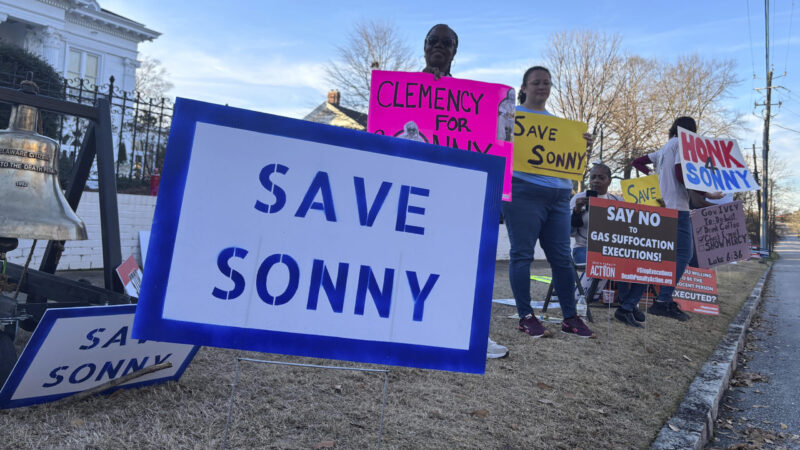
Ivey commutes death sentence of inmate whose accomplice fired fatal shot

Charles “Sonny” Burton was sentenced to death for the killing of Doug Battle during a 1991 robbery. However, another man shot Battle when Burton had left the building.

More Government Coverage