
Lessons of the Little River Canyon Center
Focus: The Little River Canyon Center
Lessons From A Wild Corner Of Alabama
“If a rattlesnake bites a king snake, they’ve got that natural
anti-venom so it does not hurt the king snake. It’ll simply swallow the rattlesnake whole.”
Hmmm. That’s just one of the attention-grabbing parts of veteran environmental educator Renee Morrison’s lesson this morning. And although the talk itself may be interesting (especially to snake-lovers or snake-haters), high school
students learning about nature in a classroom isn’t all that unusual.
But going outside to look for fake snakes after being warned not to touch them just in case they’ve found a
real one? That is.
These chemistry students from Coosa Christian High aren’t just learning about snakes here at the Little
River Canyon Center. They’re learning to be observant.
Says science teacher Loey Mills, “Get ’em outside, and their brains just turn on. I need to get my students out more. It’s
just limitless.”
But even after being prepped on what to look for and how to look, the kids missed two-thirds of the
snakes hidden along the trail — a sign of how we’re all losing touch with nature and the ability to put
down our gadgets and observe, let alone think.

Morrison, president of the state environmental educators association and coordinator of Jacksonville State University’s field schools, adds, “What we’re running into is a generation of students with a nature-deficit disorder.”
Her point isn’t just squishy tree-hugger sentimentality. On teaching the
observation skills so useful outdoors, she tells the students from Coosa Christian High:
“We’ve studied these kids — some of them we’ve started teaching these skills when they
were about four years old — they get in sixth grade, and they take their standardized tests: their scores
are going up. We’ve got teachers calling us saying, ‘Your observation techniques are helping us do better
on the ACT.'”
But those subjects and techniques aren’t the only ones on the menu at the Canyon Center. Ricky
Harcrow, longtime area resident, preacher, and Dekalb County Commission President, says the offerings
go beyond the regular curriculum:
“We teach Alabama history, but we really don’t get down to brass tacks with it. The
northeast Alabama area was part of the Cherokee Indian Nation. [The Little River Canyon Center] gives education
about the Trail of Tears that came through here. I’ve been here all my life and I can tell you, I’ve not
known about it ’til just the last few years, thanks to this place.”
As Park Rangers explain to students of all ages, from the back deck of the Canyon Center you can look
over a small creek valley where the Cherokee marched in 1838. Not far from that, many died crossing
Little River Canyon.
And speaking of lessons in the land, JSU professors would use the area as “textbooks laid out,” says John Bundy of the National Park Service, Superintendent of Little River Canyon National Preserve and Russell Cave National Monument.
“And they could come up and they
would teach geology and they would teach biological sciences and they’d talk about endangered species
and all of those kinds of things.”

Now you can add astronomy, bird-of-prey
shows, and arts programs, just to name a few. The center even gets some funding from NASA’s
education arm.
Speaking of funding, the Park Service rents its headquarters at the Canyon Center, which also has
conference rooms, a catering kitchen, a high-def surround-sound movie theater, bilingual programs, and
soon, an amphitheater for plays and concerts. There’s a lot going on here. Pete Conroy, JSU field school
and environmental policy director, offers an example:
“The National Park Service had a Law Enforcement Day where there was a group learning
how to assemble machine guns, and the classroom that had snakes and butterflies a couple hours ago,
had parts — metal weapons — all over the table tops.”
If there’s one man responsible for the Little River Canyon Preserve and the $7-million Canyon
Center, it’s Pete Conroy. One reason he says he fought for the place is, “You get kids up here and education just flows. The group this morning — these were kids
from the city, who had really not had a lot of time in the wilderness, and they came a little worried
about this, and they left smarter and happier. It’s a great way to organically educate people, and inspire
them to be problem-solvers.”
And speaking of organic and problem-solving, the center walks its ecological talk down to its very blueprints.
Its rockwork is made of recycled fly ash from a TVA coal plant. Rain from the roof waters native gardens.
It has a geothermal system corporations and schools are studying as a model.
Since it was built with public and private money in 2008, more than 60,000
students have passed through the Little River Canyon Center on their way to a sense of wonder and an
educational experience they’d be hard pressed to get anywhere else.

Crew of fatal US military crash included Alabama father recently deployed
The six U.S. service members who died in the crash of a U.S. military refueling aircraft included an Alabama father who had just been promoted and deployed. The U.S. government released the identities of the deceased service members Saturday.
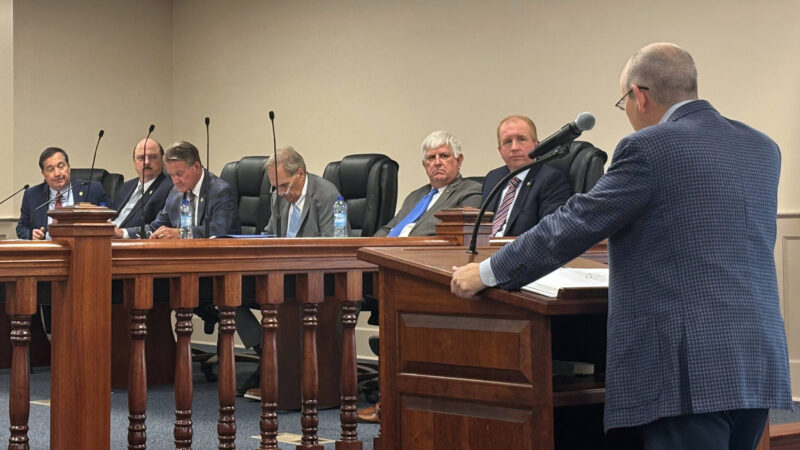
Alabama poised to drastically overhaul utility regulation. Will it lower electric bills?
The Alabama Senate unanimously voted to expand the public service commission, and create a Secretary of Energy to address rising electricity prices. A bill in the House would go even further, requiring rate case hearings and limiting utility profits.
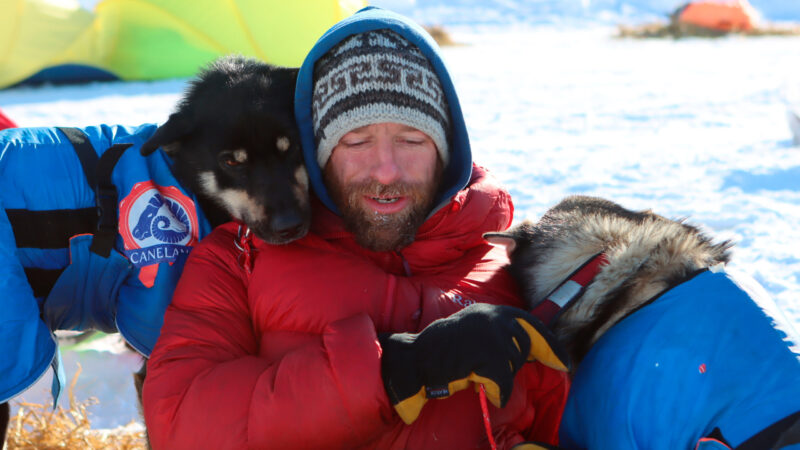
Musher from Alabama is going for back-to-back Iditarod wins
Riches and paid appearances haven’t followed Jessie Holmes since he won the world’s most famous sled dog race, the Iditarod, last year. He doesn't mind.
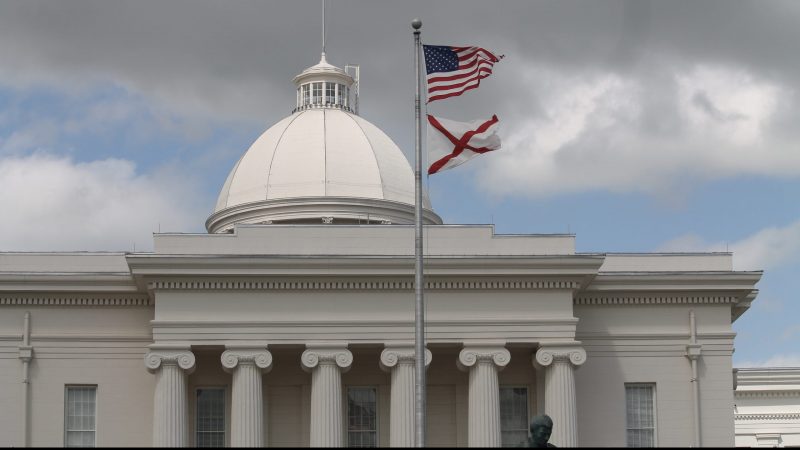
Bill would move Alabama to closed primaries
Right now, any Alabama voter can participate in a primary election. Lawmakers in Montgomery took up a bill this week that would change that system.
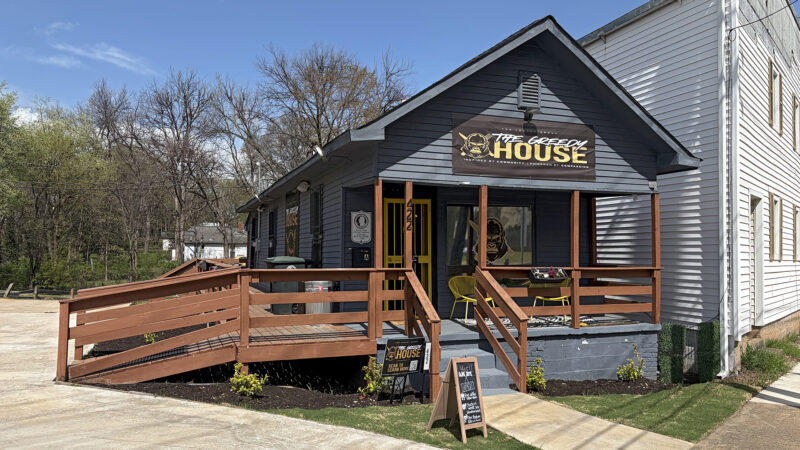
Auburn football player uses NIL funds to open a community hub in Birmingham
Jourdin Crawford, a freshman defensive lineman at Auburn, used earnings from a Name, Image, and Likeness deal to give back to his hometown.
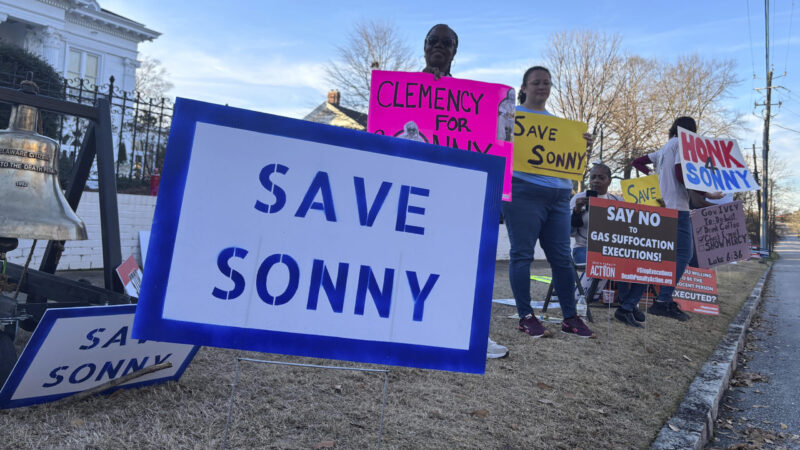
Ivey commutes death sentence of inmate whose accomplice fired fatal shot
Charles “Sonny” Burton was sentenced to death for the killing of Doug Battle during a 1991 robbery. However, another man shot Battle when Burton had left the building.