School Transpo Safety Pt 1 – Urban Trains
It’s no secret that kids trying to succeed in school face hurdles, some more than others. But for students in many of Birmingham’s urban neighborhoods, serious safety challenges start before they even get to school. In Part One of a three-part series on school transportation, Dan Carsen has more from the Southern Education Desk at WBHM:
Ahhh, the railroad. The sounds of lumbering iron horses and mournful whistles conjure up peaceful images of a simpler era. But for Vonnie Billups of Birmingham’s Woodlawn neighborhood, they conjure up something else – a challenge she faced when she went to the local high school and one still faced by area students:
“We got to Woodlawn [High School], we had to walk and just wait. That was way back in the seventies, since they’ve been doing this, so we had to wait for like 10, fifteen minutes, always tardy and stuff, so it’s still going on now, and I noticed that … Ooh, boy – there’s one, I feel like there’s one coming up that way.”
That train was actually the second one that passed through the neighborhood during the short curbside interview. Woodlawn, with its housing projects and immaculate bungalow houses, is thoroughly cross-hatched with three sets of tracks. You can’t drive the area’s winding streets for more than a few moments without stopping at a crossing. That hints at how difficult long, parked trains can make life here, not just for people trying to get to work or to the hospital, but for students trying to get to class safely and on time. Another hint is that the Birmingham Housing Authority paid to build a pedestrian tunnel mainly for students under one of the tracks.
But, as Billups put it, “they have to come from like Gate City, across Georgia Road, through these projects here, through the tunnel.”
In other words, the narrow passageway allows students to walk from several neighborhoods to Oliver Elementary School, but many have to cross a main thoroughfare first. And the tunnel, which has its share of weeds – not to mention graffiti, a broken overhead lamp, and a faint smell of urine – can be intimidating:
“It’s dark down there, it’s nasty now, and it’s unsafe.”
That from a man who’d been cruising the neighborhood that morning in a pimped-out Lincoln with an open can of Bud between his legs. He said homeless people sleep in the tunnel. He wouldn’t give his name, but he seemed genuinely concerned, and like he just might know a thing or two about the neighborhood.
But it’s not just in Woodlawn where trains create a problem. As Kershonda Jones, Ja’Kia Winston, Alandria Calhoun, and Belindez Carter, students at Hudson K-8 in Birmingham’s Collegeville neighborhood explain:
“We be late. Sometimes [the trains] stop. Sometimes they stop and sometimes they move. The trains just be stopping us from going to school. You’re supposed to be out there at eight o’clock. I feel mad because I want to get to school on time. I want to eat breakfast! I wanna eat breakfast.”
Besides the trains making them late for learning and a solid meal, there’s the obvious safety issue: Kids often take risks even when they aren’t running late to school. The Hudson students told of friends crawling under or between railcars, and worse:
“I don’t wanna go up under the train, ’cause what if the train starts moving again? You can die like that. Your leg could get cut off, because there’s a man – his leg got cut off. Never jump the train or under it!”
When I asked them who’d taught them that last part, which they had shouted in unison and had clearly heard and recited before, the students explained that there’s a safety exhibit in their school’s library.
That program comes from Alabama Operation Lifesaver an educational nonprofit whose mission is to reduce deaths and injuries at railroad crossings and along rights-of-way.
Director Nancy Hudson says, “Back in May, we lost a high school senior … driving, and was hit by a train. In the Birmingham area we’ve had young students before to maybe lose a foot, a leg. Alabama is number seven in the country for the number of vehicle-train collisions. Nationally, though, more people have died trespassing than in a vehicle-train collision.”
That’s right: if you cross tracks anywhere other than where a road crosses, legally, you’re trespassing, not to mention putting yourself in danger.
Misdemeanors aside, these issues point to a recurring question in Birmingham and beyond: How can communities reconcile large numbers of people living in areas that used to be mainly industrial? Trains, trucks, toxins … all are part of the backdrop of school and community life in these places. And in some more than others, on the way to school there’s the threat of everything from huge vehicles that can’t stop to dark tunnels where things can happen out-of-view.
The risks to students are complicated, and they don’t always lie where you might think. What is certain is that some kids, just by virtue of where they live, face far more risks than others.

Crew of fatal US military crash included Alabama father recently deployed
The six U.S. service members who died in the crash of a U.S. military refueling aircraft included an Alabama father who had just been promoted and deployed. The U.S. government released the identities of the deceased service members Saturday.
Alabama poised to drastically overhaul utility regulation. Will it lower electric bills?
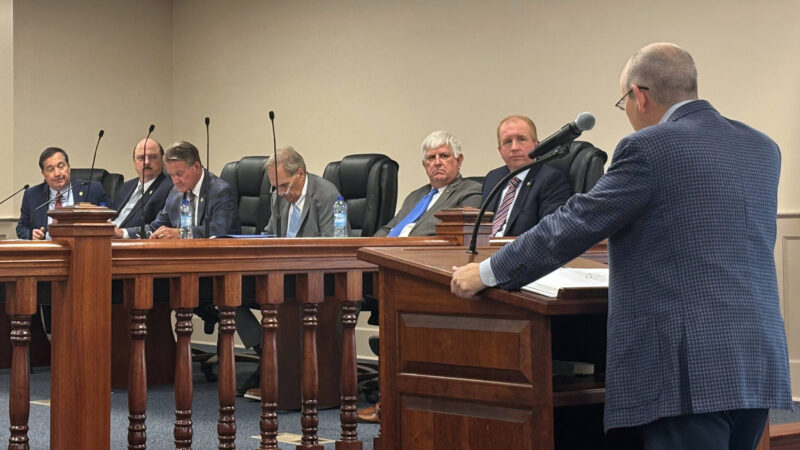
The Alabama Senate unanimously voted to expand the public service commission, and create a Secretary of Energy to address rising electricity prices. A bill in the House would go even further, requiring rate case hearings and limiting utility profits.
Musher from Alabama is going for back-to-back Iditarod wins
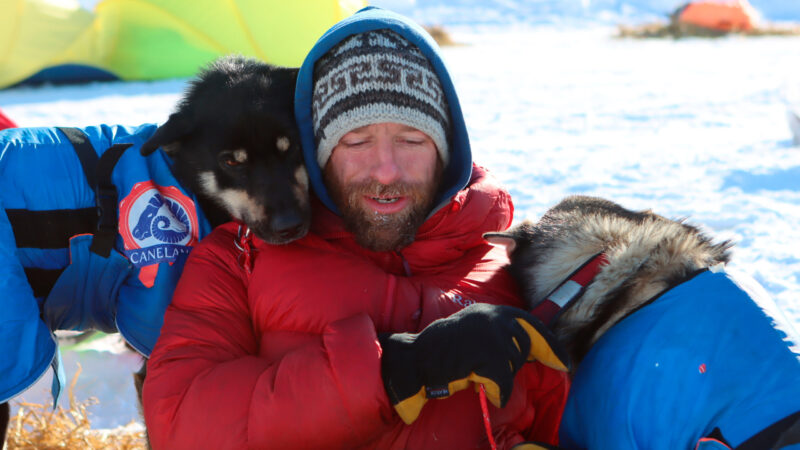
Riches and paid appearances haven’t followed Jessie Holmes since he won the world’s most famous sled dog race, the Iditarod, last year. He doesn't mind.
Bill would move Alabama to closed primaries
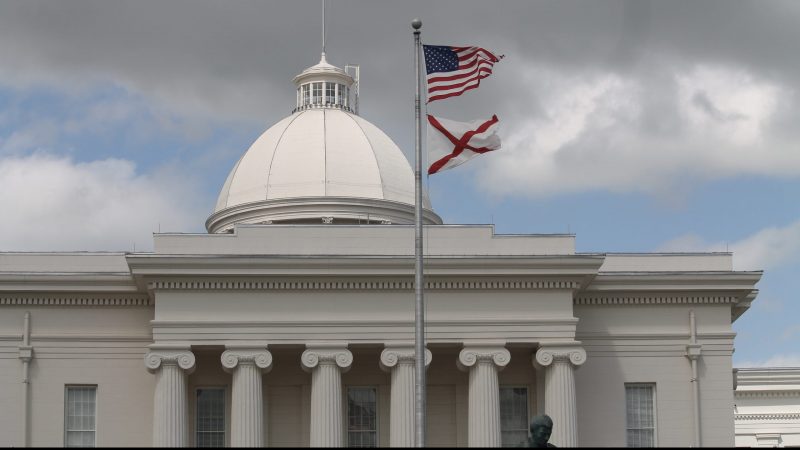
Right now, any Alabama voter can participate in a primary election. Lawmakers in Montgomery took up a bill this week that would change that system.
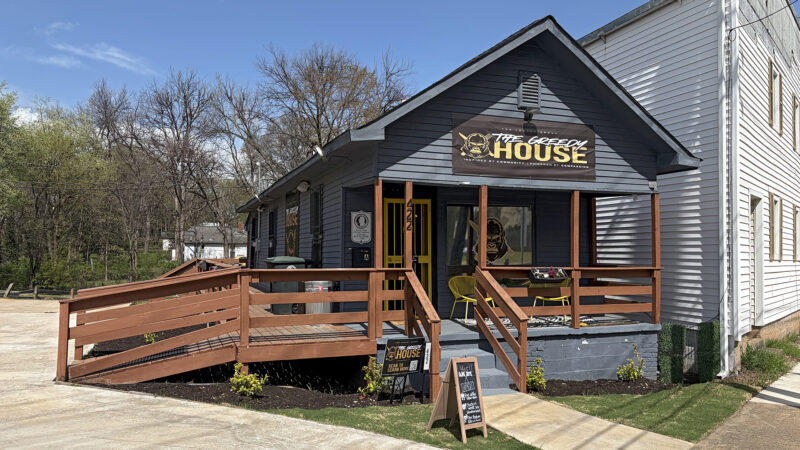
Auburn football player uses NIL funds to open a community hub in Birmingham
Jourdin Crawford, a freshman defensive lineman at Auburn, used earnings from a Name, Image, and Likeness deal to give back to his hometown.
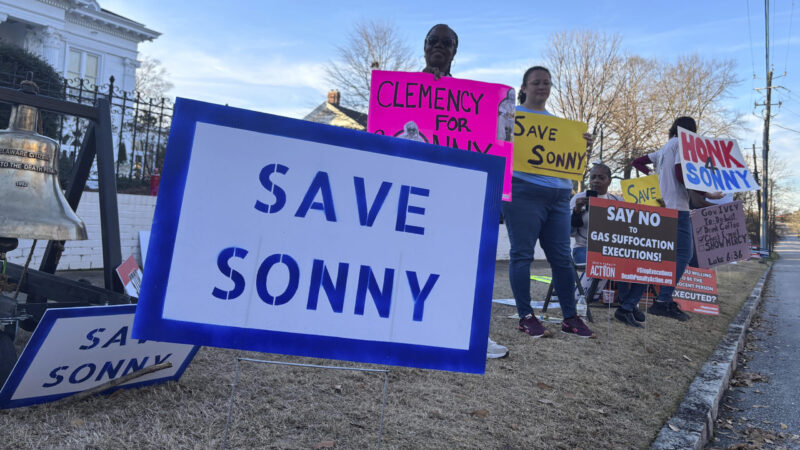
Ivey commutes death sentence of inmate whose accomplice fired fatal shot
Charles “Sonny” Burton was sentenced to death for the killing of Doug Battle during a 1991 robbery. However, another man shot Battle when Burton had left the building.