
Jones Valley Tutorial
School Cooks Learn More About Nutrition at Jones Valley Urban Farm
Dan Carsen, Aug. 10, 2011
The surly lunchlady who ladles out glop to students she barely notices. The institutional mystery meat that looks as bad as it smells, and smells as bad as it tastes. The commercial-industrial downtown neighborhood where the only green things that grow are weeds.
Those are three stereotypes or common perceptions, and I saw all three being trumped at the same time in Birmingham recently.

The community nonprofit Jones Valley Urban Farm (JVUF) is exactly what it sounds like. It’s a three-acre farm smack in the middle of a gritty, bustling area, hemmed in by highways and housing projects. It grows everything from amaranth to eggplant to herbs to flowers to chickens (for the eggs). This unique place provides fresh, locally grown organic produce to the neighborhood, and to local farm stands, farmer’s markets, and restaurants. They also provide – and this is why I was there – educational experiences of all (natural) flavors.
That morning, 10 kitchen staff from Birmingham City Schools were taking part in the “Delicious/Nutritious” program. Spencer Taylor, BCS Food Services Director, had collaborated with JVUF on community advisory committees on obesity and other nutrition issues. When JVUF staff approached him, he saw “a good opportunity to do something beyond the usual in-house professional development.” He added that, for his staff, information “from a fresh face” (meaning not his) sometimes makes more of an impression. And judging from the reactions of the food professionals, the program at JVUF did just that.

I was skeptical at first: I mean really, these nine ladies and one man, who’ve been cooking for large numbers of people for years – to say nothing of what they do for their own families – are gonna take kindly to some urban-farming tree-huggers telling them how to cook? How to do their jobs?
But my skepticism faded when Scott Silver, who coordinates the federal “Farm 2 School” program at JVUF, began speaking to the group under a rustic pavilion. One of the first things he said was that he knew Birmingham Schools’ kitchen staff and managers are already doing a good job, especially given the various limitations, in serving “learning fuel” to students. But he really connected when he critiqued the stereotype of the lunchlady who doesn’t care about the kids. Clearly, based on nods and indignant comments, these food-prep pros care for the kids they feed, and see themselves as playing a key role in their education. And that’s a perception based in hard fact: especially for kids on reduced or free lunch, the food they get in school can easily account for 40 percent of their daily caloric intake.
By the time JVUF Nutrition Coordinator Bree Garrett took over and passed around a bowl of home-grown figs, the kitchen staff had bought into the session. After explaining that JVUF is a “teaching farm,” she got the class moving around and through the various plots, picking bright red peppers, eggplant, and all sorts of herbs.

Class was definitely in session: while walking past “community boxes” (raised beds or boxes where people from the neighborhood can grow vegetables for themselves organically) and other plots, Garrett introduced the phrases “slow food,” “food deserts” (from which some of the day’s adult learners hailed), and “food miles.”

She said the average piece of fruit at a grocery store has traveled 1,500 to 2,000 miles, losing nutritional value and flavor along the way. To more nods and murmurs of assent, she pointed out that if you give a child an off-season, trucked-in winter tomato that’s mushy and tastes like nothing much, you may have turned that child off tomatoes forever. But if you give the kid a real, local, in-season tomato, you’re much more likely to develop a healthy habit that lasts, because it actually tastes good.
There are roughly twice as many fast-food restaurants in Greater Birmingham as there are grocery stores.
That eventually led to discussion of the area’s severe obesity problem. This is not a stereotype but a troubling fact: almost 18 percent of children in Alabama are obese. JVUF, the Birmingham School System, and other districts have been cooperating to introduce healthier food and remove at least some of the junk at schools across the state. The effort isn’t helped here by the fact that there are roughly twice as many fast-food restaurants in Greater Birmingham as there are grocery stores.
One good thing about greasy cooking operations, though, is that some of them donate used oil that JVUF staff turn into biodiesel, which powers the farm’s tractor. And speaking of low waste and sustainability, the farm uses rainwater caught in a cistern to irrigate crops, and their compost pile includes coffee grounds from Starbuck’s, food scraps from the nearby Culinard Cafe, and woodchips from local contractors.
Unfortunately my journalistic ethics forbid me from even asking for leftovers.
The kitchen staff seemed genuinely interested in all the energy-, material-, and money-saving approaches being utilized at the farm. And speaking of energy, the crew soon carpooled over to the nearby Alagasco Test Kitchen for Part 2 of the program, where Samford University Executive Chef Chris Vizzina connected what had just been learned (and picked) on the farm to the realities of institutional cooking, with a hands-on demonstration of recipes and tips. (Unfortunately my journalistic ethics forbid me from even asking for leftovers.
Of course, large institutional kitchens, especially in cash-strapped school systems, are limited by costs and other factors as to what they can serve hundreds if not thousands of students. But on this day, the food staff came away with some little tricks that could provide better nutrition, and could be done for little money (growing herbs on campus for seasoning, adding peppermint or other natural flavors to water, which could make kids actually drink the stuff instead of fattening, sugary sodas, etc). They even came away with a slightly different view of the raw materials they’ve been shaping into meals for so many years. A “teaching farm” indeed.

Crew of fatal US military crash included Alabama father recently deployed
The six U.S. service members who died in the crash of a U.S. military refueling aircraft included an Alabama father who had just been promoted and deployed. The U.S. government released the identities of the deceased service members Saturday.
Alabama poised to drastically overhaul utility regulation. Will it lower electric bills?
The Alabama Senate unanimously voted to expand the public service commission, and create a Secretary of Energy to address rising electricity prices. A bill in the House would go even further, requiring rate case hearings and limiting utility profits.

Musher from Alabama is going for back-to-back Iditarod wins
Riches and paid appearances haven’t followed Jessie Holmes since he won the world’s most famous sled dog race, the Iditarod, last year. He doesn't mind.

Bill would move Alabama to closed primaries
Right now, any Alabama voter can participate in a primary election. Lawmakers in Montgomery took up a bill this week that would change that system.
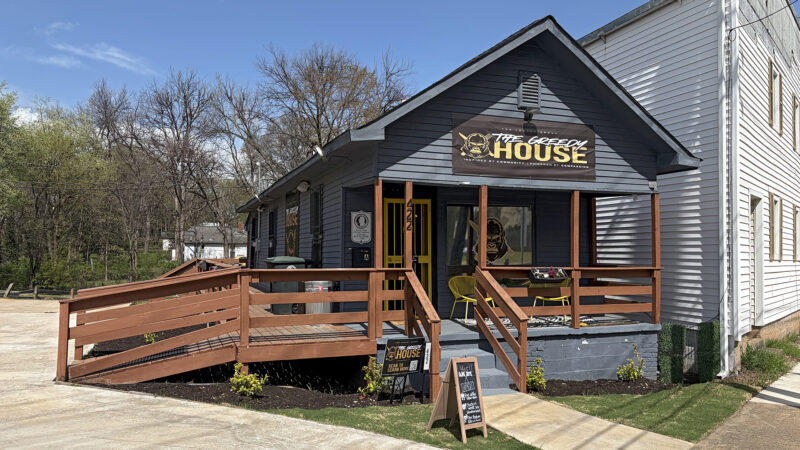
Auburn football player uses NIL funds to open a community hub in Birmingham
Jourdin Crawford, a freshman defensive lineman at Auburn, used earnings from a Name, Image, and Likeness deal to give back to his hometown.

Ivey commutes death sentence of inmate whose accomplice fired fatal shot
Charles “Sonny” Burton was sentenced to death for the killing of Doug Battle during a 1991 robbery. However, another man shot Battle when Burton had left the building.