
Closing Corporate Tax Loopholes
In Alabama and other states, education budgets are being squeezed. Teachers and support staff are facing layoffs and cuts in benefits and supply money. Seen against that background, it’s not surprising that states are looking harder at a tricky but increasingly attractive source of funding. From the Southern Education Desk at WBHM, Dan Carsen has this report:
The McDonald’s in Attalla, Alabama, is surrounded by other chain restaurants, stores, and gas stations. Now you might assume from this scene that the taxes from these marquee corporations provide a healthy revenue boost to the state. But Democrat Merika Coleman, who represents Birmingham in the state House of Representatives, says you would be wrong:
“They have a presence in the State House. They have lobbying teams, with a lot of money, and they’ve been able to protect themselves. And it’s completely unfair, when Alabama families are paying their taxes, when Alabama small businesses are paying their taxes, these corporations are allowed to cheat citizens out of the tax dollars that should be reinvested into the community. And we need to make these cheaters pay.”
In Alabama, income taxes account for more than half of the state’s Education Trust Fund. Those taxes, including corporate income taxes, pay teachers’ salaries. So at a time when the education budget faces decreasing state revenue and the end of stimulus money, conflict over those taxes isn’t surprising. What is surprising is the fact that in 2008, the last year with complete records, 25 of the 59 biggest employers in Alabama paid no corporate income tax to the state. And, of the more than 1,000 firms operating in Alabama that declared more than $25 million in taxable income to the IRS, nearly a third paid nothing to the state.
Alabama Education Association president Anita Gibson says tax loopholes prevent billions in corporate profit from becoming millions in school funding at a time when “We’re talking of having to lay off education employees. You’re looking at having to increase out-of-pocket expenses for employees. We have textbooks that are duct-taped together, pages missing because we have no money for textbook funds. Teacher supply money … it has a direct impact on the education of every child in the state.”
The Education Association, known as the AEA, is itself a lobbying powerhouse, and it recently released a list of 39 large corporations they call “major tax dodgers.” Target, ExxonMobil, UPS and other household names are on the list. The firms are identified only because they are or have been involved in tax disputes filed in state court. Otherwise, tax figures can be released only if the payers – or non-payers as the case may be – remain anonymous.
Over the past decade, state lawmakers have introduced bills to close the tax loopholes, but they’ve basically gone nowhere. Anita Gibson hopes the current education funding crisis will force change:
“If we were to take the opportunity and actually look at closing all of the tax loopholes, we could alleviate the crisis that we now find ourselves facing in the Education Trust Fund.”
One thing is certain: multi-state and multi-national firms have more accountants, tax lawyers, and lobbyists working for them than public school students do. But Gibson and others concede it’s not a simple issue. One person’s “tax loophole” is another’s “legitimate deduction,” or a “local incentive” designed to keep a business from going to another state.
Republican state Representative Jay Love, chairman of the Education Trust Fund Budget Committee, says losing a corporation means not only losing potential corporate taxes, but also jobs, individual income taxes, and all sorts of fees:
“The best thing that we can do, in terms of boosting revenue, is put Alabamians back to work. Obviously we need tax revenue to operate state government and to provide for schools, but too, we want to make sure that we provide a tax environment that is good for businesses. So you try to do everything you can to balance that.”
Love says there is “inconsistency” in Alabama’s corporate tax system. He’s offered bills he says would address some of it, and generate more than 20 million in revenue. One of those bills, though, would allow exemptions or credits for taxes paid to foreign entities. So in effect, multinationals might pay proportionately less than local businesses would. That bill has already passed the state house and could pass the senate before the session ends June 9th.
Though it’s not nearly as much as some would like, Republican Governor Robert Bentley has proposed closing one unique Alabama loophole. Right now, multi-state firms can evenly divide reported income among their locations, even if all the money was made in Alabama. The company can then deduct federal income taxes and end up reporting zero income in Alabama. The state Department of Revenue projects closing that loophole would generate $30 million for the Education Trust Fund next fiscal year. But as of now, that proposal is just a proposal. And that deduction strategy is just one of the money-moving techniques available to multi-state corporations. Tax policy expert Jim Williams is director of the Public Affairs Research Council of Alabama. He outlines another clever loophole:
“Interstate companies, particularly those that have national scope, can set up operations in states that don’t have an income tax, and then buy things from themselves internally from those states so that they channel more of their income to where it looks like it comes from states that don’t have a tax burden, and that has been to the disadvantage of states like Alabama.”
Susan Kennedy, a lawyer and entrepreneur who’s now the AEA’s revenue manager, says multi-armed companies also pay themselves rent and then deduct that money as an expense. She says “It looks like money laundering, but they’re allowed to do it.”
Representative Love points out a thorny reality:
“The problem has been, as soon as a legislature or a revenue department in another state would quote-un-quote ‘close a loophole,’ these corporations, they hire very talented tax attorneys to figure out a way to get around it.”
Democratic House Minority Leader Craig Ford, a businessman himself, has another concern:
“I spent 14 years in the Army as an officer and I’ll tell you this: morale is the most important aspect of anything when you’re dealing with troops. And in this aspect, the troops are our teachers and the most important resources in the classroom are the students first, and then the teacher second. You start affecting the morale of the teachers by taking money out of their paycheck and making them pay more for their benefits when they see these big corporations not paying their fair share, then it’s going to affect the education in the state of Alabama.”
As budgets around the country are cut and schools scramble for funds, the brewing conflict over corporate tax loopholes in Alabama may be just an early skirmish, a hint of things to come. With vital school programs in jeopardy and the threat of teacher layoffs looming, the pressure to close corporate tax loopholes and squeeze more education tax dollars from companies doing business in the state has pushed the issue out of the shadows and onto center stage.

Crew of fatal US military crash included Alabama father recently deployed
The six U.S. service members who died in the crash of a U.S. military refueling aircraft included an Alabama father who had just been promoted and deployed. The U.S. government released the identities of the deceased service members Saturday.
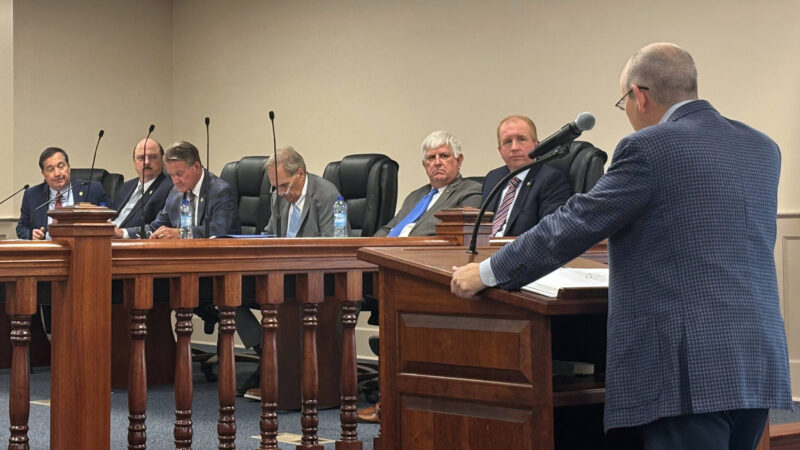
Alabama poised to drastically overhaul utility regulation. Will it lower electric bills?
The Alabama Senate unanimously voted to expand the public service commission, and create a Secretary of Energy to address rising electricity prices. A bill in the House would go even further, requiring rate case hearings and limiting utility profits.

Musher from Alabama is going for back-to-back Iditarod wins
Riches and paid appearances haven’t followed Jessie Holmes since he won the world’s most famous sled dog race, the Iditarod, last year. He doesn't mind.
Bill would move Alabama to closed primaries
Right now, any Alabama voter can participate in a primary election. Lawmakers in Montgomery took up a bill this week that would change that system.

Auburn football player uses NIL funds to open a community hub in Birmingham
Jourdin Crawford, a freshman defensive lineman at Auburn, used earnings from a Name, Image, and Likeness deal to give back to his hometown.
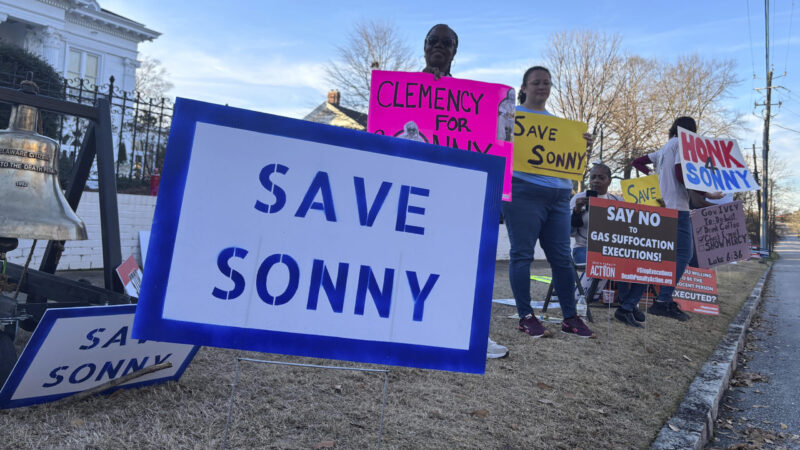
Ivey commutes death sentence of inmate whose accomplice fired fatal shot
Charles “Sonny” Burton was sentenced to death for the killing of Doug Battle during a 1991 robbery. However, another man shot Battle when Burton had left the building.