
Alabama’s New Immigration Law and Schools
Supporters and opponents of Alabama’s new immigration law generally agree it’s the most severe and far-reaching in the nation. Some educators are concerned because the law makes schools determine students’ immigration status, and in some cases, their parents’ immigration status. From the Southern Education Desk at WBHM, Dan Carsen has more:
Three mothers coo over pictures of their children on a computer in an apartment southeast of Birmingham. Their children range in age from babies to teens. These women are neighbors, and they also share intense feelings about Alabama’s new immigration law.
Annabelle Frank is Cuban. She’s in the United States legally, but her husband is not. And her assessment of the law is blunt:
“I think it’s an inhuman law. The part including the children is just horrible. It’s the worst part of it because, since when did we start punishing children for a parent’s mistakes?”
Honduran-born Claudia Castro is also here legally while her husband is not. She makes a slightly different point:
“I don’t care if the law follow just the criminals. But why follow the families? Why?”
Alabama state Representative Greg Canfield, who co-sponsored the legislation, has an answer:
“We’ve got a national problem that has an impact on the cost of delivering public services. It has a cost to public education. And it also potentially has a cost for employment of citizens and those who are here as lawful aliens.”
Canfield says the law doesn’t require anything different in the classroom. But there are new duties for public-school administrators. They’ll be required to collect data, not with the goal of singling out students, but to determine the costs of educating the undocumented. The law also says the resulting report to the legislature “shall analyze and identify the effects” [of enrolling illegal aliens] “upon the standard or quality of education.”
Alabama schools routinely check birth certificates at enrollment to confirm identity. But under the new law, there’s a veritable flow chart of extra steps administrators must take to determine students’ immigration status and that of their parents. As state Superintendent Joe Morton puts it, “It’s a little different than just holding the birth certificate and it says ‘yes, this is you and you were born somewhere.'”
That’s one reason the state department of education is preparing guidelines for administrators who’ll implement the law, which for practical purposes will go into effect in schools in August 2012. Superintendent Morton says although the cost of compliance isn’t yet known, Alabama’s schools will follow the law. He hopes his department will have the guidelines for this potentially tricky, time-consuming process this summer, but he adds, “It’s not like we’re expert in this. This is new to us as well as to all the schools.”
What isn’t new is a 1982 U.S. Supreme Court ruling that children of undocumented aliens cannot be denied public education based on the transgressions of their parents. Representative Canfield says the Alabama law was drafted with federal law in mind. He notes it has privacy protections, including the right to sue for violations in some circumstances. He and other supporters attribute the public outcry to “changing the status quo,” and to the fact that many people haven’t read the 72-page law.
But one person’s “perception” is another’s hard reality. Annabelle Frank’s son is almost ready for kindergarten, and she shares a concern common to many immigrant families in Alabama: “I’m actually considering home-schooling. Because I don’t want him involved in all this that’s going on. I know, because he is Hispanic, in some way he’s going to be singled out, you know? I’m really afraid of that.”
Exactly how schools will implement the law is an open, thorny question. But there’s a chance the law won’t be implemented at all: civil rights and immigration groups are planning a court challenge. For now, though, Alabama’s new immigration law is fueling heated discussions in and out of schools, across the state, and far beyond.
~ Dan Carsen, June 24, 2011

Crew of fatal US military crash included Alabama father recently deployed
The six U.S. service members who died in the crash of a U.S. military refueling aircraft included an Alabama father who had just been promoted and deployed. The U.S. government released the identities of the deceased service members Saturday.
Alabama poised to drastically overhaul utility regulation. Will it lower electric bills?
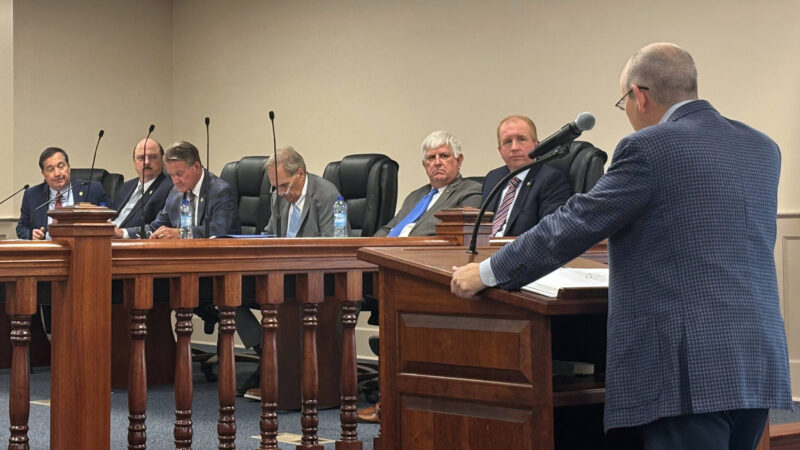
The Alabama Senate unanimously voted to expand the public service commission, and create a Secretary of Energy to address rising electricity prices. A bill in the House would go even further, requiring rate case hearings and limiting utility profits.

Musher from Alabama is going for back-to-back Iditarod wins
Riches and paid appearances haven’t followed Jessie Holmes since he won the world’s most famous sled dog race, the Iditarod, last year. He doesn't mind.
Bill would move Alabama to closed primaries
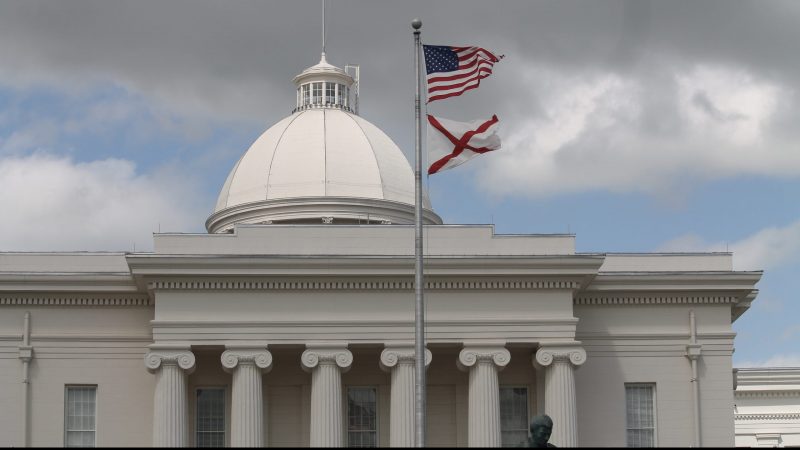
Right now, any Alabama voter can participate in a primary election. Lawmakers in Montgomery took up a bill this week that would change that system.

Auburn football player uses NIL funds to open a community hub in Birmingham
Jourdin Crawford, a freshman defensive lineman at Auburn, used earnings from a Name, Image, and Likeness deal to give back to his hometown.
Ivey commutes death sentence of inmate whose accomplice fired fatal shot
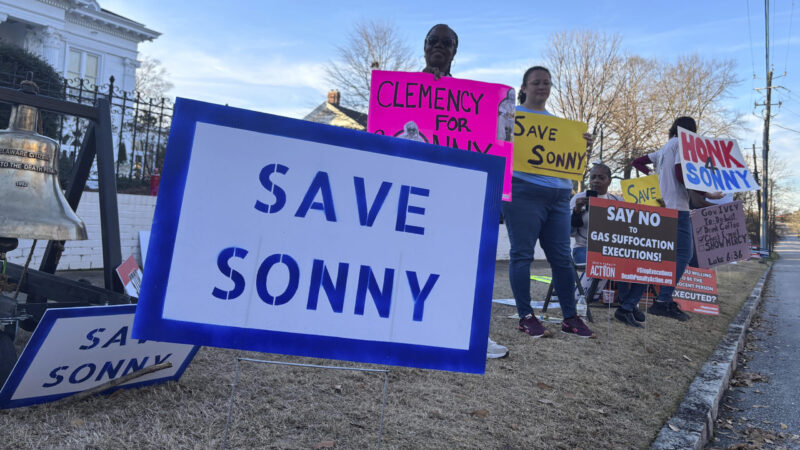
Charles “Sonny” Burton was sentenced to death for the killing of Doug Battle during a 1991 robbery. However, another man shot Battle when Burton had left the building.