Charter Schools: Do They Work?
There are nearly 5,000 charter schools across the country. They educate more than 1.5 million students. And President Obama wants more. But do they work? There are a handful of charter schools in wealthy communities and, perhaps not surprisingly, they tend to have high test scores. But most charter schools are in low-income, often minority neighborhoods. How do they fare? WBHM’s Tanya Ott has our report.
Caroline Hoxby graduated from Harvard, Oxford and MIT, so she knows a bit about good education. As an economist at Stanford University she also studies education outcomes, and for the past few years she’s had her eye on Charter Schools.
But back Caroline Hoxby, the Stanford economist. She compared the test scores of New York City students who applied for and got into charter schools with those of their peers who applied for, but didn’t get into charter schools. And she found that charter school students improved significantly more in math and reading than their counterparts. To be precise, they closed the achievement gap by 87% in math and 67% in reading.
“Those are really big numbers, but it isn’t a silver bullet. It’s not that you send a student for one year to a charter school and all of the sudden they’re performing at the same level as students from an affluent background.”
In fact, Hoxby tracked students from kindergarten through 8th grade. She says at the high school level, attending a charter school raised the probability of graduating by an average of 7% a year per year. Meaning student who attended a charter high school for four years were 28% more likely to graduate than their peers at a traditional public high school.
“In many big cities, like the one we’re sitting in Washington DC, the public charter schools are the best schools. Same with Boston, New York, Denver, Houston.”
Jay Mathews is an education reporter for the Washington Post. He’s written a book called Work Hard, Be Nice – about a specific charter school program called Knowledge is Power or KIPP. There are more than 60 KIPP charter schools across the country. Mathews talked about KIPP with Michelle Martin of the NPR program Tell Me More.
“I look at schools in one parameter which schools are doing the best job in raising the achievement of kids. Which schools have kids coming in, as the KIPP schools do, at about the 30 percentile in the 5th grade and they leave in the 8th grade in the 70th or 80th percentile in math or reading. That rarely happens, but in some of these charter groups, particularly KIPP they’ve made that happen. And it’s really unleashing the power of great teachers.”
But, Mathews warns, that’s when charter schools are done right. Another group of Stanford researchers – a group called CREDO – or the
Center for Research on Education Outcomes — examined the standardized test scores of more than a half million kids attending charter schools in 16 states. They compared their results to kids from traditional public schools like the ones the charter school kids would have attended. Ken Surratt is CREDO’s assistant director.
“Charter school students lagged compared to their traditional public school peers in both math and reading.”
CREDO’s study found that 17% of charter schools outperformed the traditional public schools. But 46% performed about the same at the traditional public schools, and 37% performed worse. Some of them much worse. In the south, Florida and Texas charter schools showed significantly lower learning gains.
CREDO also studied New York City school in-depth, and like Caroline Hoxby, they found that charter school students in New York perform better than their peers at traditional public schools. Surratt says that’s because of the way the charters are managed.
“They are assessing performance. They have clear performance criteria that they use. There’s a Charter School Support Center. And it’s been embraced by the mayor, by the head of the schools so it has that buy-in.”
Buy-in is not something that comes easy in Alabama. Last month the legislature killed a proposal to legalize charter schools. Governor Bob Riley says that was a major reason the state didn’t get any of the recently announced Race to the Top federal education money. Tomorrow on our program we examine the politics behind the fight over charter schools in Alabama.

Crew of fatal US military crash included Alabama father recently deployed
The six U.S. service members who died in the crash of a U.S. military refueling aircraft included an Alabama father who had just been promoted and deployed. The U.S. government released the identities of the deceased service members Saturday.
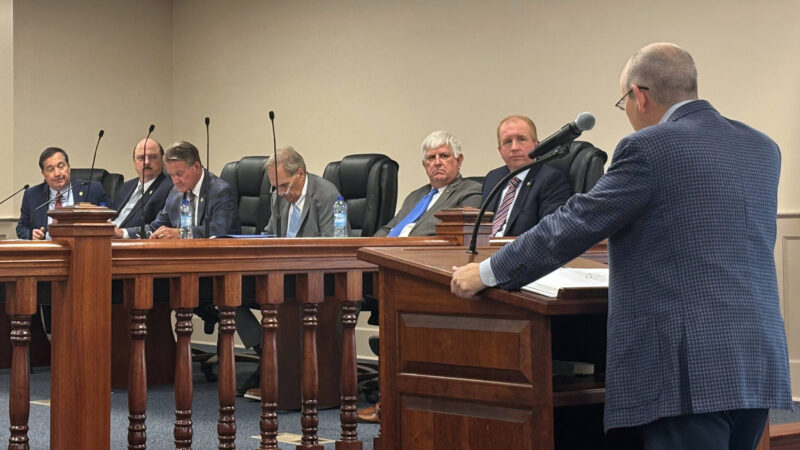
Alabama poised to drastically overhaul utility regulation. Will it lower electric bills?
The Alabama Senate unanimously voted to expand the public service commission, and create a Secretary of Energy to address rising electricity prices. A bill in the House would go even further, requiring rate case hearings and limiting utility profits.

Musher from Alabama is going for back-to-back Iditarod wins
Riches and paid appearances haven’t followed Jessie Holmes since he won the world’s most famous sled dog race, the Iditarod, last year. He doesn't mind.
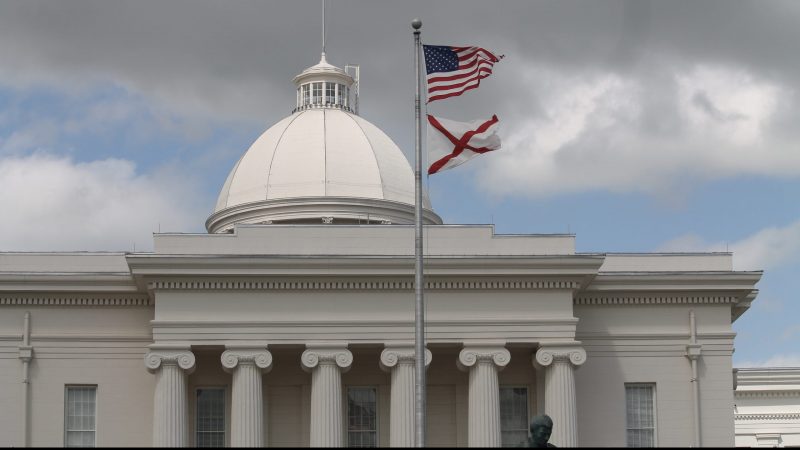
Bill would move Alabama to closed primaries
Right now, any Alabama voter can participate in a primary election. Lawmakers in Montgomery took up a bill this week that would change that system.
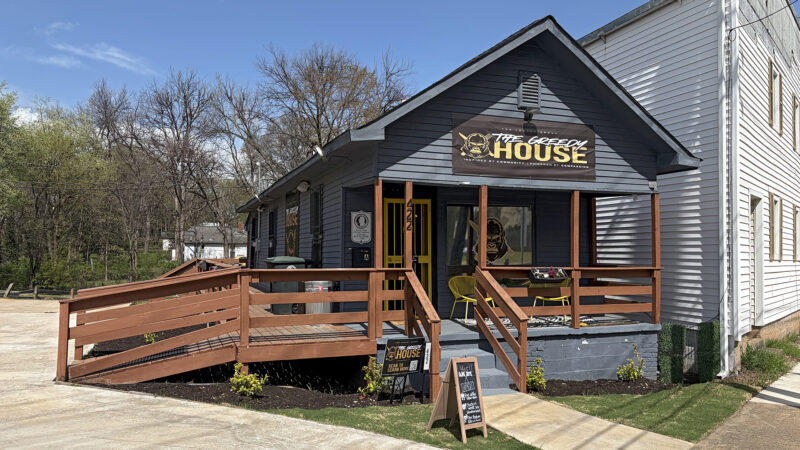
Auburn football player uses NIL funds to open a community hub in Birmingham
Jourdin Crawford, a freshman defensive lineman at Auburn, used earnings from a Name, Image, and Likeness deal to give back to his hometown.
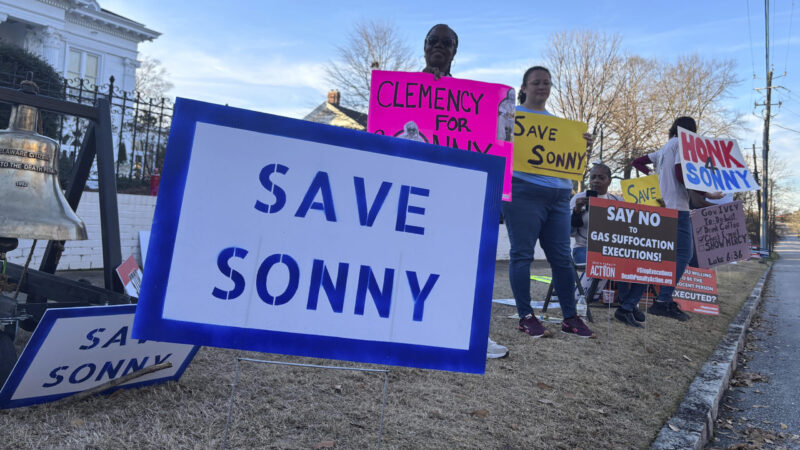
Ivey commutes death sentence of inmate whose accomplice fired fatal shot
Charles “Sonny” Burton was sentenced to death for the killing of Doug Battle during a 1991 robbery. However, another man shot Battle when Burton had left the building.