Charter Schools 101
A bill to authorize charter schools in Alabama is dead in the state legislature, but don’t expect the debate to die down anytime soon. President Obama is pushing charter schools, and several of the gubernatorial candidates say they support the idea as well. But just what is a charter school? They’ve been around for more than a decade in some other states, but here in Alabama there seems to be a lot of confusion.
Birmingham residents Cassandra Walker and Tracy Caldwell aren’t alone. So, for the first installment on our weeklong series on Charter Schools, we asked esteemed professor Les Lovoy to explain the ABCs of charter schools.
Welcome to Charter School 101. Helping me in the classroom today are Robin Lake, associate director of the Center on Reinventing Public Education at the University of Washington; Joe Morton, Superintendent of Schools in Alabama; and Dr. Michael Froning, recently retired dean of the UAB School of Education.
Let’s get started by explaining what is a charter school. The first charter school opened in St. Paul, Minnesota nearly 20 years ago. Today more than 5,000 charter schools serve more than 1.5 million children in 40 states, plus the District of Columbia. A charter school is a public school that operates independently of a local school board. Educators, parents, community leaders, educational entrepreneurs or others write the charter plan describing the school’s guiding principles. Charter schools are different from traditional schools in many ways, right Ms. Lake?
“So, the idea is that the school is free from some rules and regulations that normally apply to public schools, and might have more control over its staff, and its funding and educational program. And, in return for that freedom it has to be accountable for results.
If a school doesn’t live up to its charter, it can be shut down. Ms. Lake, you say charter schools have certain freedoms public schools don’t. Of course they have to adhere to the same major laws and regulations as all other public schools. Things like civil rights laws. But what do you mean when you say by they have more freedom?
“There’s actually some charter schools that are set up just for special needs kids.”
So it could be kids with special educational needs, like an emphasis on writing or math. Or it could be magnet programs for kids who are gifted in the sciences or arts. There can also be charter schools set up specifically to meet the needs of high school drop-outs, right Mr. Morton?
“Maybe they’re already working part time, so they come to school part-time, work part-time. So, a lot of those barriers are broken down by having a charter school.
Ok. Let’s put a few of these points on the board. Charter schools canould pick their own hours of operation. They can use their money as they see fit, not how a school district tells them they have to use it. They can choose their own textbooks and other education materials instead of being required to use the state-approved books. I see.
All students would get a shot at attending a charter school. If more students volunteer to attend one than available seats, no one gets preferential treatment, right. Dr. Morton?.
“Say, there was a school started in Birmingham, and they were going to have 200 students and 500 applied. Then, by law, they have to put all of the names in a hat and draw them out. That’s just the way it is. And, it couldn’t be any fairer.”
(Dr. Froning) “What happens to the kids who don’t make the lottery? Their numbers don’t come up.”
Dr. Froning, you’ve got something to add?
“So, are they so called “stuck” in the regular public schools, because they weren’t lucky enough to be chosen to go to a charter school? I think that sends the wrong message.”
What about funding charter schools? Where do charter schools they get their money? When a child goes to leaves for a charter school the money follows that child, right Dr. Morton?
“The bill is written such that it said the state money and federal money would follow the child. The local board of education can decide to give the charter school local tax dollars, or not.”
Of course all of this is very controversial. Proponents say charter school foster innovation and accountability. They say if parents can choose which school they want their kid to attend it promotes healthy competition between the schools. But critics say charter schools drain much needed money from traditional public schools.

Crew of fatal US military crash included Alabama father recently deployed
The six U.S. service members who died in the crash of a U.S. military refueling aircraft included an Alabama father who had just been promoted and deployed. The U.S. government released the identities of the deceased service members Saturday.
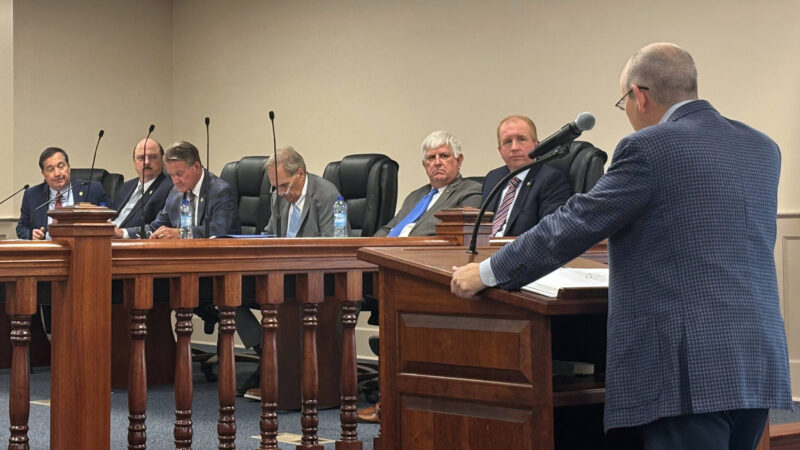
Alabama poised to drastically overhaul utility regulation. Will it lower electric bills?
The Alabama Senate unanimously voted to expand the public service commission, and create a Secretary of Energy to address rising electricity prices. A bill in the House would go even further, requiring rate case hearings and limiting utility profits.

Musher from Alabama is going for back-to-back Iditarod wins
Riches and paid appearances haven’t followed Jessie Holmes since he won the world’s most famous sled dog race, the Iditarod, last year. He doesn't mind.
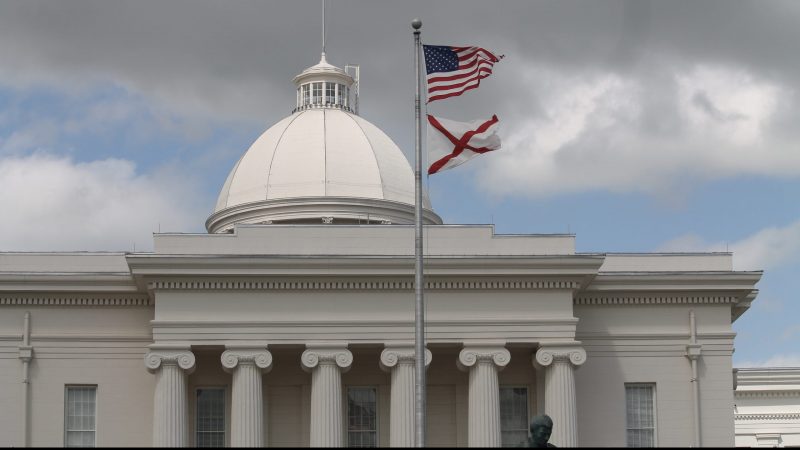
Bill would move Alabama to closed primaries
Right now, any Alabama voter can participate in a primary election. Lawmakers in Montgomery took up a bill this week that would change that system.
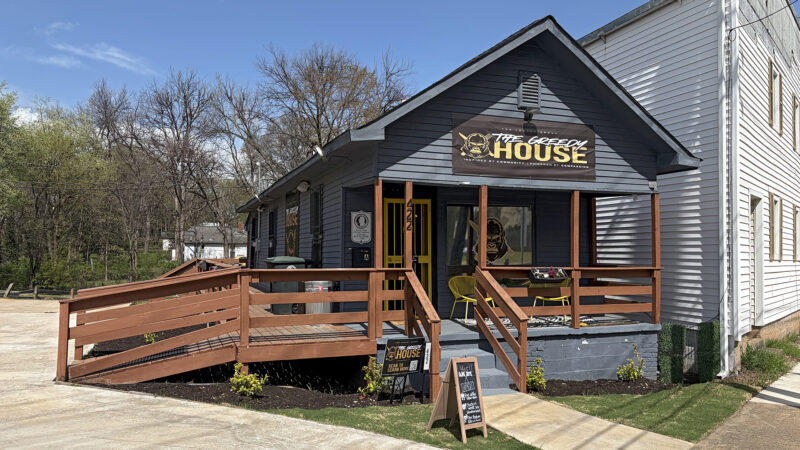
Auburn football player uses NIL funds to open a community hub in Birmingham
Jourdin Crawford, a freshman defensive lineman at Auburn, used earnings from a Name, Image, and Likeness deal to give back to his hometown.
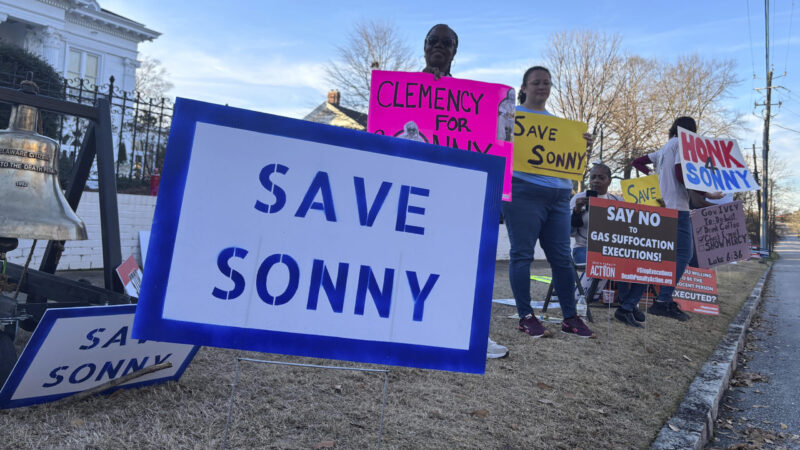
Ivey commutes death sentence of inmate whose accomplice fired fatal shot
Charles “Sonny” Burton was sentenced to death for the killing of Doug Battle during a 1991 robbery. However, another man shot Battle when Burton had left the building.