Public arts funding
Trobaugh rips away preservative brown paper and saran wrap, the massive, movie-poster-sized laminated pictures show his narrative: life-sized shots of male dolls embracing one another, holding hands, touching.
“If you see a lot of the photographs together, you can see that sometimes it’s about a deeper friendship than just a normal friendship.”
Five years ago, Trobaugh was an adjunct art professor at Shelton State Community College when he was asked to present an exhibit in a public gallery.
“I showed them my work. Because they knew vaguely what I did, but not exactly. And they really liked it.”
Liked it at first. Until the college president decided that the gay images might bother people coming to the college to see a production of “Arsenic and Old Lace”. The photos, he said, were not family friendly and because the college receives state money, he closed Trobaugh’s exhibit.
“Censorship is an awfully harsh word.”
That’s college spokesperson Leigh Hays who says Shelton State’s art department and the college’s new administration are trying to formulate a policy that would make everyone happy.
“We’ll look at opportunities as they come up of art shows, art exhibits, performances prior to them being open so that we are all on the same page and we are all in agreement as to what’s in the best interest of the college, our students, our program and our community.”
Hays says it is a tightrope over some fierce flames. What the school eventually decides is at the intersection of first amendment law, government funding and public opinion. What is art? … and … what is offensive or obscene?
In 1973, a famous U.S. Supreme Court case, Miller vs. California, didn’t involve art – but rather, mailings of so-called sexually explicit material. But the case rippled across the art world because the high court has used the Miller case as a gauge of what can be thought of as obscene. And that gauge includes “artistic value”.
The so-called Miller test also established the idea of “community standards” of decency and interpretations that can be as numerous as the boundaries of cities, counties and states themselves. Just ask Birmingham residents Todd Sanstead and Emily Self.
“Going with every reaction to pull a piece just because it makes people uncomfortable is probably not the right answer. Giving people complete ability to put things out that offend a large group of people is probably not the right answer as well.”
“I think it can be complicated if politics and art get too entangled.”
But they are.
The National Endowment for the Arts – or NEA, which has also funded public broadcasting, has been at the center of funding arts projects since 1965.
This fiscal year, the NEA will dole out more than $140 million to arts organizations coast to coast, but in 1996, Congress slashed the budget by more than a third, under pressure from conservative and family groups over funding for controversial artists. Artists such as Andres Serrano – whose works include an image of Jesus on a cross immersed in urine and Robert Mapplethorpe, whose explicit nude male photographs fueled protests about obscenity.
“Why would someone ask the Christians across this country to pay any kind of money toward the gay and lesbian film festival? Why would we ask gays and lesbians to pay for some type of art form that may go against what they believe in?”
Bay Buchanan is president of The American Cause, a conservative organization that, according to its website, promotes traditional American values.
“I don’t think it’s necessary and I don’t think art would lose its value, if it wasn’t funded by the government. I think the private sector would step in and we would have the kind of art that the American people would be willing to support.”
Or would it be the art that the majority supports? And the voices, etchings, paintings and sculptures of those who don’t have large audiences die on the vine. It is a constant battle that keeps arts organizations, such as Birmingham’s Space One Eleven and co-founder Anne Arrasmith, on their toes.
“I’m a taxpayer, and I don’t like my tax dollars going to bombs and all that kind of stuff, wars. But it does. So, if your tax dollar in teeny teeny proportion goes to Arts in America, it’s your problem.”
“It’s not just about encouraging a single artist to produce a work of art; it’s really about encouraging artistic activity in the United States.”
Karen Henricks is an art historian at Jacksonville State University. She says throughout American history, from early colonial times through the great depression and WPA projects, when artists were commissioned to paint public murals, the underpinning of government-sanctioned art was to encourage more expression and appreciation of it.
“You know you don’t support a theater program, or an artist, because they’re going to produce one thing. You support it because the entire public enjoys the product. So I think that, really, their goal was to bring that broad-based interest in art and to do it through looking at quality art as well.”
That concept continues today, but in a multi-media world of instant access, it is so much easier to see the controversial, and hear the reactions.
It is all a part of this artistic-public funding landscape.

Crew of fatal US military crash included Alabama father recently deployed
The six U.S. service members who died in the crash of a U.S. military refueling aircraft included an Alabama father who had just been promoted and deployed. The U.S. government released the identities of the deceased service members Saturday.
Alabama poised to drastically overhaul utility regulation. Will it lower electric bills?
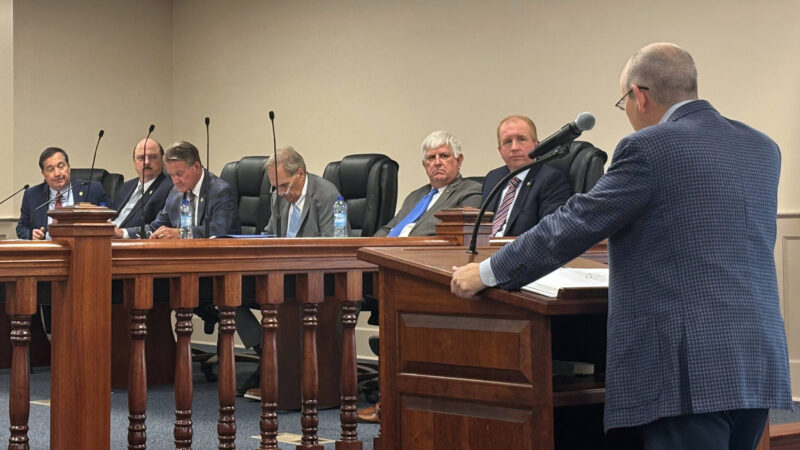
The Alabama Senate unanimously voted to expand the public service commission, and create a Secretary of Energy to address rising electricity prices. A bill in the House would go even further, requiring rate case hearings and limiting utility profits.

Musher from Alabama is going for back-to-back Iditarod wins
Riches and paid appearances haven’t followed Jessie Holmes since he won the world’s most famous sled dog race, the Iditarod, last year. He doesn't mind.
Bill would move Alabama to closed primaries
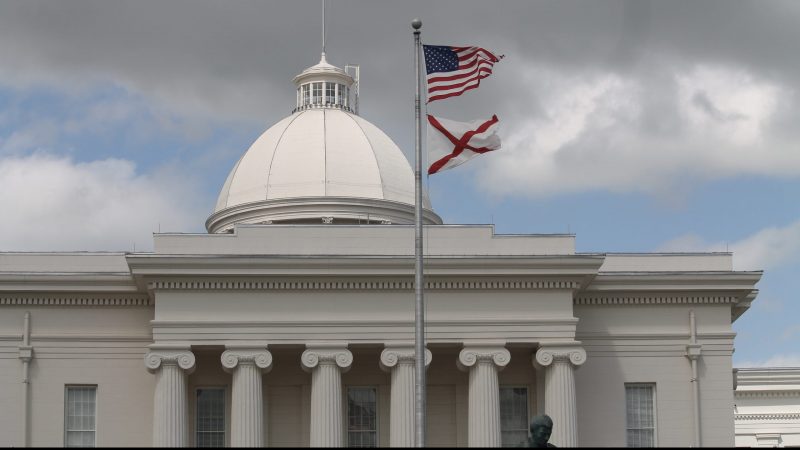
Right now, any Alabama voter can participate in a primary election. Lawmakers in Montgomery took up a bill this week that would change that system.
Auburn football player uses NIL funds to open a community hub in Birmingham
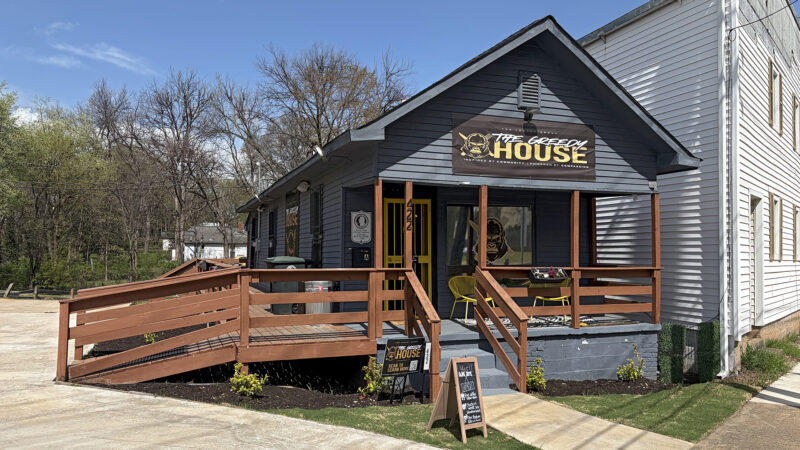
Jourdin Crawford, a freshman defensive lineman at Auburn, used earnings from a Name, Image, and Likeness deal to give back to his hometown.
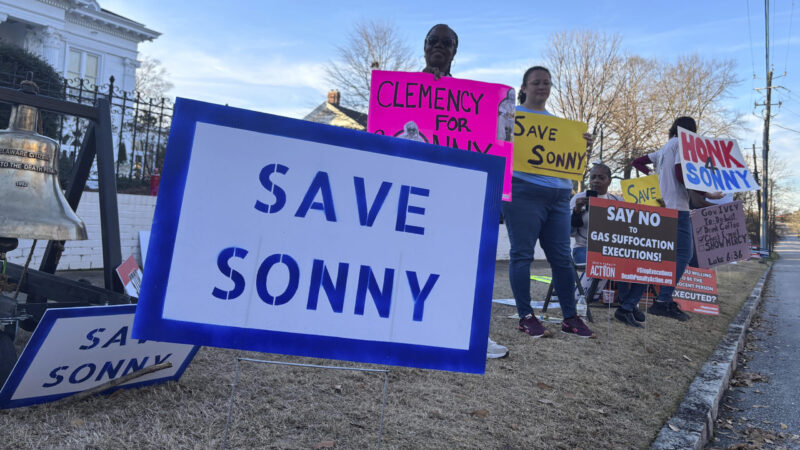
Ivey commutes death sentence of inmate whose accomplice fired fatal shot
Charles “Sonny” Burton was sentenced to death for the killing of Doug Battle during a 1991 robbery. However, another man shot Battle when Burton had left the building.