
Asperger’s Syndrome: the Kids
Aspergers patients are believed to have a high-functioning form of Autism. They often have normal or above normal IQs, but they tend to retreat into their own worlds and miss social cues. Some display obsessive-compulsive tendencies, and many battle depression. Aspergers Syndrome is known as an invisible disorder, because you can’t tell right away that someone has it.
But parents of children with Aspergers Syndrome seem to know instinctively something isn’t quite right.
“Well you kind of always know there’s something different about your child.”
Kaye Donnelly 7-year-old son Carver went undiagnosed for several years.
“When I’d take him to preschool, I’d take my younger son and him and I would drop him off and all the children would run. Then I’d drop my other son off and they’d come to him, “Hi!” And you know there’s something wrong and you wonder why can’t they make friends? Something is there. Even though they’re so smart.”
Donnelly struggled with her questions, until one day it all made sense.
“And I happen to be reading the newspaper like a Dear Abby column and a lady was asking about it and I read it and it’s like, “Gosh that’s him. And it was just a Eureka moment.”
She got on the Internet and started “Googling” aspergers’ syndrome. She found Mitchell’s Place, a new treatment facility Birmingham.
Today – Donnelly spends more than four hours on the road each week to bring Carver to the after-school program.
7-year old Carver Donnelly is a bright boy with Aspergers Syndrome. Unlike his younger siblings, this second-grader has difficulty making friends. Carver attends the after school program at Mitchell’s Place. He’s one of about half a dozen kids between ages 7 and 12 who come here twice a week to learn critical social skills.
“He has to learn step by step, kind of like playing a piano, how to get along with other children, how to meet other children, how to make friends. Because he wants friends really badly but he doesn’t know how to do it.”
Making things tougher, Carver has difficulty hearing and as a result, speaking. Mom Kaye Donnelly says the program teaches Carver how to notice his peers and how to get along with them. Something most people know instinctively. Aspergers Children need to be taught these skills.
“What emotion have we been talking about? Chase? “Anger.”
“We’ve been talking about anger. Raise your hand if you can tell me does everyone feel angry sometimes?”
Fran Camille is Carver’s teacher. Today the children are learning about handling their feelings of anger. Children with Asperger’s often become angry and frustrated because of their inability to connect with their peers.
“What can we do to calm down? Alex reminded us to take deep breaths. Sometimes that helps people. Let’s take a deep breath.”
According to the experts, children with Autism and Aspergers are uncomfortable making new friends because they don’t know how.
“You need to pick a buddy.”
“No buddy please.”
“It’s not a choice. You have to do it. Ok?”
“I want to play by myself now.”
” Well, we’re going to play with a buddy. I’ll tell you what. I will let someone else pick you.”
The children choose someone to play with. Once outdoors, the children are instructed to ask their buddies what activity they’d like to engage in. Some choose to ride on swings. Others enjoy slides. Teachers guide them every step of the way.
“Okay so go ask David what he wants to do.”
“We have a lot of kids with Aspergers. Really the Early Learning Program we modeled after Auburn University’s program, but the after-school program, there is nothing like it anywhere in the country.”
Executive Director of Mitchell’s Place, Dr. Matthew Remick, says the after school program is pioneering new ways of integrating social skills into a child’s life.
It’s a breath of fresh air to see these kids making friends and enjoying themselves and looking forward to coming here.”
Remick says the program is different because the facility is family-driven. Every treatment room features an observation window. Parents can watch, listen and learn how the staff is teaching their children. The staff also works with students to complete homework, often a very difficult task for parents to undertake.
“So we have a half-hour homework component in there, where we are helping kids get their homework done so twice a week, families can do a little more family activity since we are focusing on getting their homework done with them.”
Mitchell’s Place has an early learning program for young children. After school help for school age children, and a comprehensive outpatient treatment center for adults with Autism, Aspergers Syndrome and other disorders.
Growing up without a disability is hard enough. Growing up with one can be unbearable. Now parents have a place to go where they no longer feel so alone in their journey, and their children can learn how to make a friend, possibly one of the most treasured gifts in life.

Crew of fatal US military crash included Alabama father recently deployed
The six U.S. service members who died in the crash of a U.S. military refueling aircraft included an Alabama father who had just been promoted and deployed. The U.S. government released the identities of the deceased service members Saturday.
Alabama poised to drastically overhaul utility regulation. Will it lower electric bills?
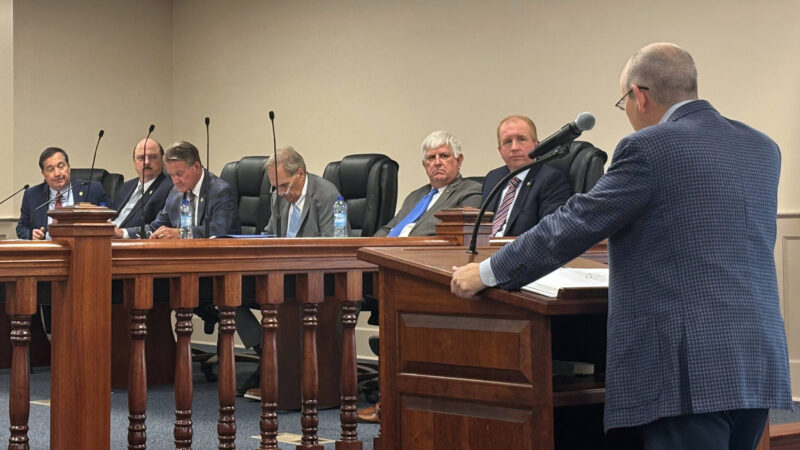
The Alabama Senate unanimously voted to expand the public service commission, and create a Secretary of Energy to address rising electricity prices. A bill in the House would go even further, requiring rate case hearings and limiting utility profits.

Musher from Alabama is going for back-to-back Iditarod wins
Riches and paid appearances haven’t followed Jessie Holmes since he won the world’s most famous sled dog race, the Iditarod, last year. He doesn't mind.

Bill would move Alabama to closed primaries
Right now, any Alabama voter can participate in a primary election. Lawmakers in Montgomery took up a bill this week that would change that system.
Auburn football player uses NIL funds to open a community hub in Birmingham
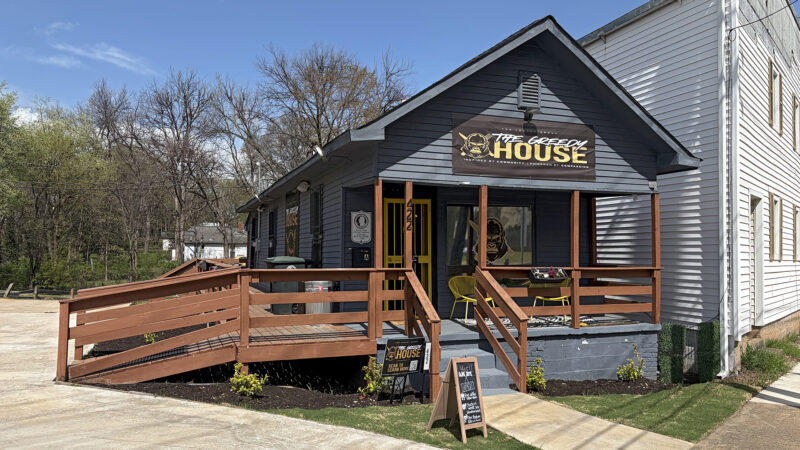
Jourdin Crawford, a freshman defensive lineman at Auburn, used earnings from a Name, Image, and Likeness deal to give back to his hometown.

Ivey commutes death sentence of inmate whose accomplice fired fatal shot
Charles “Sonny” Burton was sentenced to death for the killing of Doug Battle during a 1991 robbery. However, another man shot Battle when Burton had left the building.