
Public Health 911

 | Birmingham — Dr. Ronald J. Glasser, a physician and author from Minneapolis, created a flurry of controversy in July when he published an article in Harper’s Magazine titled ‘We Are Not Immune: Influenza, SARS, and the Collapse of Public Health.’ In the piece, Glasser writes, ‘It is no exaggeration to say that we simply lack a public health system, per se. What we do have is a hodgepodge of programs, bureaucracies and failings.’
Among the flak that Glasser caught for his views was an angry phone call from a high-level government official accusing him of unnecessarily alarming the public. But Glasser, who was in Birmingham recently to speak at a UAB School of Public Health seminar, not only stands by his dire assessment’ he says current events are, unfortunately, proving his point. 
‘I mean, it has collapsed. If it hadn’t collapsed, what are we doing with 50 million people not being able to get the flu vaccine? You have to be a lunatic to say, ‘well that’s okay; we’ll make it work.’ I mean, if this was any other business in the world, if you were selling refrigerators and somebody said, ‘We can’t sell refrigerators this year because half of them are gone,’ in a business you would say, ‘This is a disaster!”
Although Glasser’s lecture was scheduled several weeks before the flu vaccine crisis was discovered, he says it didn’t take a crystal ball for him ‘ and for many others in the public health field ‘ to know that such problems, and worse, are inevitable for the country. He says the vaccine shortage shouldn’t be a surprise to any official who makes health policy.
‘They were warned, public health officials were, after the swine flu in 1976. It didn’t work. They did it wrong, and they realized they had to redo it. And then over the years with the shortages, they knew they needed more companies and they knew they needed more effective methods for making vaccines.’
But still, according to Glasser, the federal government was reluctant to intervene in the process. He says that drug companies, who are in business to make money, understandably prefer to put their resources into making blockbuster drugs such as Lipitor or Paxil that their consumers will take daily for a lifetime’ unlike vaccines, that only sell once a year.
‘But the government would be able to handle this by just guaranteeing some payment, by perhaps giving some tax benefits. But they haven’t wanted to do it, because that’s ‘government intervention. That’s a big of regulation. Leave it to the marketplace. Leave it to capitalism.’ It’s nonsense!’
But the flu vaccine problem could be only the tip of the iceberg, Glasser says, because of what he sees as a drastic decline in America’s public health infrastructure. For example, he says, if last year’s epidemic of SARS had broken out in the U.S. instead of Asia, there’s little chance that our current system could have contained it. And the spread of America’s West Nile Virus epidemic to 46 states, with some 14,000 people infected and 560 deaths, at last count, might have been headed off when the virus first appeared in New York City ‘ if local budget cuts there had not eliminated surveillance programs to detect mosquitoes carrying the disease.
Surveillance programs are the first line of defense for stopping the spread of disease, Glasser says, but they’re often the first programs to be eliminated when budgets are reduced. Alabama is no exception, he says; the state recently cut its surveillance program that identified people with tuberculosis.
‘Just talk to your state legislators and ask them why they cut funding for the TV surveillance program. I can tell you why they cut it, because they turned over Medicaid to one of the HMOs, and the HMOs felt that 12 million dollars a year to make sure that the migrant workers who come through Alabama don’t have TB is not important, because they don’t vote. Well, that’s okay, unless you’re on an airplane with somebody coughing.’
Glasser says that although America’s public health infrastructure must be rebuilt, it can’t be done overnight because it’s taken some 30 years to be dismantled’ a process so gradual that most people don’t notice it until an occasional crisis makes the headlines. Even after the threat of bio-terrorism has entered the public consciousness, he says, still less than one percent of America’s health care spending goes to public health and preventive medicine.
‘We’re not in the age of individualism, of letting the marketplace make the decisions, of decreased taxes. ‘Public’ has become a dirty word. How that changed in 30 years is the great success of the right-wing party. You don’t talk about patients as patients, but ‘consumers’. I mean, the marketplace has never worked in medicine. The truth is, you need a basic package for health care. And I don’t care how we work it, as long as every American has the ability to go in and see somebody when they’re sick.’
Still, Glasser says he’s hopeful that public awareness can help change health care policy without the impetus of a major disaster.
‘You’ve got to know that in order to take care of yourself, you’ve got go take care of other people. When we get 70 million people that are without health insurance, I think people will consider that enough of a crisis. Right now it’s 40 million. But counting.’

Crew of fatal US military crash included Alabama father recently deployed
The six U.S. service members who died in the crash of a U.S. military refueling aircraft included an Alabama father who had just been promoted and deployed. The U.S. government released the identities of the deceased service members Saturday.
Alabama poised to drastically overhaul utility regulation. Will it lower electric bills?
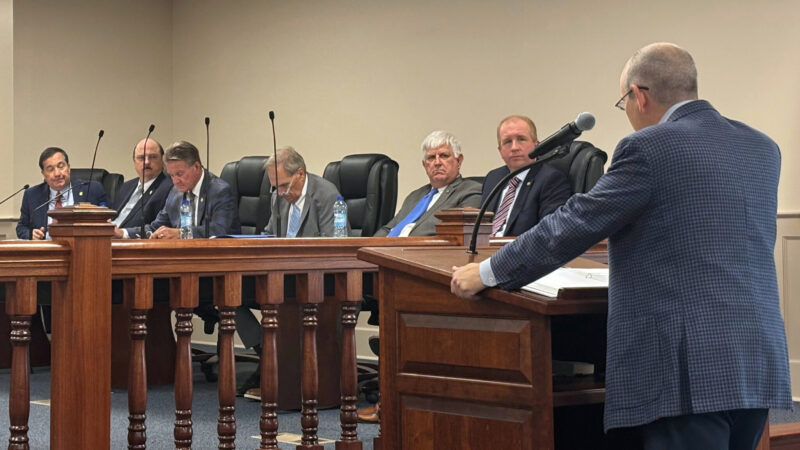
The Alabama Senate unanimously voted to expand the public service commission, and create a Secretary of Energy to address rising electricity prices. A bill in the House would go even further, requiring rate case hearings and limiting utility profits.

Musher from Alabama is going for back-to-back Iditarod wins
Riches and paid appearances haven’t followed Jessie Holmes since he won the world’s most famous sled dog race, the Iditarod, last year. He doesn't mind.
Bill would move Alabama to closed primaries
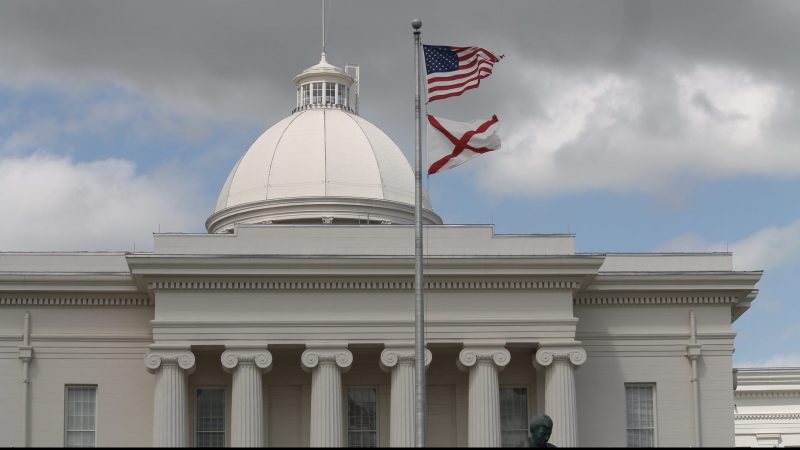
Right now, any Alabama voter can participate in a primary election. Lawmakers in Montgomery took up a bill this week that would change that system.

Auburn football player uses NIL funds to open a community hub in Birmingham
Jourdin Crawford, a freshman defensive lineman at Auburn, used earnings from a Name, Image, and Likeness deal to give back to his hometown.
Ivey commutes death sentence of inmate whose accomplice fired fatal shot
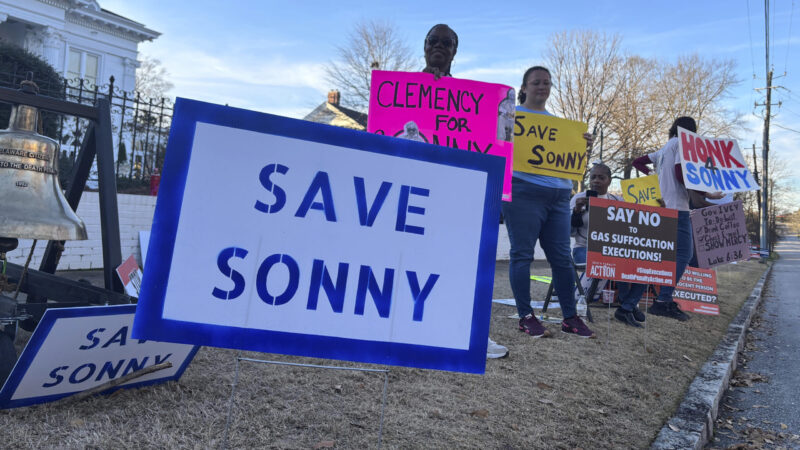
Charles “Sonny” Burton was sentenced to death for the killing of Doug Battle during a 1991 robbery. However, another man shot Battle when Burton had left the building.
